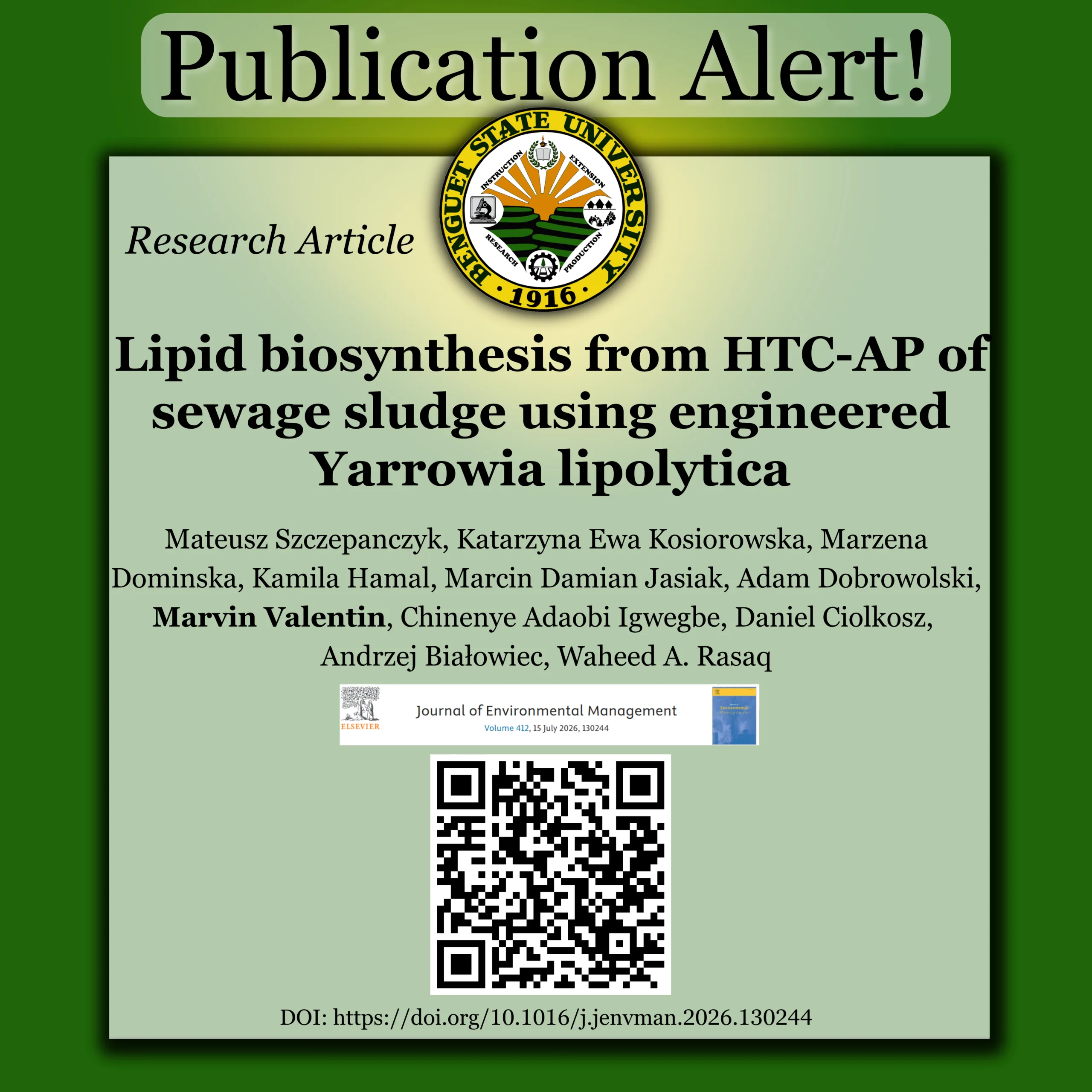
We are excited to share another Research Article Publication entitled;
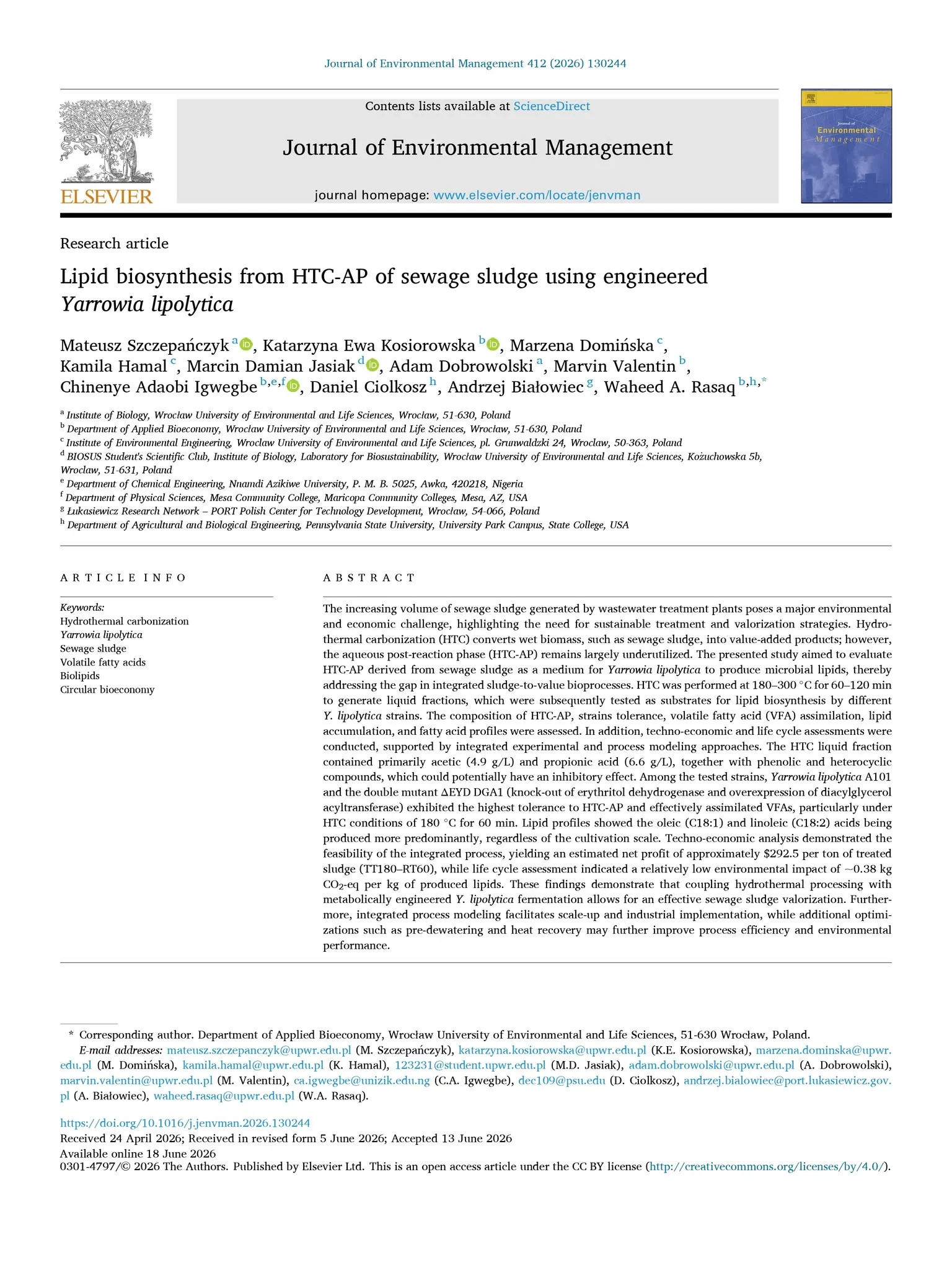
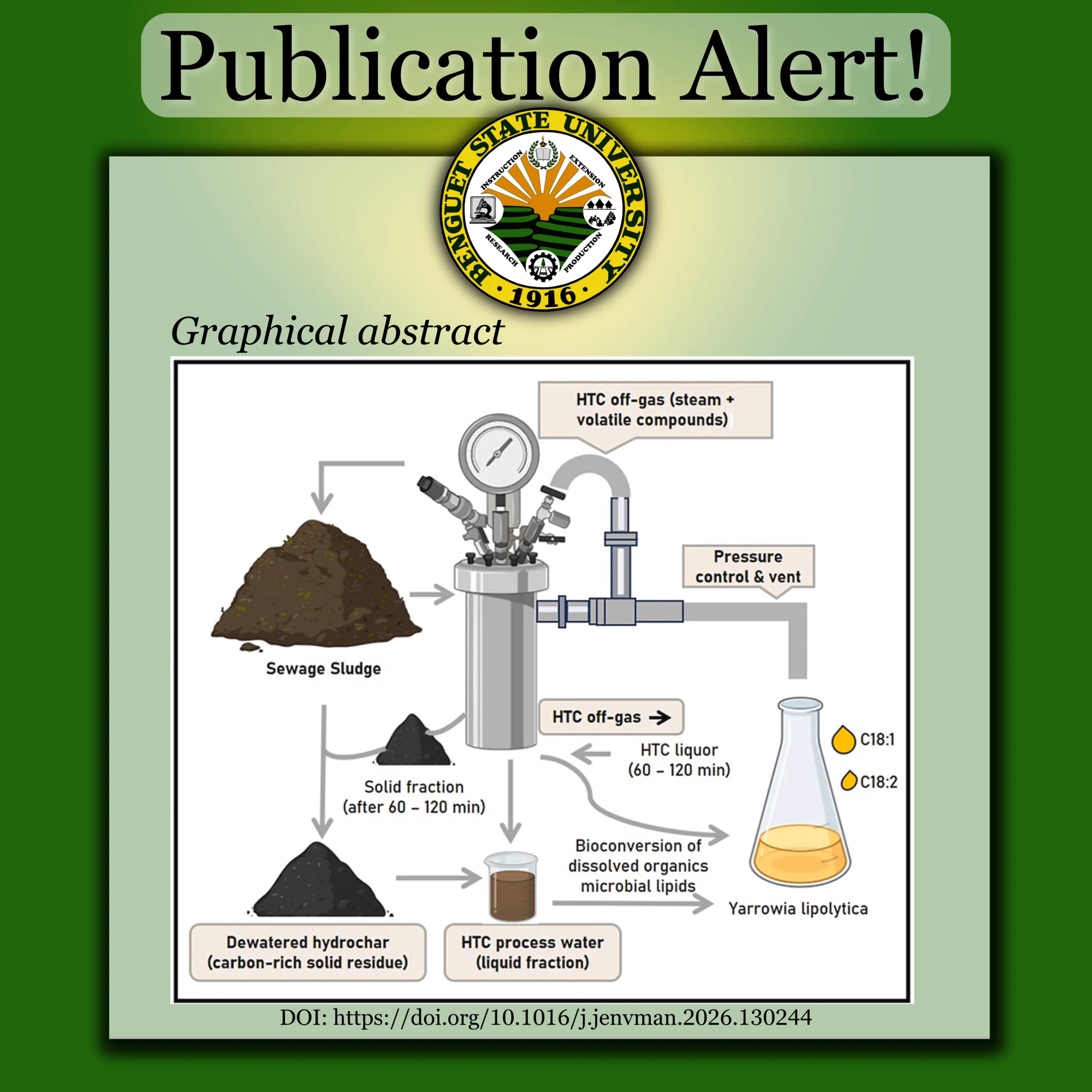
“Lipid biosynthesis from HTC-AP of sewage sludge using engineered Yarrowia lipolytica”
by Mateusz Szczepanczyk, Katarzyna Ewa Kosiorowska, Marzena Dominska, Kamila Hamal, Marcin Damian Jasiak, Adam Dobrowolski, 𝑀𝑎𝑟𝑣𝑖𝑛 𝑉𝑎𝑙𝑒𝑛𝑡𝑖𝑛, Chinenye Adaobi Igwegbe, Daniel Ciolkosz, Andrzej Białowiec, Waheed A. Rasaq
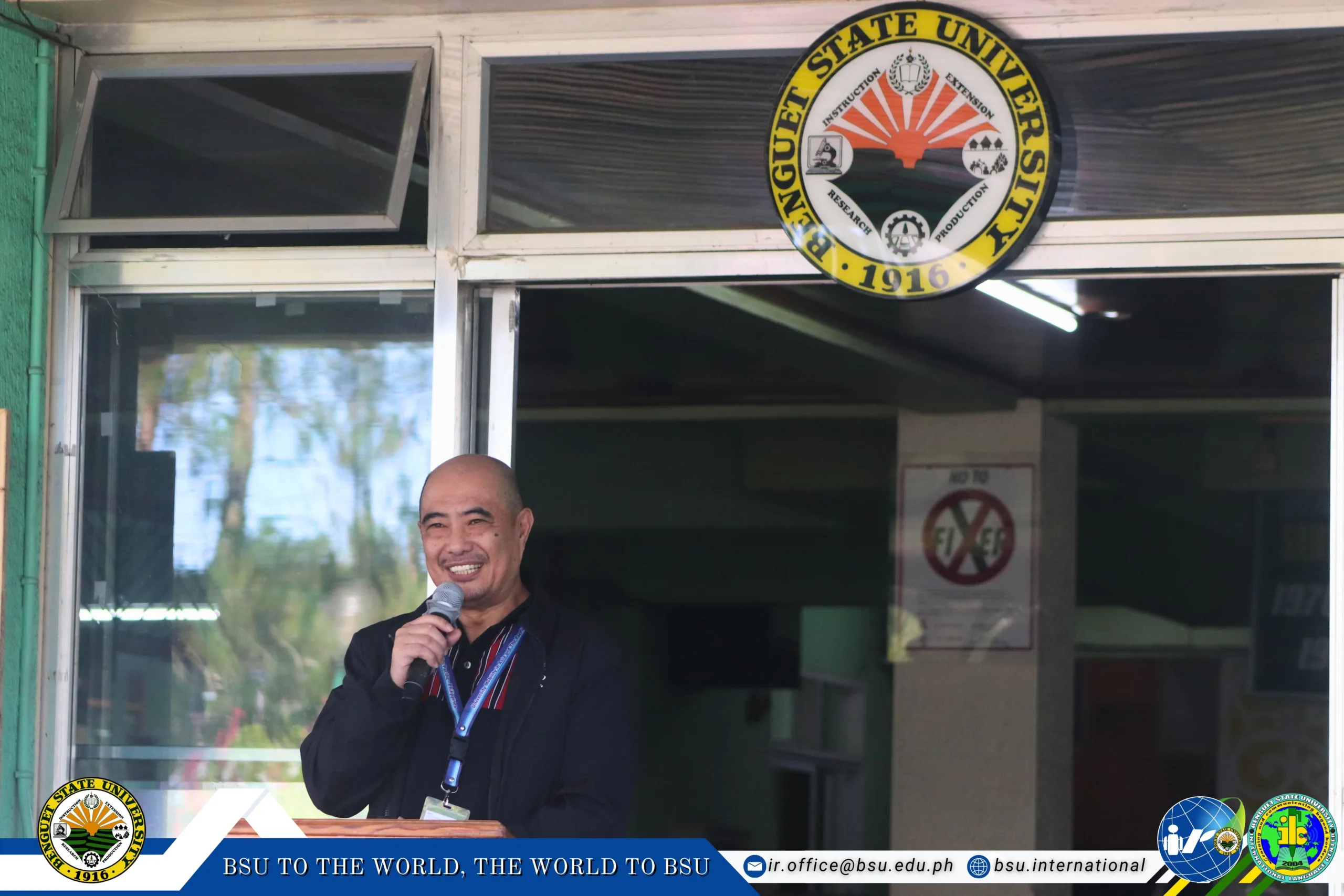
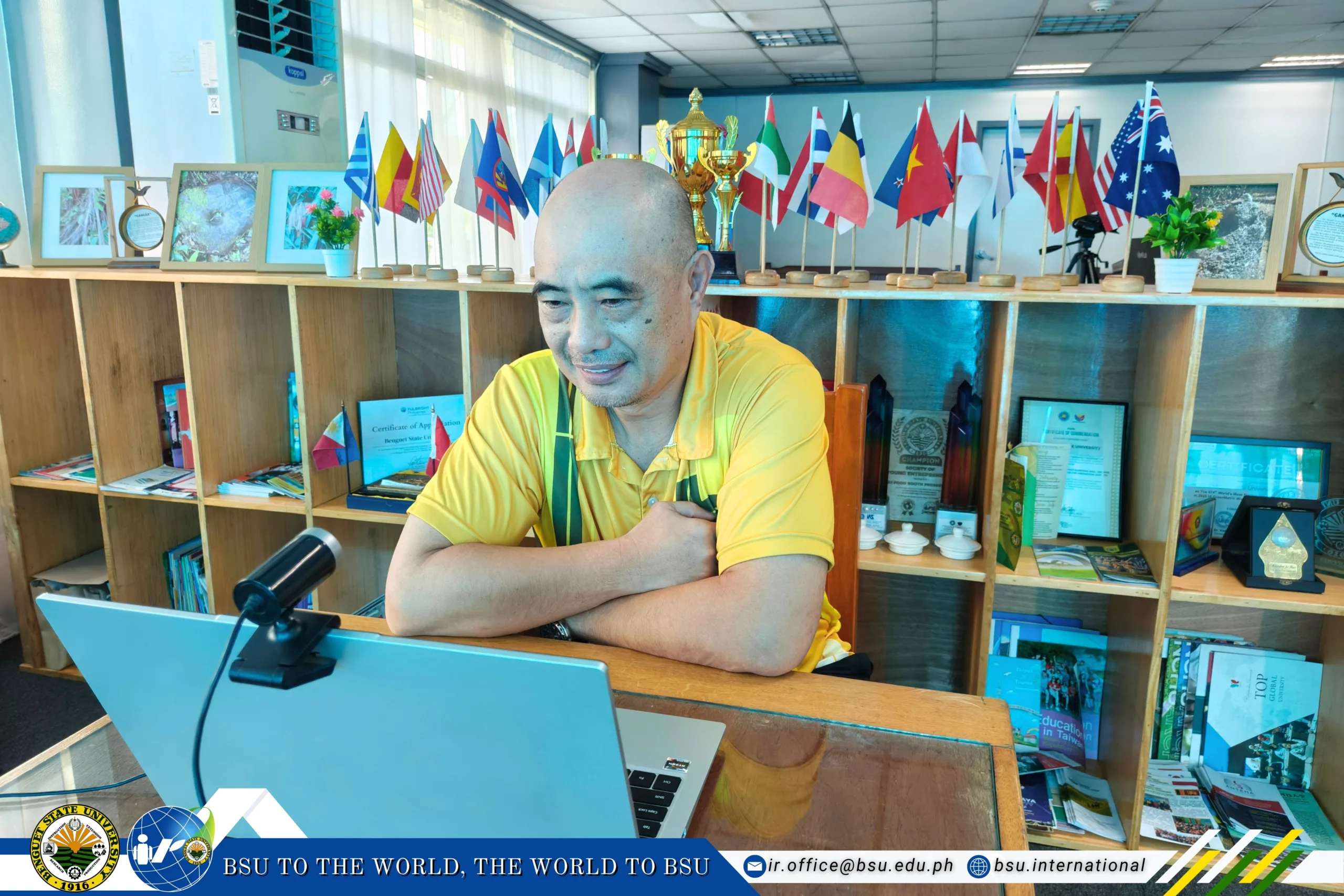
Mr. Marvin T. Valentin, is a faculty member from the BSU-College of Engineering and an assistant to the BSU Office of the Vice President for Academic Affairs
𝑨𝒃𝒔𝒕𝒓𝒂𝒄𝒕:
The increasing volume of sewage sludge generated by wastewater treatment plants poses a major environmental and economic challenge, highlighting the need for sustainable treatment and valorization strategies. Hydrothermal carbonization (HTC) converts wet biomass, such as sewage sludge, into value-added products; however, the aqueous post-reaction phase (HTC-AP) remains largely underutilized. The presented study aimed to evaluate HTC-AP derived from sewage sludge as a medium for Yarrowia lipolytica to produce microbial lipids, thereby addressing the gap in integrated sludge-to-value bioprocesses. HTC was performed at 180–300 °C for 60–120 min to generate liquid fractions, which were subsequently tested as substrates for lipid biosynthesis by different Y. lipolytica strains. The composition of HTC-AP, strains tolerance, volatile fatty acid (VFA) assimilation, lipid accumulation, and fatty acid profiles were assessed. In addition, techno-economic and life cycle assessments were conducted, supported by integrated experimental and process modeling approaches. The HTC liquid fraction contained primarily acetic (4.9 g/L) and propionic acid (6.6 g/L), together with phenolic and heterocyclic compounds, which could potentially have an inhibitory effect. Among the tested strains, Yarrowia lipolytica A101 and the double mutant ΔEYD DGA1 (knock-out of erythritol dehydrogenase and overexpression of diacylglycerol acyltransferase) exhibited the highest tolerance to HTC-AP and effectively assimilated VFAs, particularly under HTC conditions of 180 °C for 60 min. Lipid profiles showed the oleic (C18:1) and linoleic (C18:2) acids being produced more predominantly, regardless of the cultivation scale. Techno-economic analysis demonstrated the feasibility of the integrated process, yielding an estimated net profit of approximately $292.5 per ton of treated sludge (TT180–RT60), while life cycle assessment indicated a relatively low environmental impact of ∼0.38 kg CO2-eq per kg of produced lipids. These findings demonstrate that coupling hydrothermal processing with metabolically engineered Y. lipolytica fermentation allows for an effective sewage sludge valorization. Furthermore, integrated process modeling facilitates scale-up and industrial implementation, while additional optimizations such as pre-dewatering and heat recovery may further improve process efficiency and environmental performance.
We hope you will explore the key findings of this work and share or cite it to spread knowledge and insights to the wider academic community.
You can find the full publication here: Click here to Open
#BenguetStateUniversity, #PublicationAlert, #ResearchCorner