
BENGUET STATE UNIVERSITY
INTERNATIONAL RELATIONS OFFICE
The Lead Office in Facilitating and Coordinating International Partnerships for the University
BSU to the WORLD,
the WORLD to BSU

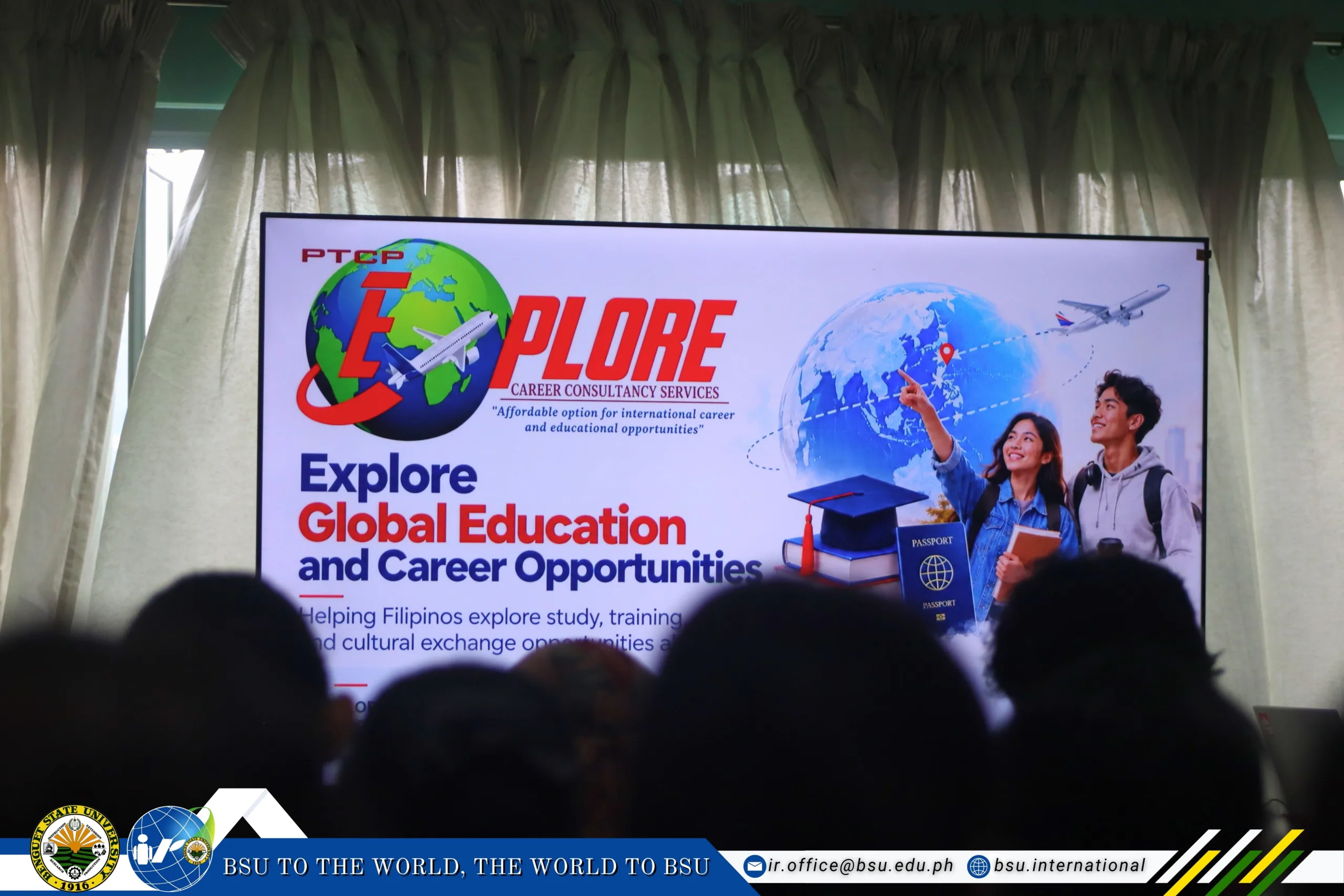
The activity featured study abroad information sessions, paid internship information sessions, and one-on-one consultations to help interested students and alumni explore opportunities for international education and career development.
Through PTCP, participants had the opportunity to learn from representatives, consultants, market specialists, development managers, and marketers from various international educational institutions and organizations, including Mohawk College and the Southern Alberta Institute of Technology in Canada; InUni Global in the United States; Global College Malta in Malta; Woosong University in South Korea; Arden University in the United Kingdom; the National Training College of Australia; and Leap Geebee Philippines.
The activity provided students and alumni with information on international study and internship opportunities, allowing them to explore possible pathways for further education and professional experience abroad.
#BenguetStateUniversity, #PTCPInfoSession, #StudyAbroad
[…]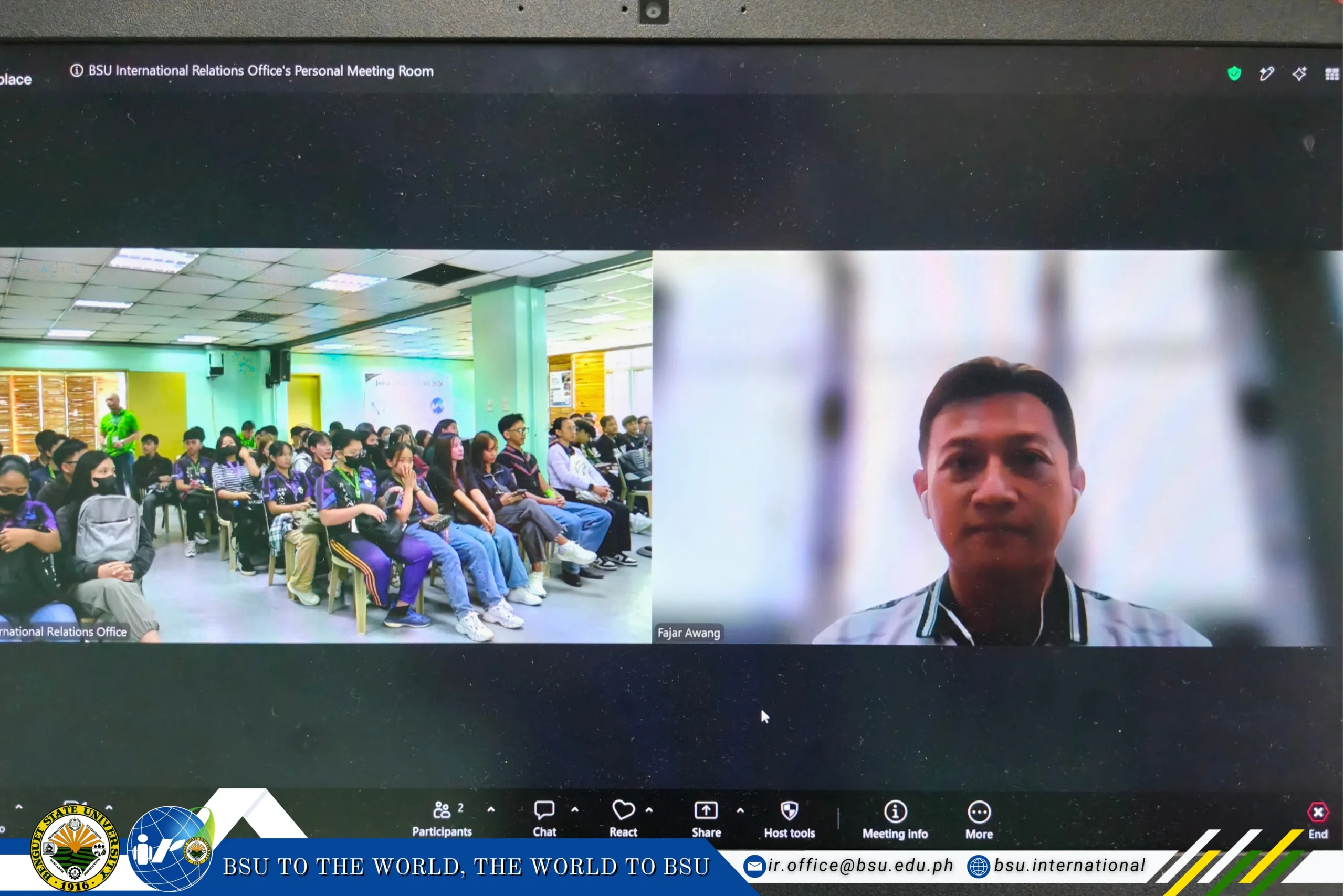
The seminar featured Fajar Awang Irawan, Ph.D., an Associate Professor from Universitas Negeri Semarang, Indonesia, who shared his expertise in sports science and performance improvement. His discussion included the use of biomechanical matrices in sports, including their application to traditional Indonesian games, highlighting how scientific approaches can be used to better understand sports performance and movement.
The activity was attended by CHK faculty members and Bachelor of Science in Exercise and Sports Science students majoring in Sports Management and Sports Coaching. The seminar gave participants an opportunity to learn about approaches to sports development in Indonesia and explore their relevance to sports science, coaching, and physical education.
The activity gave faculty members and students an opportunity to learn from the experiences of Universitas Negeri Semarang and gain new perspectives on sports science, coaching, and physical education.
#BenguetStateUniversity, #SDG4QualityEducation, #UniversitasNegeriSemarang
[…]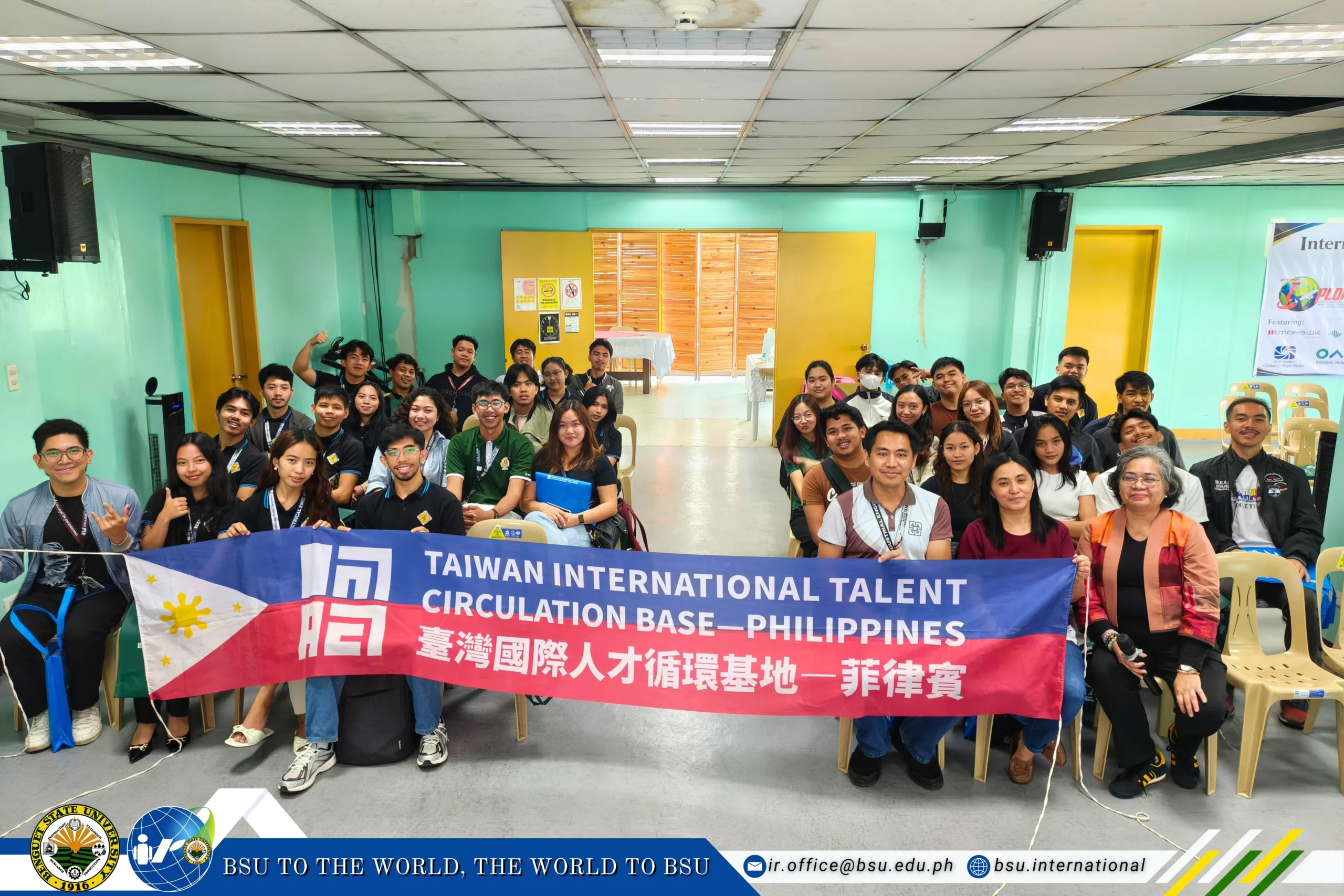
Ms. Mercedes Joy M. Fojas, General Manager of INTACT Base Philippines, introduced the program to students from the Bachelor of Science in Industrial Engineering and Bachelor of Science in Electrical Engineering programs of the College of Engineering. She discussed the opportunities available through the INTENSE Program, including Mandarin preparatory courses, tuition subsidies, paid internships, and possible employment opportunities in Taiwan after graduation.
The session gave students a chance to learn more about the program and explore opportunities to gain international academic and professional experience in Taiwan. The activity also marks the start of a series of information sessions and consultations on international study and internship opportunities running from October 19 to 21, 2026.
These sessions are open to all interested students and alumni who want to learn more about available programs and opportunities abroad. Interested participants are encouraged to visit the IRO Function Hall for more information.
#BenguetStateUniversity, #INTENSEProgram, #ScholarshipsCorner
[…]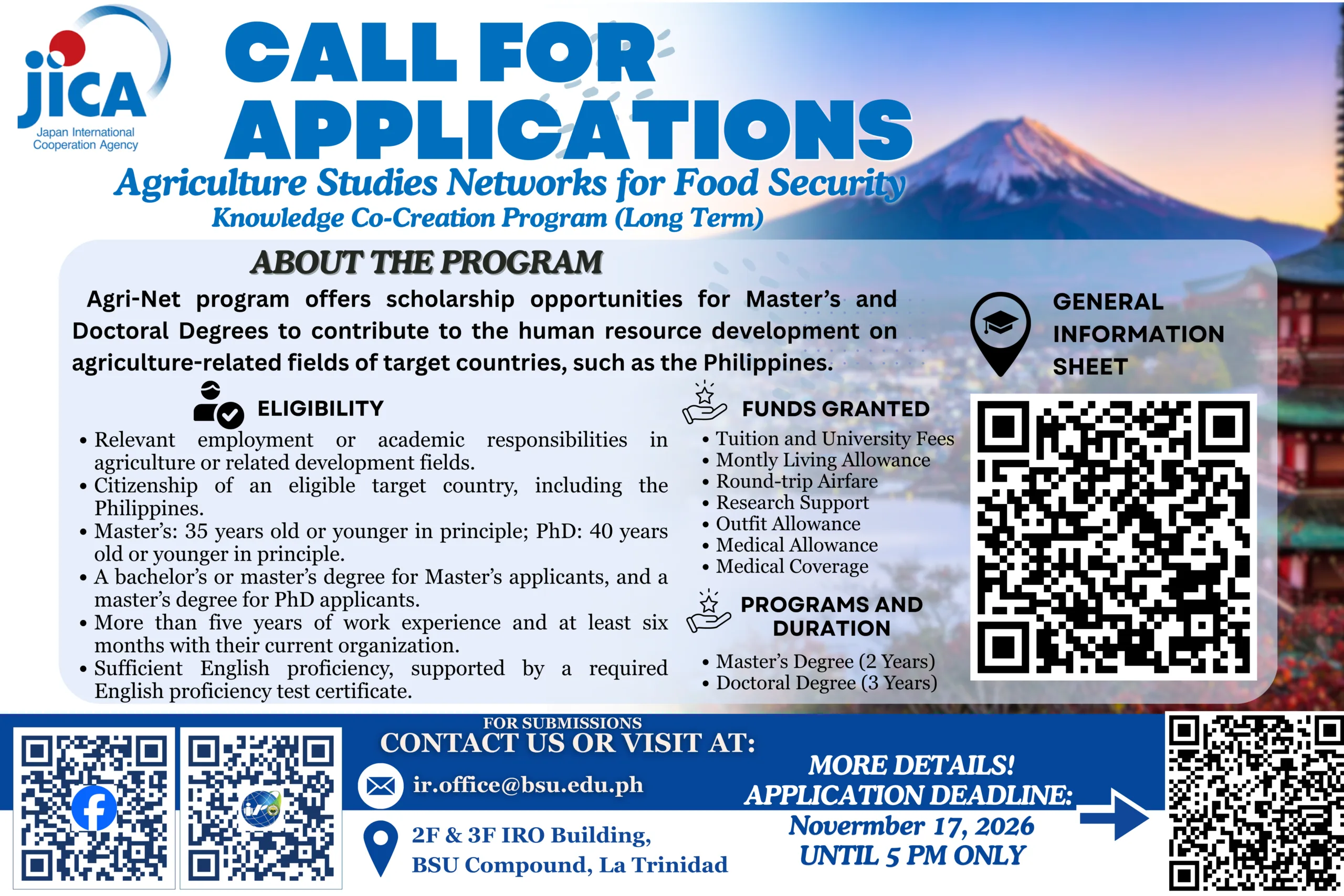
The program aims to develop human resources in agriculture-related fields and contribute to food security and agricultural development in participating countries, including the Philippines.
Scholarship opportunities include:Master’s degree program (2 years)Doctoral degree program (3 years)
Scholarship benefits include:Tuition and university feesMonthly living allowanceRound-trip airfareResearch support expensesOutfit and moving allowancesMedical coverage, subject to JICA provisions
Applicants must meet the program’s eligibility requirements, including the required educational background, relevant work experience, and English proficiency. An English proficiency test certificate is required regardless of the selected university’s requirements.
Interested applicants are encouraged to review the General Information Sheet and consult their preferred university supervisors regarding their proposed research before applying.
📅 Application Deadline: November 17, 2026 (Tuesday)Please read the following information (General Information):General Information here…Or check out more details at More details here..
#BenguetStateUniversity, #JICA, #ScholarshipCorner
[…]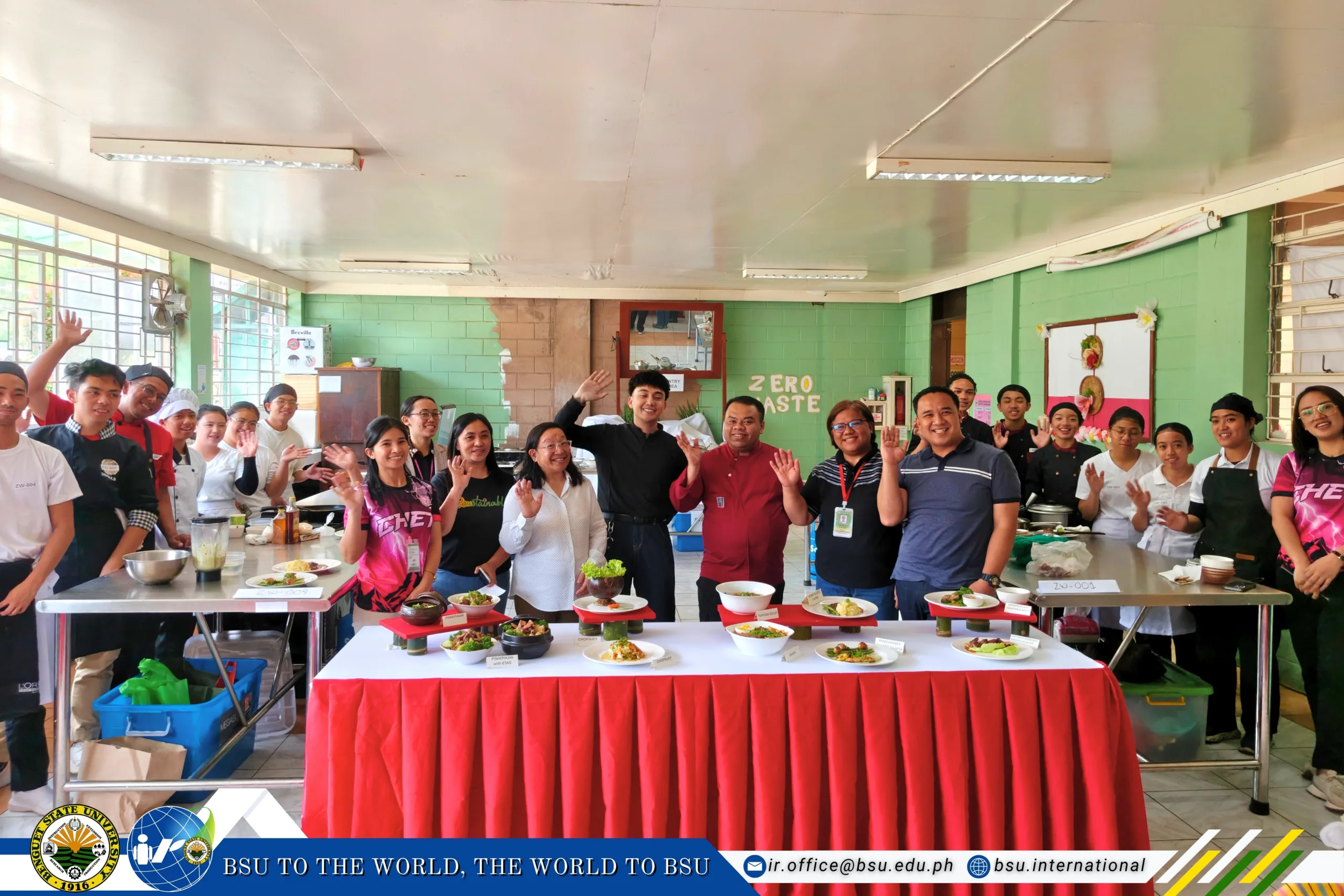
This year’s competition marked the second staging of the Zero-Waste Market Basket Competition, following its first run last year as part of the university’s United Nations celebration.
This year’s competition challenged participants to prepare both a traditional and a modern version of a dish using a surprise pantry of local and indigenous ingredients. All five participating colleges completed the challenge, showcasing their creativity, cooking skills, and resourcefulness while putting the principles of zero-waste cooking into practice.
The College of Information Sciences emerged as champion, represented by Kane Dominic David, Bougie Sarmiento, and Princess Eunice Longboan. Their entry featured Pork Barbecue with Soup on the Side as their traditional dish and Coconut Pork Barbecue with Ratatouille-Style Sauce as their modern version.
The College of Veterinary Medicine, represented by Joel M. Estabillo and Nathanael John D. Sembrano, secured first runner-up with their Honey Glazed Flambé and Miso Honey Glazed Tilapia. Meanwhile, the College of Teacher Education placed second runner-up. Its team, composed of Aaron Lee U. Corpuz, Faith P. Dong-on, and Althea Jane B. Gavino, prepared Tengba Soup as their traditional dish and Ramen as their modern version.
The other participating teams also completed the challenge. Representing the College of Forestry were Jirena A. Bencio, Elizabeth F. Lasdacan, and Hyacinth C. Padillo, who prepared Pinikpikan and Pinikpikan with Etag. The College of Arts and Humanities, represented by Jamaica P. Ogayan, Renz M. Roldan, and Kenneth W. Nabe, presented Chopsuey and its modern version with meat.
The dishes were evaluated by five judges: Greg B. Landocan, faculty member of the Department of Hospitality Management, College of Human Ecology; Sherilyn B. Balauro, faculty member of the Department of Nutrition and Dietetics, College of Human Ecology; Khael Balboa, School Director of the Philippine Institute of Culinary Arts; Angelo A. Bayacsan, faculty member of King’s College of the Philippines; and Constance Dulay-Florentin, a Home Economics educator. Aside from evaluating the entries, the judges shared practical tips and insights with the participants during and after the competition.
Supporting the activity’s zero-waste advocacy, the League of Associations at La Trinidad and Vegetable Trading Areas, Inc. donated vegetables for the competition, helping provide ingredients for the participating teams.
During the closing remarks, UBA IRO Coordinator Jeftee Ben B. Pinos-an emphasized the importance of making use of available resources. His message reflected the main purpose of the competition: to make the most of the ingredients at hand, find practical ways to reduce food waste, and recognize the value of what is readily available.
The Zero-Waste Market Basket Competition showed how traditional dishes can be given new interpretations while keeping resourcefulness and sustainability in mind. Congratulations to the winning teams and to all participating colleges for taking up the challenge and completing the competition!
#BenguetStateUniversity, #BSUstainable, #InternationalMonth2026
[…]
The activity brought together participants from the College of Human Ecology-Department of Hospitality Management, Supreme Student Government, College of Nursing, and the faculty and staff of the College of Forestry and the Center of Geoinformatics.
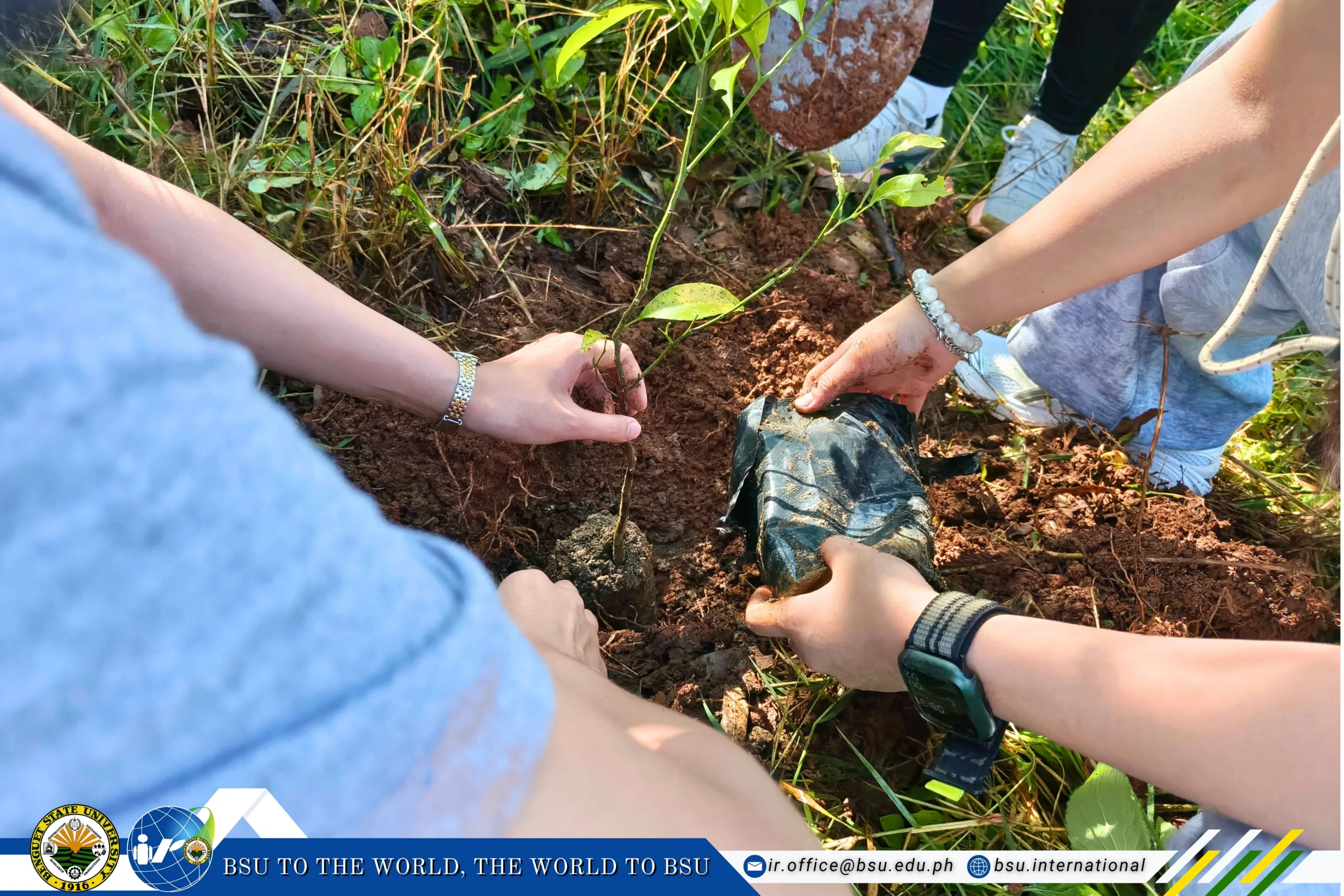
The participants tended to the fruit trees planted last year to help ensure their continued growth. They also planted new additional fruit trees, including bayabas (guava), guyabano (soursop), karamay(Star Gooseberry), langka (jackfruit), and bugnay/bignay (Currant tree).
Fruit trees were chosen for their contribution to both food production and environmental protection. As they grow, they can provide fruits for food, support local biodiversity, and help maintain a greener campus. The activity also emphasized that planting trees is only the first step; regular care and maintenance are needed to help them thrive.
Through this initiative, BSU continues to encourage the university community to take an active role in caring for the environment while recognizing the importance of trees in supporting food availability and a more sustainable campus.
#BenguetStateUniversity, #BSUstainable, #WorldFoodDay
[…]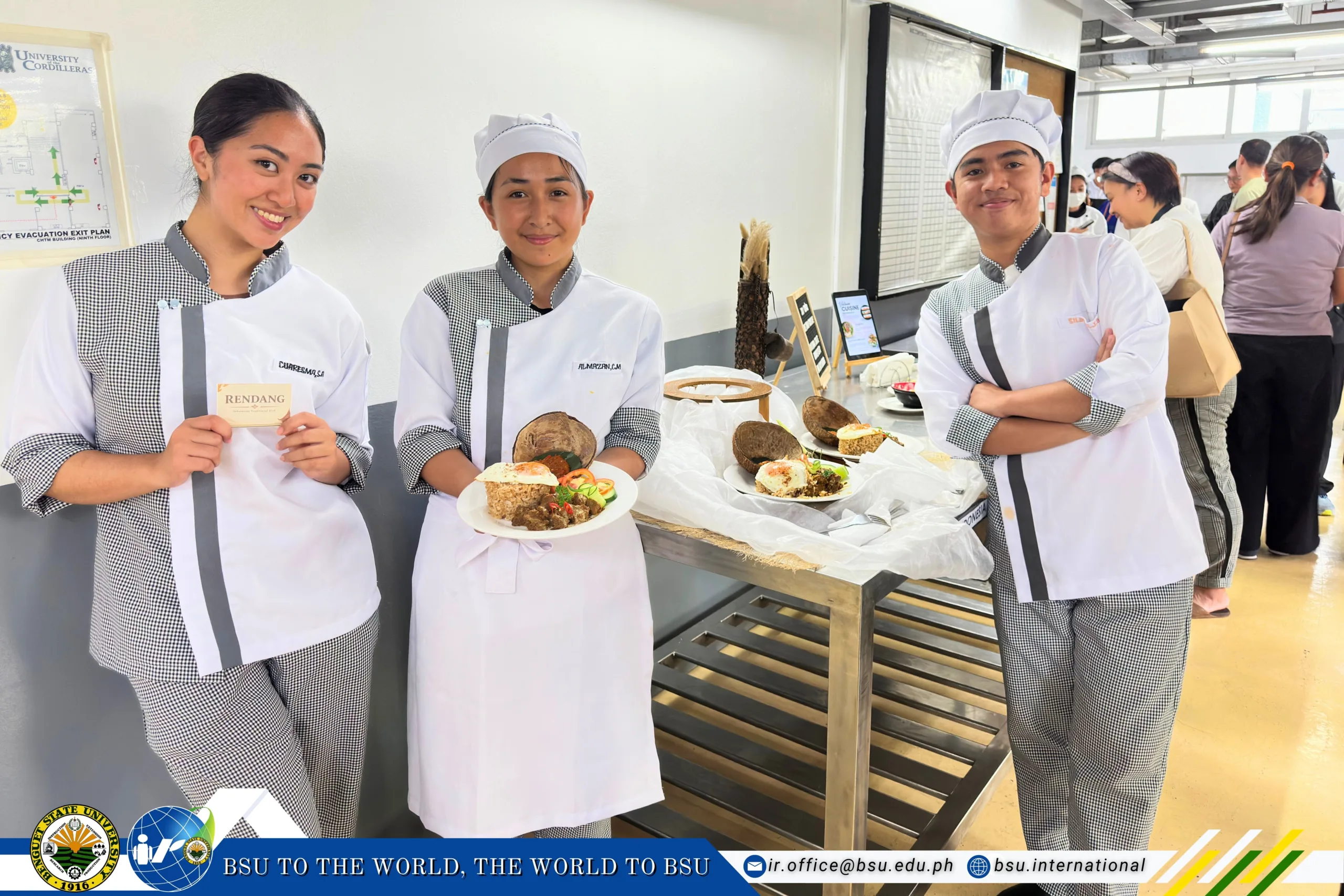
Representing BSU’s College of Human Ecology, students Shandelle A. Cuaresma, Chrizzle Mae V. Almazan, and Arthur John B. Siloy, guided by their advisers Ms. Jacqueline Gawisan and Ms. Keafleen Mating, participated in the ASEAN Culinary Fest, where they prepared “Piring Raja Nusantara” (Plate of the Kings), an Indonesian dish featuring three culinary favorites.
The dish brought together three distinctive flavors of Indonesia: Rendang, the king of meat, featuring tender beef simmered in rich and creamy spices; Nasi Goreng, the king of rice, offering smoky and savory fried rice; and Sambal Bajak, the king of spice, a sweet and fiery chili sauce. Together, these three components presented a flavorful culinary experience inspired by Indonesia’s rich food culture.
Through their participation, the BSU delegation contributed to the celebration of ASEAN’s cultural diversity and the role of food in fostering intercultural understanding. The activity provided an opportunity for students to showcase their culinary skills, appreciate the traditions of another ASEAN nation, and strengthen connections among participating institutions through shared cultural experiences. //R.Day-ong
#ALLUYON2026, #BenguetStateUniversity, #TheWorldToBSU
[…]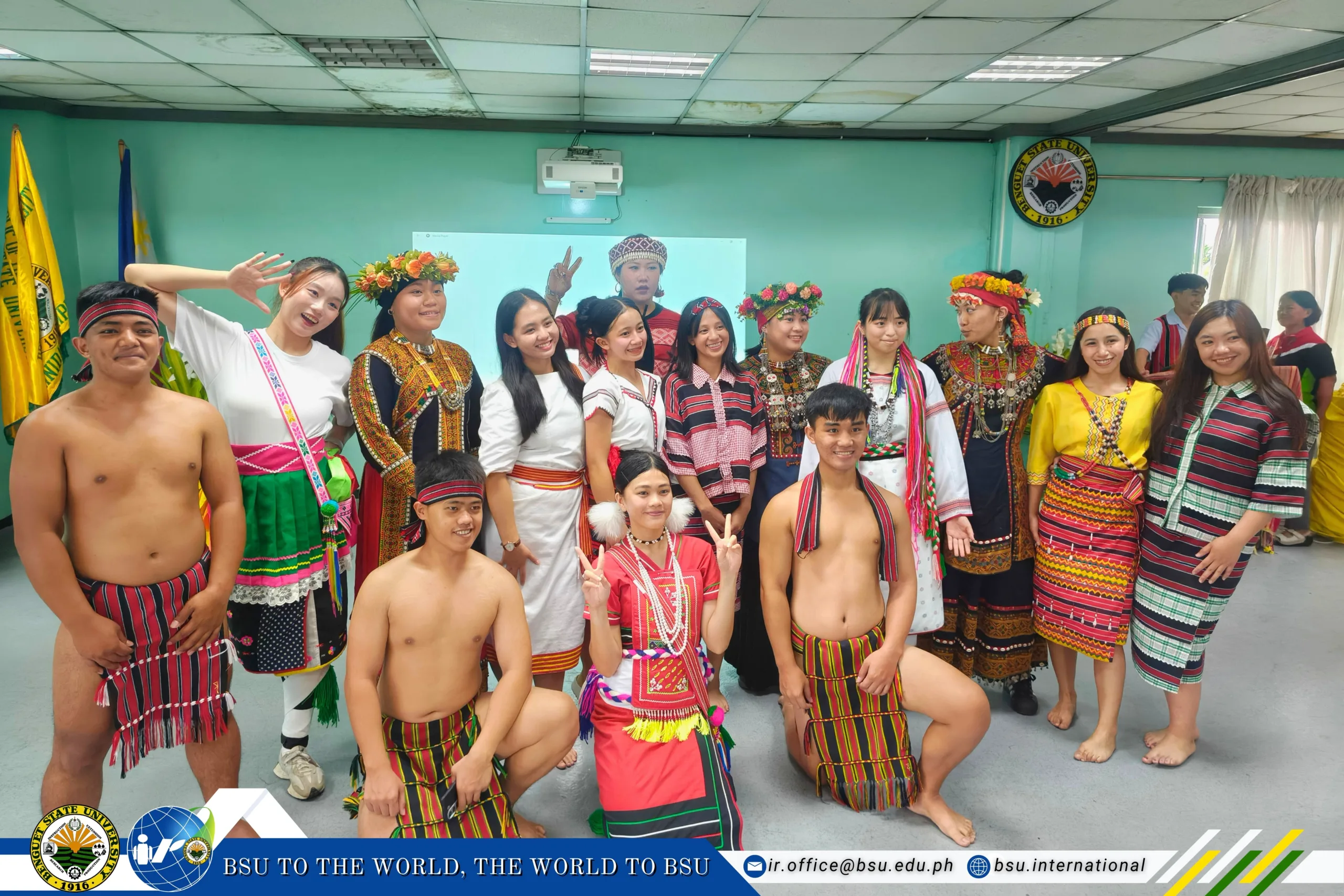
The afternoon session commenced with an informative presentation by the Taiwanese delegation introducing Taiwan’s sixteen officially recognized indigenous tribes: the Amis, known for their harvest festivals and vocal harmonies; the Atayal, recognized for weaving traditions and facial tattooing; the Paiwan, renowned for wood carving and stone-slab architecture; the Bunun, famous for polyphonic singing; the Puyuma, noted for their youth age-grade system; the Rukai, who honor the lily flower as a sacred symbol; the Tsou of Alishan, deeply connected to forest traditions; the Saisiyat, known for the biennial Pas-ta’ai ritual; the Yami (Tao), ocean-farers famous for hand-carved boats; the Thao, known for pestle music around Sun Moon Lake; the Kavalan, skilled in banana-fiber weaving; the Truku, celebrated for hunting lore and weaving; the Sakizaya, known for their distinct ancestral rites; the Sediq, high-mountain dwellers steeped in weaving and lore; the Hla’alua, guardians of the sacred shell rituals; and the Kanakanavu, dedicated to language and ritual revitalization.
Following this introduction, the Taiwanese students performed three traditional songs: the interactive Clap Song, which uses rhythm to express joy; Yul Lore’s, a reflective piece rooted in indigenous storytelling; and the Friends Song, a welcoming melody celebrating unity and hospitality.
The focus then shifted to the local cultural showcase as the student performance group Kontad presented a suite of traditional Cordilleran dances. These included Tinatakyad, a dance featuring strong and rhythmic footwork; Tayaw, a sacred Benguet dance expressing gratitude to ancestors through wing-like arm movements; Bendian, a celebratory circle dance marking victory and community unity; Boogie, a lively social dance adapted into regional gatherings; and Tadok alongside Salidsid, expressive courtship dances reflecting grace and community harmony. Following their performances, members of Kontad introduced and detailed the various traditional attires of the Cordillera, explaining the intricate patterns and cultural symbolism embedded within each garment.
The exchange concluded with an interactive workshop and inspiring closing messages. The Taiwanese students first led the audience through the basic steps of traditional Taiwanese dances, prompting students from History 3A and Kontad to join them on the dance floor. In turn, members of Kontad taught the Taiwanese guests the fundamentals of Cordilleran dances, culminating in a festive joint performance where participants danced together.
To wrap up the program, Dr. Richard H. Kinnud delivered an inspiring message highlighting the cultural similarities between Taiwan and the Cordillera. He emphasized that education goes beyond the classroom, as meaningful cultural exchanges allow students to learn from different experiences and develop openness, empathy, and respect for diversity.
Dr. Yih-Jiun Lee, Dean of Student Affairs of CCU, then expressed her appreciation to the BSU International Relations Office (IRO) for the opportunity to learn and share cultural experiences. She remarked that the two regions are “not just neighbors” but are also connected through culture and history, expressing her hope that their friendship would continue to grow.
Finally, Ms. Gwyneth A. Sildon, IRO Coordinator, delivered the closing remarks, emphasizing that the gathering went beyond sharing cultural knowledge and traditions, as it also helped build friendships and strengthen understanding between the participating communities.✍️ D. Waclin, CSS History Intern
#BenguetStateUniversity, #ChineseCultureUniversity, #PartnershipsCorner
[…]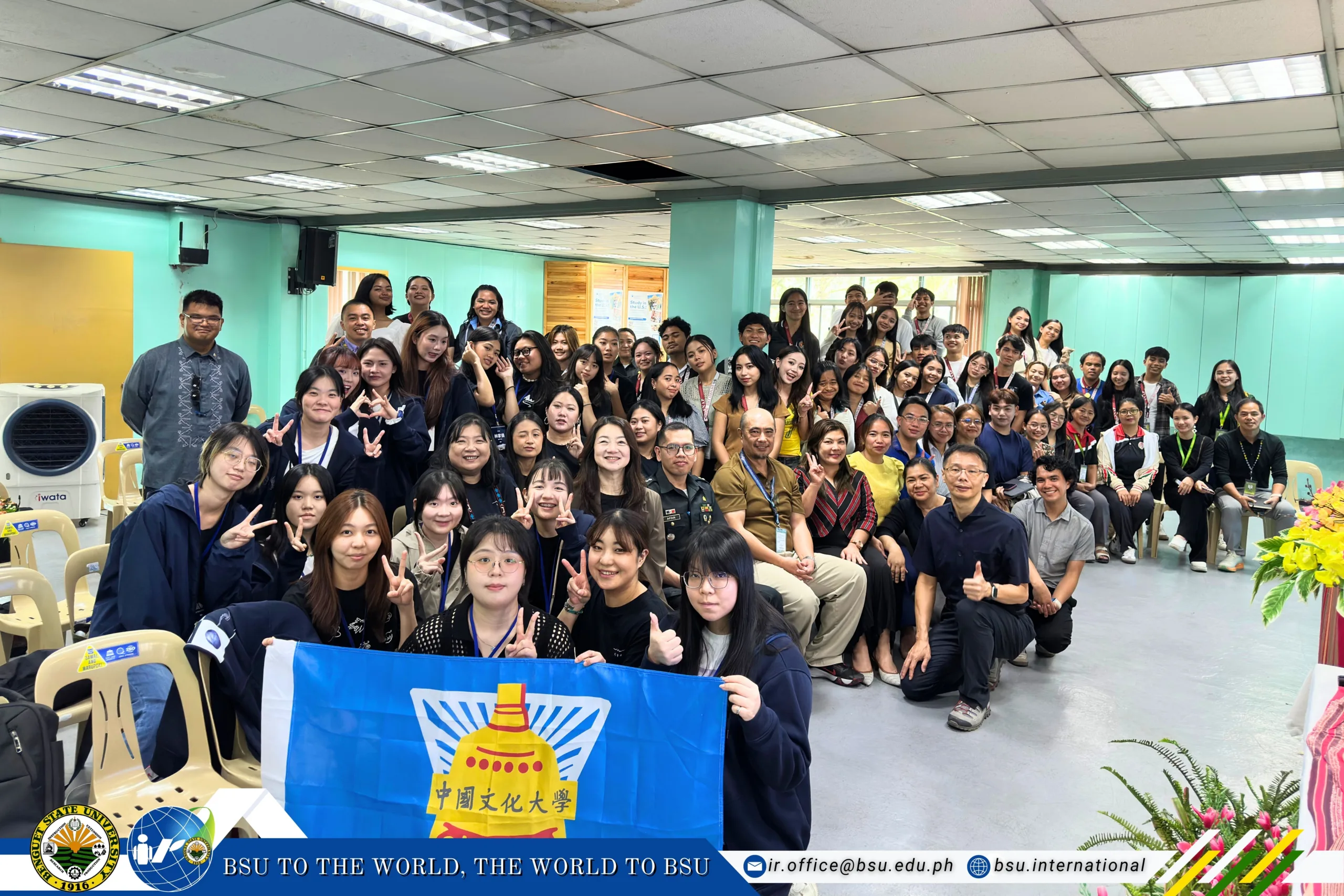
The program opened with an Indigenous prayer led by Dr. Penelope A. Tica-a, followed by the opening remarks of Rex John G. Bawang, Director of the BSU International Relations Office. Bawang expressed his appreciation to Dr. Tica-a for sharing the Cordilleran chant and highlighted the similarities between the Indigenous cultures of Taiwan and Benguet.
BSU President Kenneth A. Laruan welcomed the delegates and recalled his early career as a research assistant at the university. He emphasized the importance of learning through experience and collaboration and challenged the students to bridge formal sciences and traditional sciences.
The first set of presentations focused on cultural identity and peace. Susie Bangles-Baldo discussed the Indigenous communities of the Cordillera Administrative Region, emphasizing that cultural identity is deeply connected to land, culture, clan, and family. She also discussed the Bodong system as a traditional framework for community relations and conflict resolution.
Sylvette Joy M. Licyayo followed with a presentation on integrating peace into education. She emphasized the importance of considering local experiences and Indigenous perspectives in peace education. She also discussed Tawid Cordillera, highlighting the importance of viewing people as stewards of their cultural heritage. Her presentation further touched on the relationship between environmental protection and peace within communities.
LTC. Reynan C. Afan then discussed regional identity and the challenges faced by communities today. He highlighted the distinctiveness of Cordilleran identity while cautioning against romanticizing regional experiences. He also discussed the challenges of putting policies into practice, as well as concerns involving tolerance, cooperation, and digital manipulation.
The program continued with thematic presentations on Indigenous traditions and culture. Melecio D. Palsaan Jr. discussed Begnas in Bauko, explaining its significance as an expression of the community’s identity, beliefs, values, and spirituality. Through its eight distinct rituals, the tradition reflects respect for elders, gratitude, the seeking of blessings, and harmony between the community and the spiritual world.
Emielou F. Castillo followed with a presentation highlighting the connection between language, culture, and society. The discussion emphasized the importance of understanding how language and cultural practices shape people’s experiences and relationships.
The session concluded with a presentation by Dr. Yih-Jiun Lee of Chinese Culture University, who introduced CCU and its Indigenous Student Resource Center (ISRC). She shared the center’s background, vision, and mission, highlighting its commitment to supporting Indigenous students, promoting multicultural understanding, and building academic and cultural connections with partner institutions.✍️K. Komicho, CSS History Intern
#BenguetStateUniversity, #ChineseCultureUniversity, #PartnershipsCorner
[…]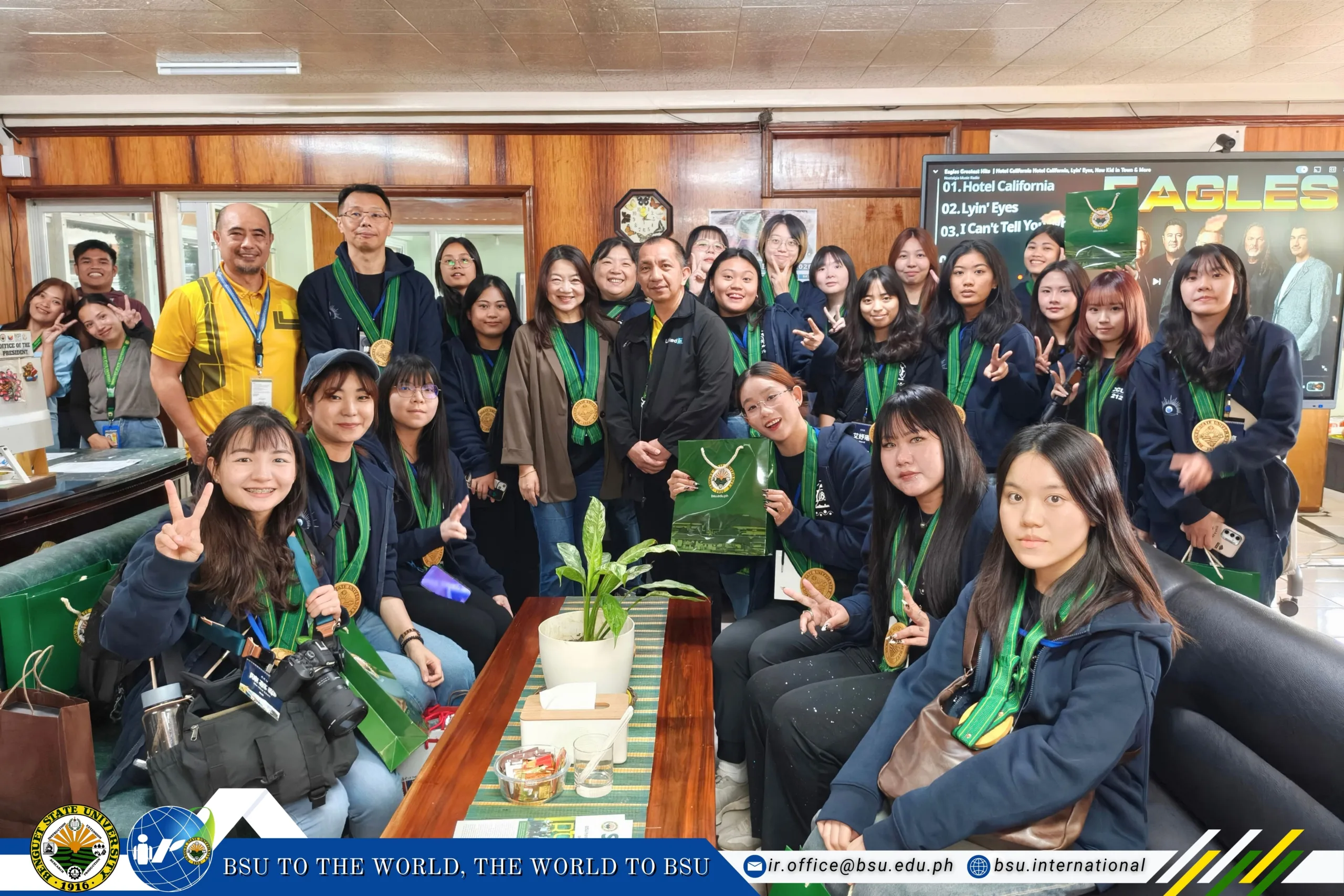
The delegation began their visit with a courtesy call at the Office of the University President, where they were welcomed by BSU President Kenneth A. Laruan and International Relations Office (IRO) Director Rex John G. Bawang. During the meeting, President Laruan and the head of delegation, Yih-Jiun Lee, PhD, introduced their respective universities and shared their institutional backgrounds.
The visit continued at the BSU Centennial Park with a ceremonial tree planting, with the assistance of Mr. Levi Ezekiel Daipan, College of Forestry IRO Coordinator. The delegates and university representatives planted two narra trees, symbolizing the growing partnership between BSU and CCU and the hope that their collaboration will continue to grow and strengthen over time, just as the trees take root and grow.
The delegates also visited the BSU Museum to learn about the university’s history and the cultural heritage of the Cordillera region. They later proceeded to the Cordillera Regional Apiculture Center, where they learned about BSU’s beekeeping initiatives. The CRAC staff and internas introduced them to the university’s beekeeping projects and shared insights into its ongoing research, training, and extension activities.
The delegation will continue their visit to BSU on October 9, 2026, for an academic and cultural exchange program with BSU faculty members and student cultural performers, providing another opportunity to share knowledge, experiences, and cultural traditions.
#BenguetStateUniversity, #ChineseCultureUniversity, #PartnershipsCorner
[…]
The visiting volunteers were Ms. Mina, JOCV assigned in Cebu City, and Mr. Kanji, assigned in La Union. Their visit aimed to provide an opportunity to observe and learn from the agricultural activities conducted at BSU, while allowing the participants to compare agricultural practices, management strategies, and problem-solving approaches developed in response to different environmental conditions.
The visitors were accompanied by Ms. Otoha, JOCV assigned to BSU’s Pomology Project, together with Ms. Maricel Dacnes and Ms. Dianne Pingalo of the College of Agriculture.
The learning visit began with a courtesy visit to the Office of the University President, where the volunteers were warmly welcomed by Vice President for Business Affairs Josel M. Florentin, International Relations Office (IRO) Director Rex John G. Bawang, and College of Agriculture IRO Coordinator Jake L. Galian.
The group then proceeded to the College of Agriculture, where they met with faculty and staff, including colleagues involved in the Pomology Project. They also met with College Dean Constantino T. Sudaypan, who shared the itinerary and activities prepared for the day.
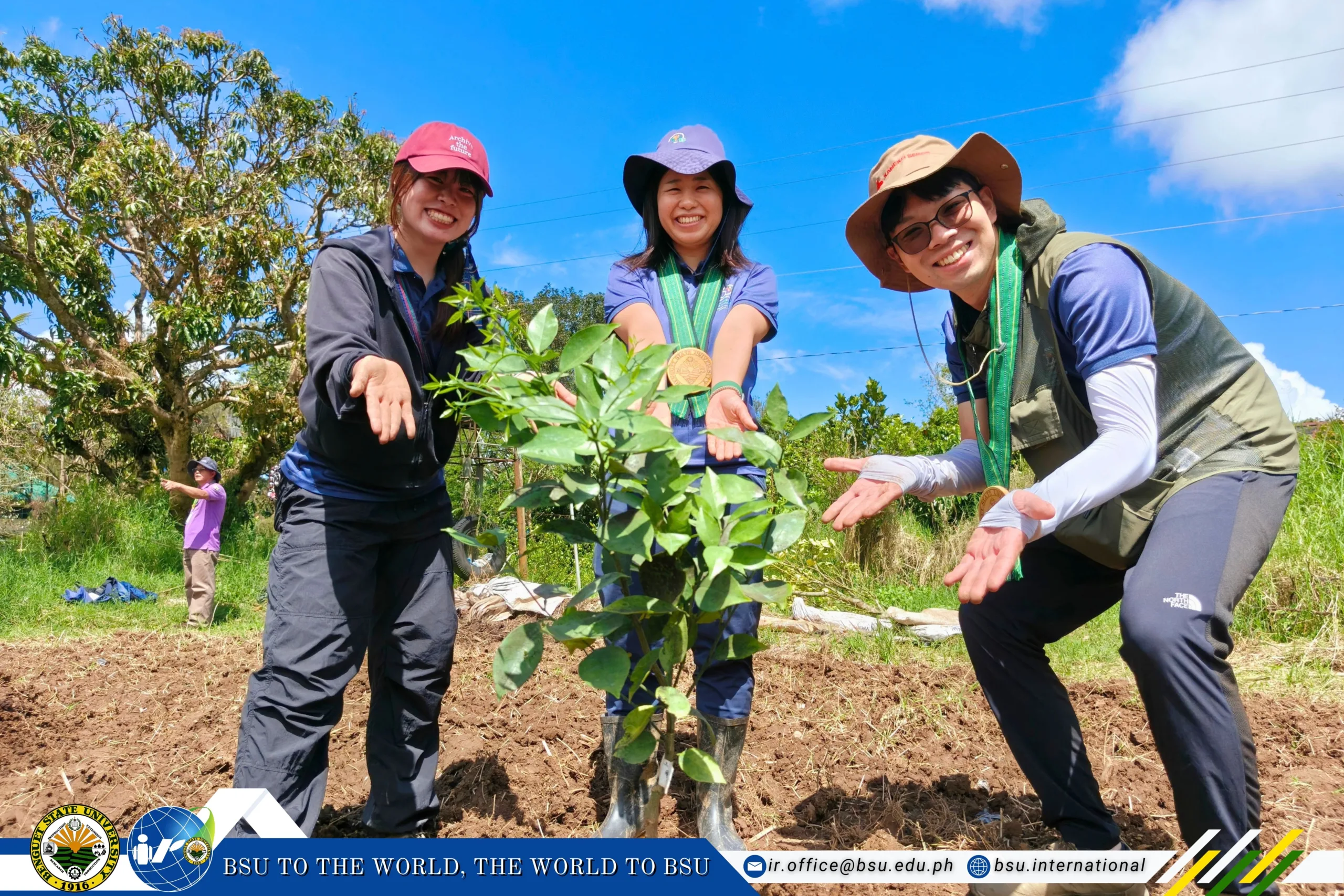
The agricultural learning tour continued at the Pomology Project site, where the three JOCVs participated in a ceremonial planting of sweet orange trees. The group then proceeded to the BSU Demonstration Farm Project of the Office of Extension Services (OES) and the Cordillera Organic Agriculture Research and Development Center (COARDC), where they explored the University’s practices in organic farming, good agricultural practices, and sustainable agricultural production. Agricultural Technician II Mr. Casmir Ligat guided the group through the OES Demo Farm, while COARDC Director Ms. Precil Sales shared the center’s ongoing initiatives on organic farming. The visits provided the volunteers with firsthand insights into how BSU applies sustainable and context-responsive farming approaches in the highland environment.
In the afternoon, the group proceeded to the Northern Philippines Root Crops Research and Training Center (NPRCRTC). They were toured by Mr. Gabby Dao-ines, a former Japan agricultural trainee and now a researcher at the center. He shared the center’s work in root crop production and research, including innovative production systems utilizing hydroponic, aeroponic, and drip technologies.
The final stop was the Institute of Highland Farming Systems and Agroforestry (IHFSA), where the group met with Mr. Junee Mark D. Gayaso and Mr. Jaymar Ross P. Garcia, IHFSA Staff. The visitors learned about the different coffee species grown by the University and in the region, as well as the coffee harvesting, production, and post-harvest processes practiced by the institute.
The visit gave the JOCVs an opportunity to see and learn from the different agricultural activities being conducted at BSU. It also allowed the participants to share experiences and practices from their respective areas, creating an avenue for learning and exchange within the agricultural community.
#AgriculturalPractices, #BenguetStateUniversity, #JOCV
[…]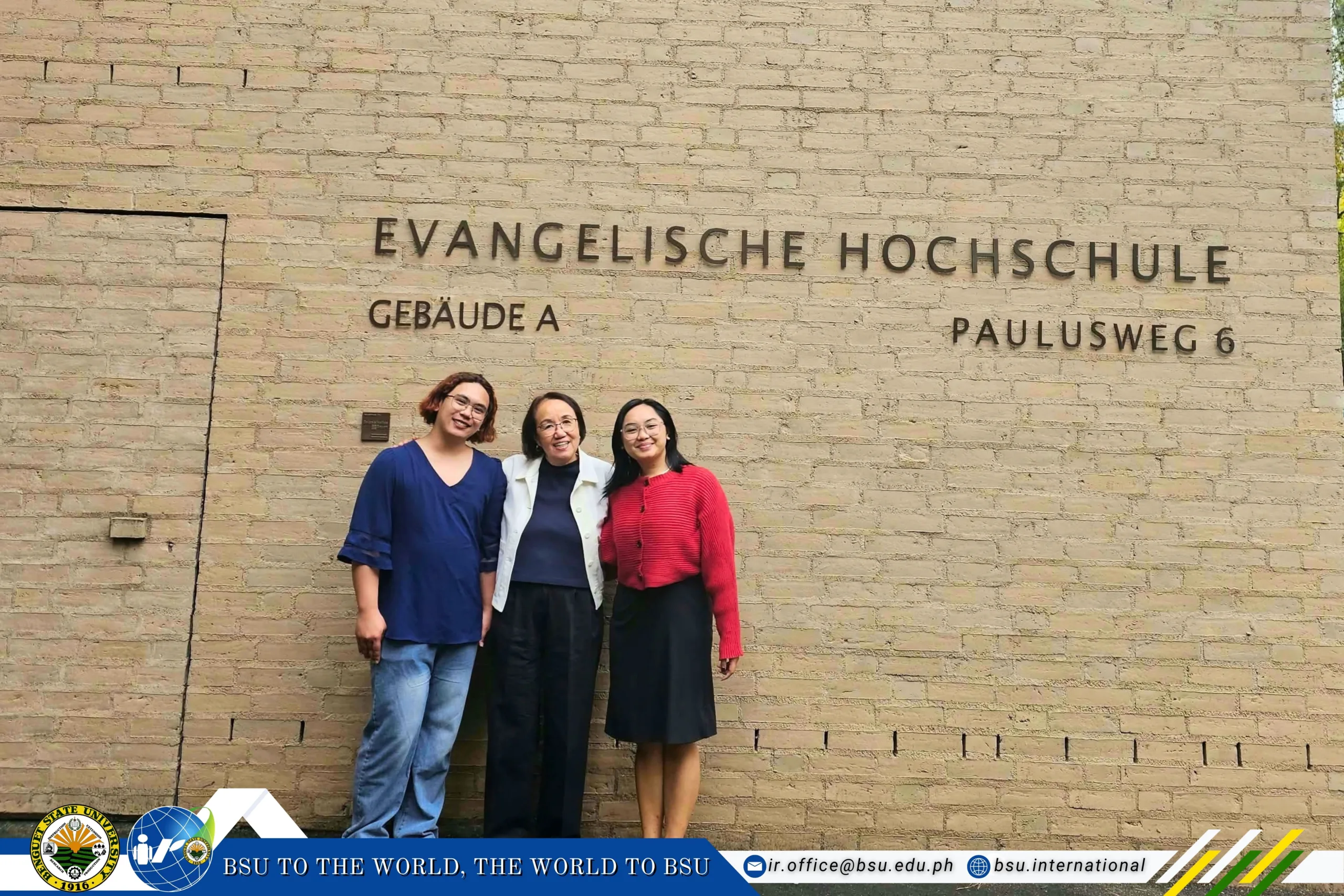
This engagement reflects BSU’s strong commitment to its vision and mission of fostering global citizenship and academic excellence. It is implemented through the university’s flagship internationalization programs: BSU-BUILD (Building University Internationalization Linkages and Development), ACE (Academic Collaborations and Engagement), and ASSIST (Advancing Services and Support for Internationalization through Sustainable Transformation). By joining the exchange program, Budikey and Borromeo exemplify BSU’s dedication to preparing students for meaningful participation in international academic communities, strengthening institutional linkages, and advancing sustainable transformation through education.
Congratulations Bannie and Kim!
#BenguetStateUniversity, #EHLGermany, #StudentExchangeProgram
[…]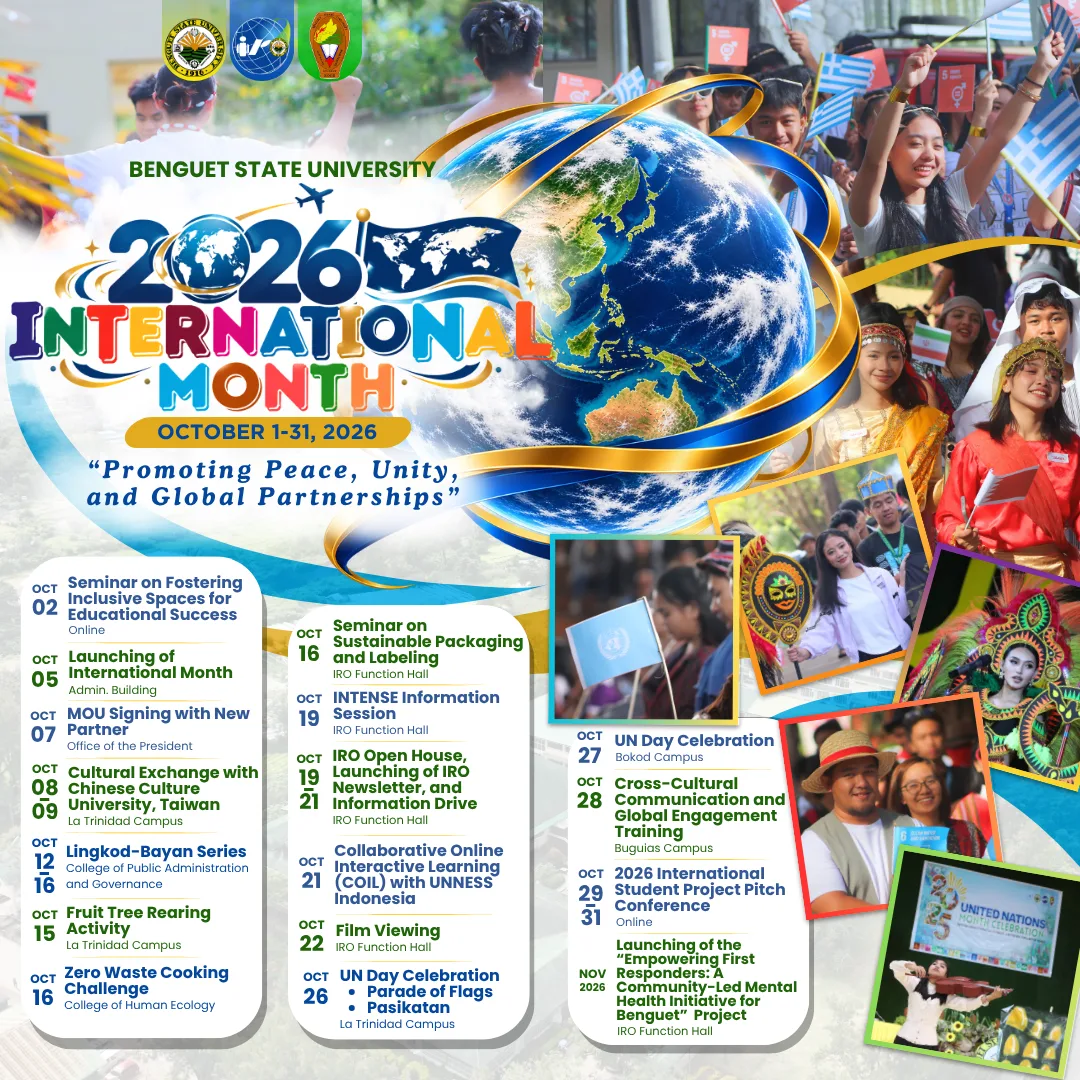
Here’s a look at the activities lined up for this year:📌 Oct 02 – Seminar on Fostering Inclusive Spaces for Educational Success📌 Oct 05 – Launching of International Month & MOU Signing with New Partner📌 Oct 08–09 – Cultural Exchange with Chinese Culture University, Taiwan📌 Oct 10 – “Empowering First Responders” Seminar📌 Oct 12–16 – Lingkod-Bayan Series📌 Oct 15 – Fruit Tree Rearing Activity📌 Oct 16 – Zero Waste Cooking Challenge & Seminar on Sustainable Packaging and Labeling📌 Oct 19–21 – INTENSE Information Session & IRO Open House, Newsletter Launch, and Information Drive📌 Oct 21 – Collaborative Online Interactive Learning (COIL) with UNNESS Indonesia📌 Oct 22 – Film Viewing📌 Oct 26–27 – UN Day Celebrations, including the Parade of Flags and Pasikatan📌 Oct 28 – Cross-Cultural Communication and Global Engagement Training📌 Oct 29–31 – 2026 International Student Project Pitch Conference
🌏 And there’s more to come! A month filled with learning, cultural exchange, sustainability, and opportunities to connect with the wider world awaits.
Keep an eye on the BSU International Relations Office page as we share more details about each activity, along with announcements, reminders, and event highlights.
Follow us and stay updated! Don’t miss the individual event posts coming your way.
See you this International Month 2026!
#BenguetStateUniversity, #BSUstainable, #InternationalMonth2026
[…]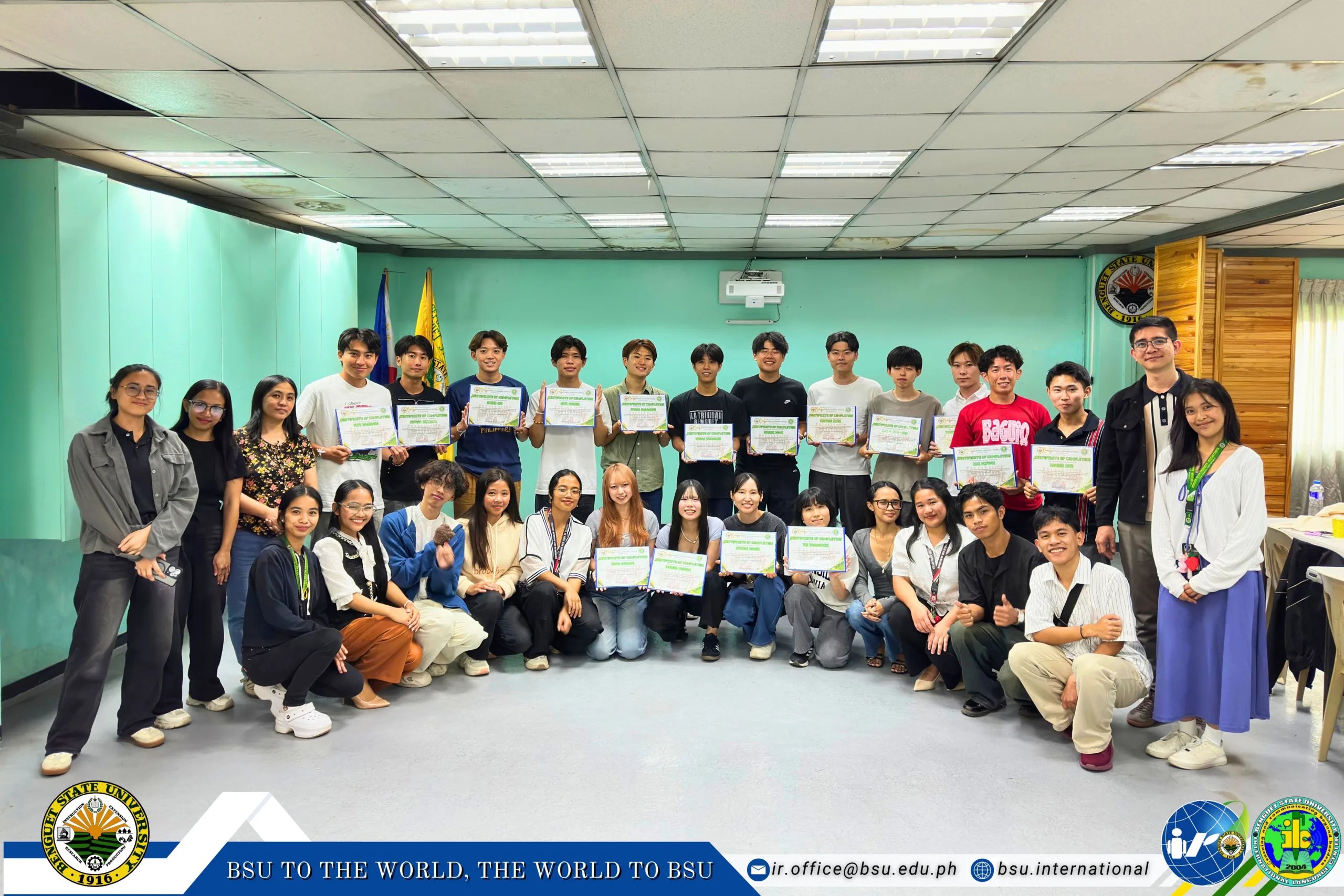
The delegates shared how their first impressions of Benguet, BSU, and the local community changed throughout their stay, along with the lessons and discoveries they gained. They also expressed their appreciation to those who welcomed and guided them, and their continued interest in improving their English language skills.
The program formally concluded with the awarding of certificates, followed by a farewell dinner with College of Arts and Humanities students and staff from the International Relations Office and International Language Center.
#BenguetStateUniversity, #KyushuInstituteofTechnology, #SocioCulturalImmersion
[…]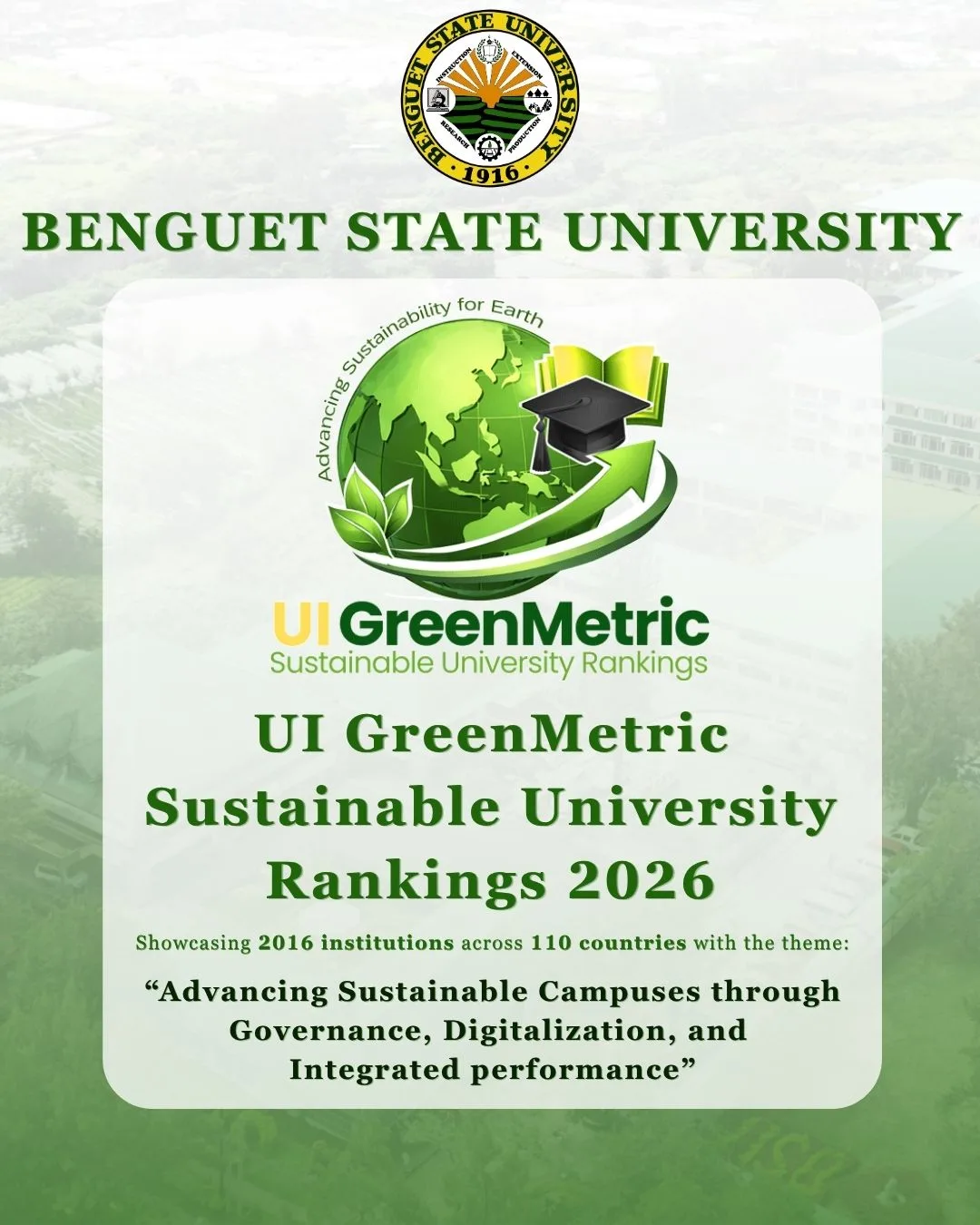
This year’s ranking assessed 2,016 institutions from 110 countries, reflecting the growing global commitment of higher education institutions toward environmental sustainability and responsible campus development.
Building on its debut in the rankings last year, BSU has demonstrated remarkable progress, moving from 674th globally in 2025 to 558th in 2026. The University likewise improved its national standing, advancing from 29th to 22nd in the Philippines, while moving from 4th to 3rd among HEIs in CAR.
More significantly, BSU ranked 1st among all State Universities and Colleges (SUCs) in the Cordillera Administrative Region, affirming its continuing commitment to sustainability, innovation, and responsible stewardship as a public higher education institution.
The 2026 rankings mark the transition from the UI GreenMetric World University Rankings to the UI GreenMetric Sustainable University Rankings, with the theme “Advancing Sustainable Campuses through Governance, Digitalization, and Integrated Performance.” A new Governance and Digitalization (GD) criterion was also introduced.
We extend our heartfelt congratulations to the Benguet State University community for this achievement, as well as to all Higher Education Institutions in the Cordillera Administrative Region, the Philippines, and around the world that participated in this year’s UI GreenMetric World University Rankings.
#BenguetStateUniversity, #BSUstainable, #UIGreenMetric
[…]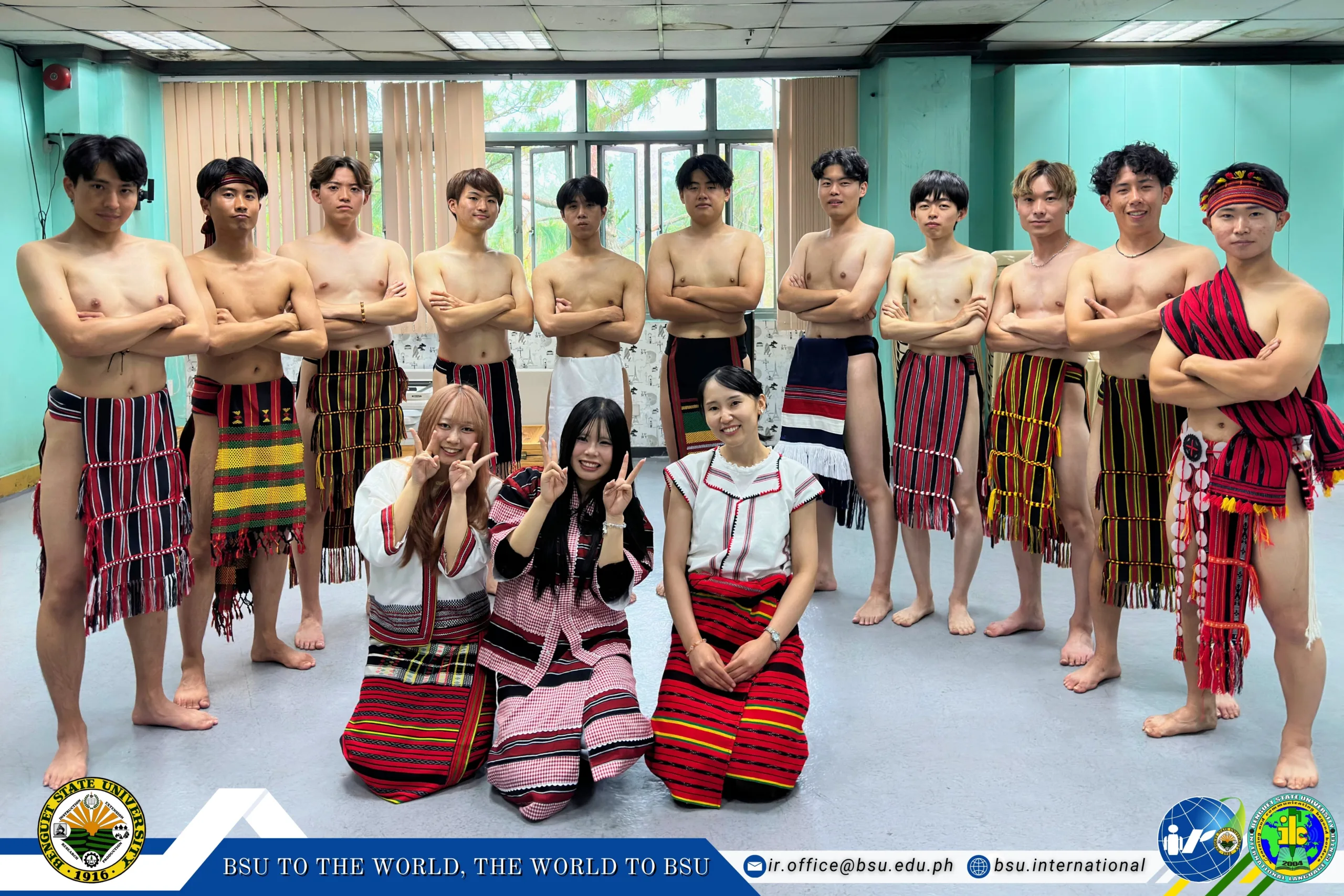
The delegates also engaged in the rich cultural dances of the region with the assistance of the BSU-KONTAD (Highland Cultural Dance Troupe). Through the demonstration and learning of various traditional dances, the group gained a deeper appreciation of the region’s cultural expressions and traditions. Adding to the experience, the delegates had the opportunity to wear cultural attires representing the different provinces of the Cordillera.
The delegates then visited the Diplomat Hotel and Mirador Heritage and Eco Park, where they were introduced to the history and significance of these well-known landmarks.
Through these activities, the Kyutech delegates experienced the Cordillera beyond its landscapes – discovering its living traditions, artistry, and cultural identity while strengthening the bonds of friendship and cultural exchange between Japan and the Philippines.
#BenguetStateUniversity, #KyushuInstituteofTechnology, #SocioCulturalImmersion
[…]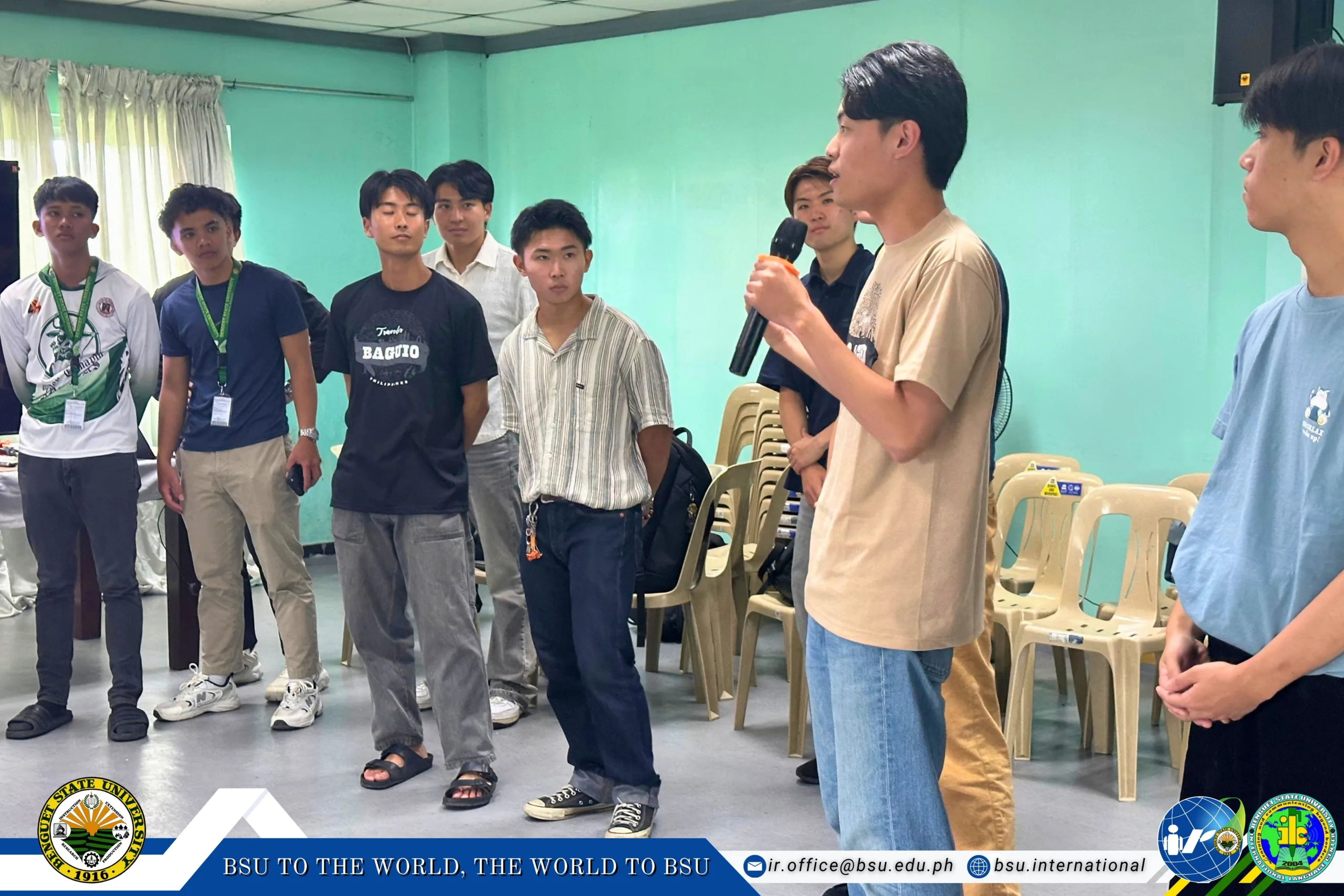
As part of the activity, the delegates shared aspects of Japanese culture and traditions, giving BSU students an opportunity to learn more about Japan through direct interaction with the delegates.
They also introduced basic Japanese vocabulary and grammar, which the students could use as an introduction to the Japanese language and its everyday expressions.
Through the classroom activities, the Kyutech delegates and BSU students shared knowledge and experiences while strengthening their understanding of each other’s language and culture.
#BenguetStateUniversity, #KyushuInstituteofTechnology, #SocioCulturalImmersion
[…]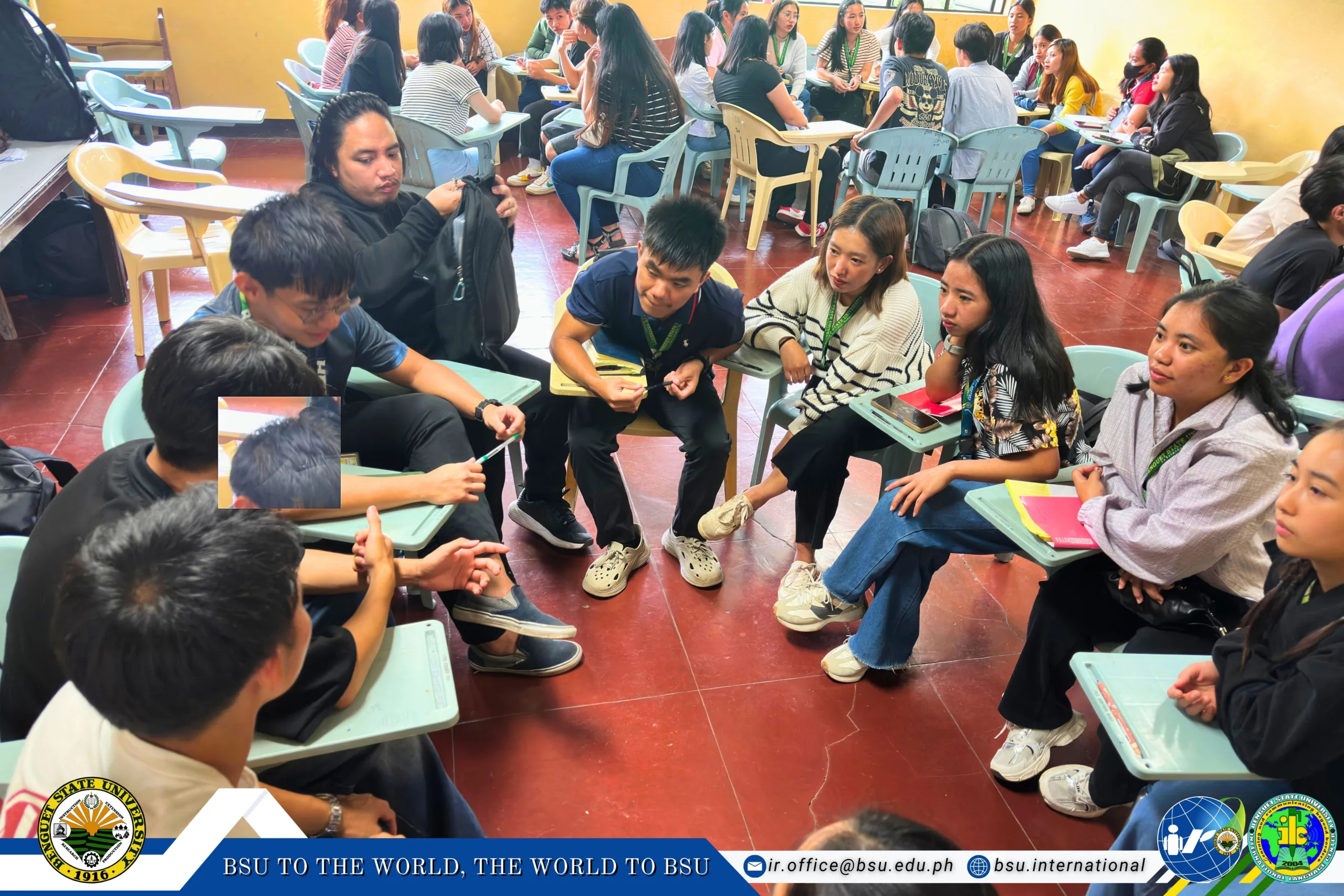
As part of the activity, the delegates shared aspects of Japanese culture and traditions, giving BSU students an opportunity to learn more about Japan through direct interaction with the delegates. They also introduced basic Japanese vocabulary and grammar, which the students could use as an introduction to the Japanese language and its everyday expressions.
Through the classroom activities, the Kyutech delegates and BSU students shared knowledge and experiences while strengthening their understanding of each other’s language and culture.
#BenguetStateUniversity, #KyushuInstituteofTechnology, #SocioCulturalImmersion
[…]
Organized by the Food and Fertilizer Technology Center (FFTC) in collaboration with the Taiwan Agricultural Research Institute (TARI), Taiwan Livestock Research Institute (TLRI), and Taichung District Agricultural Research and Extension Station (TCDARES), the workshop convened experts, policymakers, and industry leaders from across the Asia-Pacific region. The discussions centered on the theme “Smart Low Carbon Agrifood Systems: Digital Innovation in Crops, Livestock, and Pathways to Net Zero.”
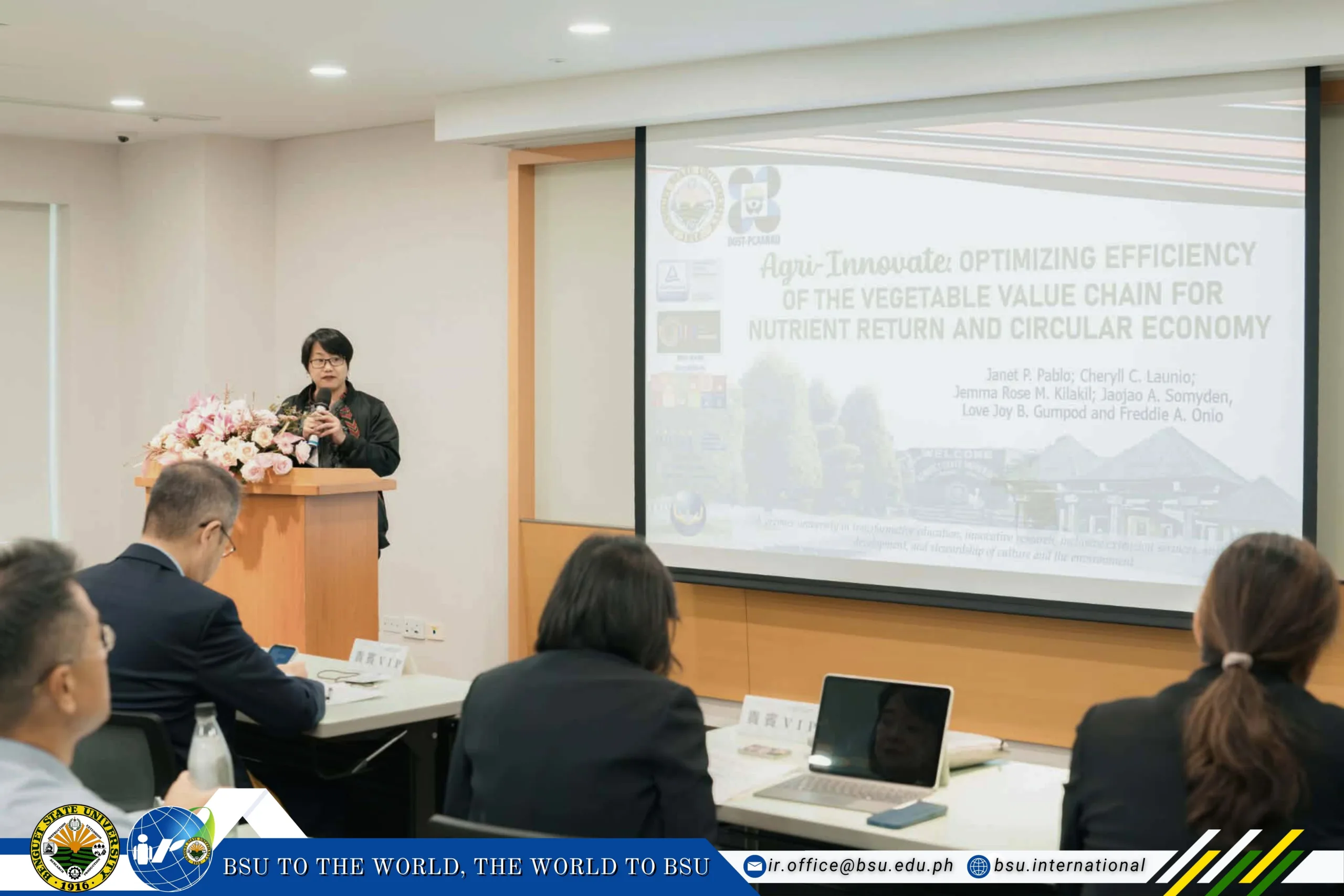
Dr. Pablo delivered a presentation entitled “AGRINNOVATE: Optimizing Efficiency of the Vegetable Value Chain for Nutrient Return and Circular Economy.” Her talk highlighted BSU’s initiatives in advancing sustainable agriculture through innovation and circular economy practices.
Over the three day program, participants engaged in sessions on sustainable soil management, water efficient crop production, livestock technologies, and smart electrification for agriculture. Key highlights included presentations on IoT-based soil moisture management, blockchain-enabled carbon credits for livestock, and Philippine innovations in low-carbon rice farming.
The workshop also featured roundtable discussions on bridging data gaps and adapting policies for sustainable agrifood systems. Closing remarks emphasized the importance of collaborative pathways toward achieving net zero agriculture in the Asia Pacific region.
Benguet State University takes pride in Dr. Pablo’s contribution to this international dialogue, underscoring the University’s commitment to advancing research, innovation, and sustainable development in agriculture.
Photo Credit: Dr. Janet P. Pablo
#AGRINNOVATE, #BenguetStateUniversity, #SustainableAgriculture
[…]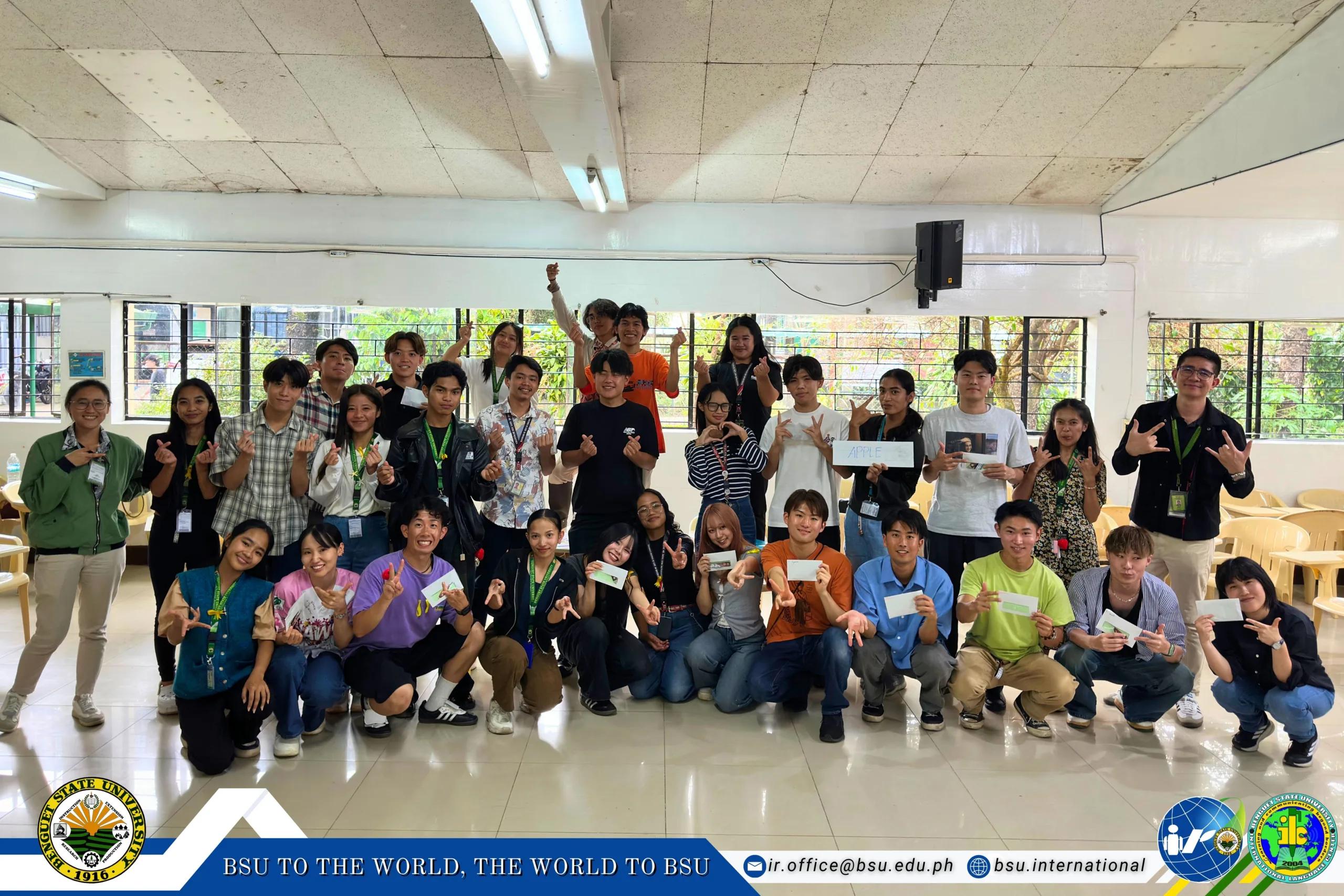
Following the interactive activities, the participants shared their insights and reflections, highlighting the lessons and experiences gained.
The activity served as an avenue for the Kyutech delegates and BSU students to build connections, learn from one another, and strengthen intercultural exchange between Japan and the Philippines.
#BenguetStateUniversity, #KyushuInstituteofTechnology, #SocioCulturalImmersion
[…]