


















Benguet State University (BSU) contributes to the achievement of Sustainable Development Goal 2 (Zero Hunger) through its integrated functions of instruction, research, extension, and technology transfer that enhance agricultural productivity, promote sustainable farming practices, and strengthen the resilience of farming communities. As a leading agricultural higher education institution in the Cordillera region, BSU serves as a key source of knowledge, innovation, and technical expertise for farmers, agricultural enterprises, and other stakeholders. Through agricultural research, farmer education and training, community-based extension programs, sustainable agriculture initiatives, and the dissemination of technologies and best practices, the university supports improved food production systems, sustainable resource management, and livelihood development. These efforts translate scientific knowledge into practical solutions that improve food security, empower farming communities, and contribute to sustainable agricultural development, demonstrating BSU’s strong commitment to advancing SDG 2 (Zero Hunger).
Campus Food Waste
Benguet State University (BSU) measures and tracks food waste generated from its food service operations as part of its institutional waste management framework aligned with the Ecological Solid Waste Management Act of 2000 (RA 9003) and the University’s sustainability policies. Waste minimization practices, including segregation, composting, resource recovery, and reuse, are implemented campus-wide to reduce environmental impacts and promote circular resource use.
In 2025, BSU’s university canteen and Food Processing Center recorded a total of mt of organic waste that includes food waste, demonstrating the University’s systematic monitoring of food waste streams. Collected food and other biodegradable wastes are further utilized through sustainable waste management initiatives, including the Black Soldier Fly (BSF) farming program implemented by the Cordillera Center for Animal Research and Development (CCARD). Through capacity-building activities conducted in 2025 and 2026, BSU promoted Black Soldier Fly technology as an innovative approach to converting organic waste into alternative animal feed and organic fertilizer. These initiatives support the monitoring, diversion, and productive utilization of food waste while advancing a circular bioeconomy and reducing waste sent to disposal facilities.
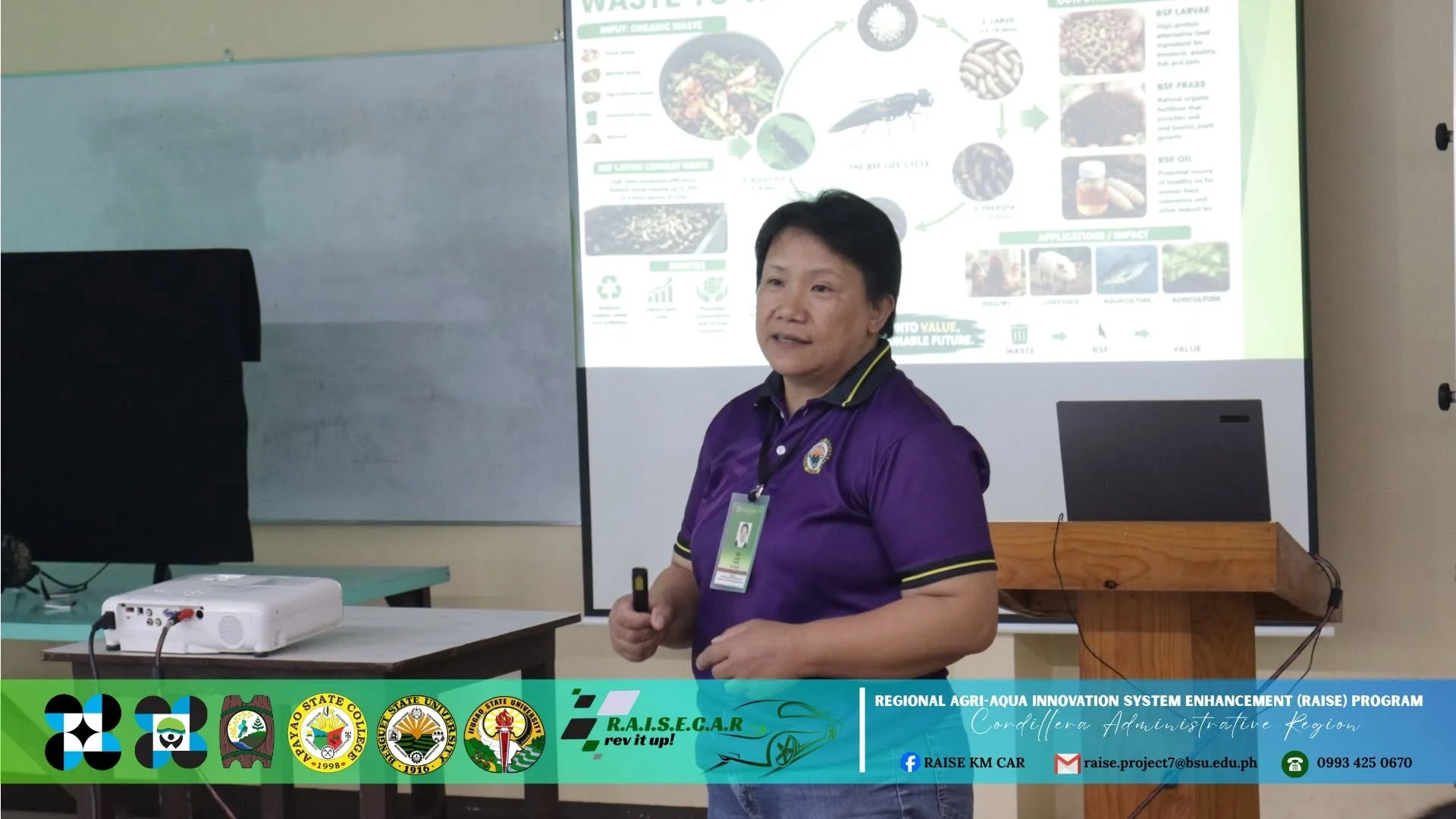
Photo: CCARD Promotes BSF Farming
Student Hunger
Recognizing that food insecurity can affect student well-being and academic success, Benguet State University (BSU), through the Office of Student Services (OSS), implements the Emergency Food Packs Program to support students experiencing immediate food needs. The initiative mobilizes food donations from private donors and government agencies and distributes them to eligible students following an OSS Rapid Needs Assessment. Beneficiaries are prioritized based on need and availability of supplies, with particular attention given to students living away from their parents or guardians and those with special needs. Through this program, BSU helps ensure that vulnerable students have access to essential food assistance, reducing barriers to learning and promoting student welfare, retention, and academic success.

Photo: Emergency Foodpacks Program
Benguet State University (BSU) continues to promote food security and healthy living through programs that ensure access to safe, nutritious, and affordable food for its community. Central to this effort is the University’s Internal Guarantee System, managed by the Office of Extension Services (OES), which supports sustainable food production and consumption. Through Timpuyog dagiti Umanamong iti BSU Internal Guarantee System (TUBIGS), a network of more than 200 organic farmers, BSU helps maintain a reliable supply of safe agricultural produce for both the campus and surrounding communities. The university also promotes healthy dietary choices through Health 101, a vegetarian restaurant, while the campus canteen accommodates special dietary requirements upon request. To further support staff well-being, BSU implements the Sariling Sikap Program, allowing employees to cultivate food crops on designated farm lots, enhancing household food security and livelihoods. Together, these initiatives demonstrate BSU’s commitment to building a healthy, resilient, and food-secure university community.
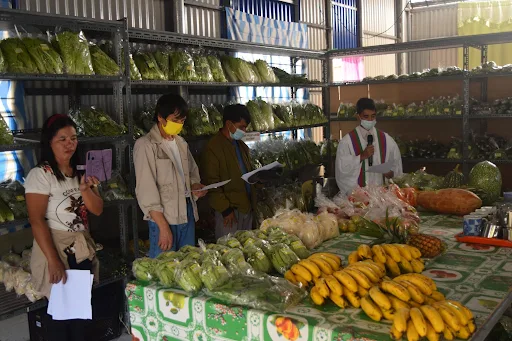
National Hunger
Agricultural Technology Transfer for Farmers and Rural Communities
Through its Office of Extension Services (OES), BSU promotes the transfer, adaptation, and utilization of technologies generated through university research. The OES serves as a bridge between technology generators and end users, ensuring that scientific innovations and research outputs reach farmers, community organizations, agricultural practitioners, and local government partners. Its mandate includes conducting farmer training, outreach programs, technology diffusion activities, and the commercialization of mature technologies, enabling farming communities to adopt improved and evidence-based agricultural practices.
Agricultural Technology Transfer for Farmers and Rural Communities
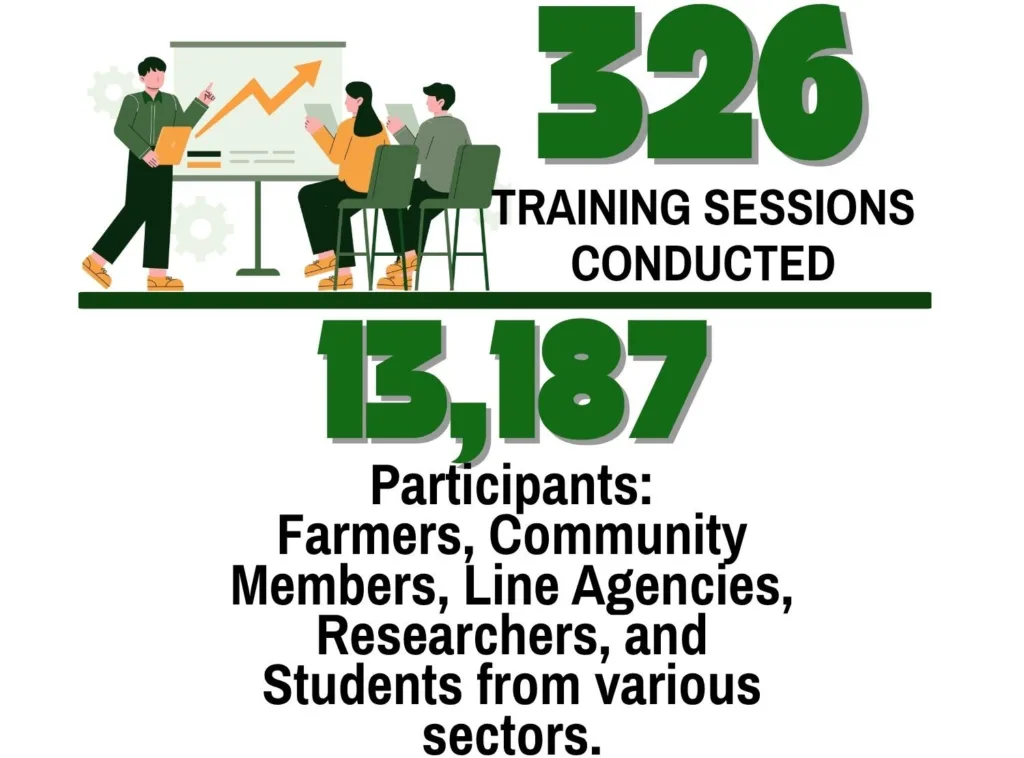
BSU regularly conducts extension and capacity-building programs covering a wide range of agricultural technologies and sustainable farming systems. Training areas explicitly include Natural Farming Systems, Organic Agriculture, Crop Production, Vegetables, Legumes, Root Crops, and Animal Production, among others. These programs equip farmers and agricultural stakeholders with the knowledge and skills necessary to improve productivity, reduce production costs, promote environmentally sustainable practices, and enhance food availability within local communities.
The University also develops and disseminates training manuals and knowledge products on organic agriculture and sustainable farm management, further strengthening the adoption of climate-responsive and environmentally sound agricultural practices.
Research and Demonstration Activities Supporting Food Security
BSU maintains specialized research and extension centers that develop technologies and innovations aimed at improving agricultural production systems, food availability, and resource sustainability. These include the Climate-Smart Agriculture Center, Cordillera Organic Agriculture Research and Development Center, Horticultural Research and Training Institute, Institute of Highland Farming Systems and Agroforestry, and the Northern Philippines Root Crops Research and Training Center. These centers undertake research, technology validation, demonstration, training, and extension activities that contribute directly to food security and agricultural development.
The University’s research efforts support farmers through the development of improved farming methods, climate-resilient technologies, sustainable production systems, and value-adding innovations for agricultural commodities.
Research and Extension Centers
Sustainable Agriculture Research and Extension Initiatives
BSU actively advances sustainable agriculture through dedicated research and extension programs. The Northern Philippines Root Crops Research and Training Center develops sustainable root crop production and utilization systems through research, training, extension, crop management, seed production, postharvest technologies, and farmer support services. The Center’s mandate includes implementing national root crop research, development, and extension programs, helping improve productivity while supporting long-term food security and rural development.
In addition, the University’s organic agriculture, climate-smart agriculture, agroforestry, and technology commercialization initiatives promote sustainable land use and environmentally responsible farming systems that enhance the resilience of agricultural communities in the Cordillera region and beyond.