Benguet State University International Relations Office
June 2025
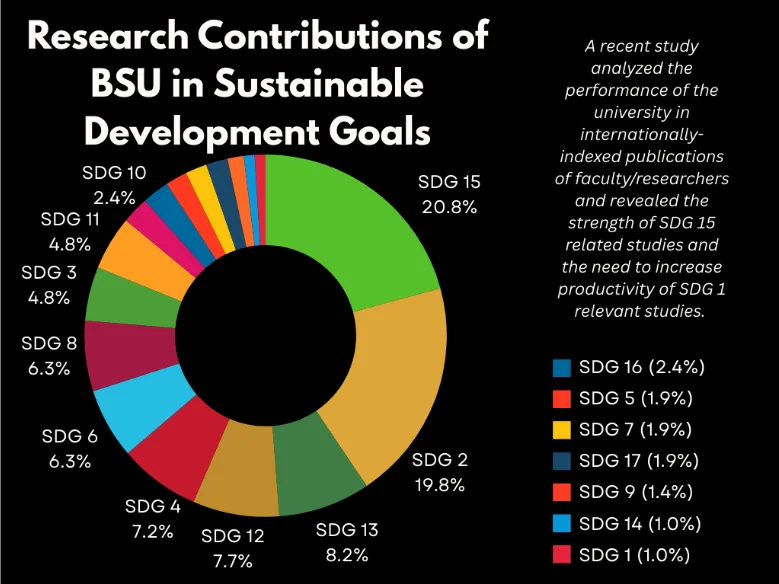
A recent study analyzing the performance of Benguet State University (BSU) in internationally-indexed publications has shed new light on the institution’s research contributions to the global Sustainable Development Goals (SDGs). Conducted by a team of university researchers, the study mapped BSU’s publications in Scopus and Web of Science to assess how the university’s research aligns with the 17 SDGs.
The findings reveal that BSU’s strongest contributions are in SDG 15 (Life on Land), alongside SDG 2 (Zero Hunger) and SDG 12 (Responsible Consumption and Production), reflecting the university’s agricultural heritage and its longstanding commitment to sustainability and environmental science. These results affirm the university’s role as a key contributor to research areas essential for ecological conservation and sustainable agriculture.
However, the study also highlighted an opportunity for growth: SDG 1 (No Poverty) emerged as one of the least represented goals in BSU’s indexed research outputs. Along with SDG 5 (Gender Equality), SDG 9 (Industry, Innovation and Infrastructure), and SDG 17 (Partnerships for the Goals), these areas represent critical fields where the university’s research productivity can be strengthened.
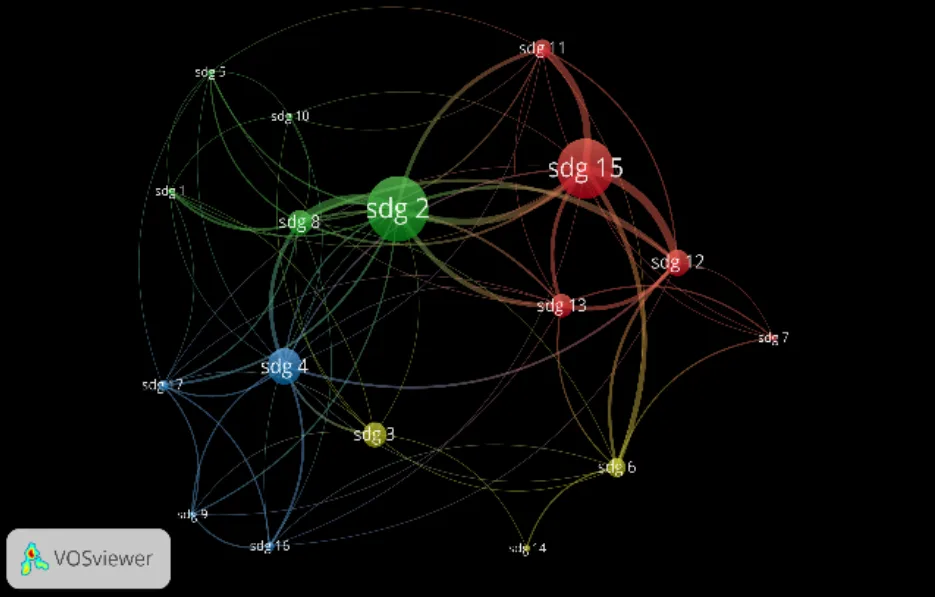
The study not only quantified output but also explored research dynamics. It revealed that BSU’s research landscape is still largely shaped by internal collaborations. There is significant potential to boost productivity and impact through expanded international partnerships and cross-disciplinary collaborations, especially in underrepresented SDG areas.
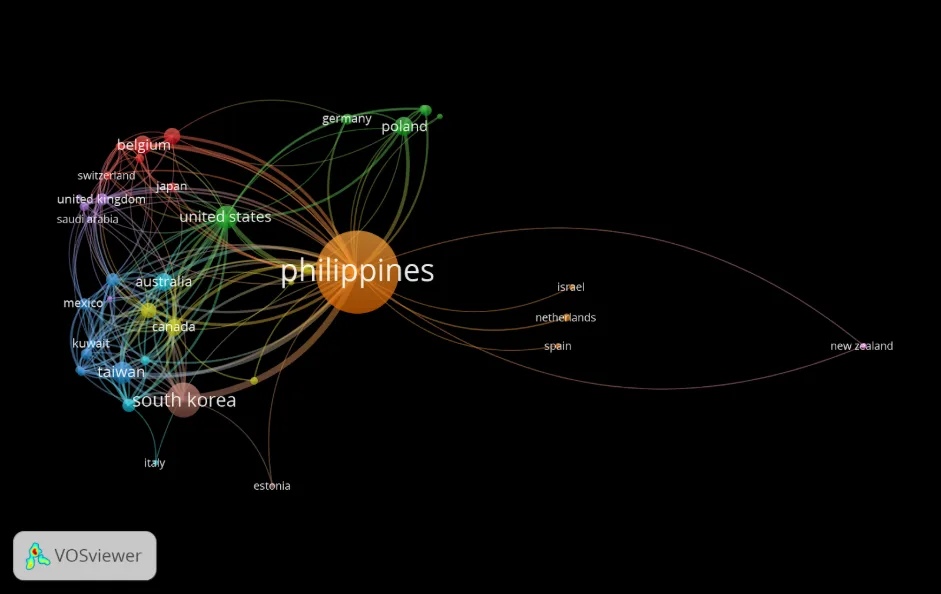
In addition, research trends are visibly shifting toward topics related to environmental sustainability and food security, suggesting that BSU is aligned with the global academic pivot toward these urgent concerns. The study also uncovered key drivers of research productivity such as prolific authorship, institutional clusters, and faculty engagement with higher-tier journals, emphasizing the importance of supportive incentive systems and institutional policies that recognize and reward SDG-aligned scholarly work.
This study represents the second phase of a broader research initiative examining the evolution and impact of BSU’s scholarly outputs. The first study, published in Science & Technology Libraries, analyzed articles published in the university’s in-house research journals from 1977 to 2023. Rather than evaluating global research impact, it examined publication patterns and disciplinary strengths to provide evidence-based recommendations for improving library resource acquisitions, access, and research support services. Building on this institutional perspective, the present scientometric study expanded the analysis to BSU’s internationally indexed publications in Scopus and Web of Science, allowing researchers to evaluate the university’s contribution to the Sustainable Development Goals (SDGs) and identify research areas requiring greater institutional support.
The research initiative was subsequently expanded beyond BSU through a national bibliometric study involving the top higher education institutions in the Philippines, with BSU included among the institutions analyzed. By mapping SDG contributions across leading universities, the study provided comparative insights into institutional research strengths, specialization, and collaboration patterns. Its findings offer university administrators, research directors, and policymakers valuable evidence for refining research agendas, strengthening strategic partnerships, and aligning institutional priorities with the global Sustainable Development Goals. Together, these three studies demonstrate a progressive research trajectory—from understanding BSU’s institutional publication landscape, to assessing its global SDG contributions, and finally to benchmarking its performance within the broader Philippine higher education research ecosystem.
As the latest findings are disseminated, BSU encourages faculty members and researchers to engage with the results, particularly in identifying underexplored SDG areas, strengthening international collaborations, and fostering interdisciplinary partnerships that can enhance the university’s contribution to sustainable development and increase the global visibility and impact of its research.
References
Abiasen, J., Balbin, D.J., & Panolong, K. (2026). Scientometric analysis of SDG-related research outputs in an agricultural state university in the Philippines: Implications for research performance and higher education policy. International Online Journal of Education and Teaching, 13(3), 48–75. https://www.researchgate.net/publication/408317073_Scientometric_Analysis_of_SDG-Related_Research_Outputs_in_an_Agricultural_State_University_in_the_Philippines_Implications_for_Research_Performance_and_Higher_Education_Policy
Balbin, D.J. (2025). A bibliometric analysis of Benguet State University research journals (1977–2023): Implications for library resource acquisitions, access, and services. Science & Technology Libraries, 44(1), 85–101. https://www.researchgate.net/publication/386345620_A_Bibliometric_Analysis_of_Benguet_State_University_Research_Journals_1977-2023_Implications_for_Library_Resource_Acquisitions_Access_and_Services
Balbin, D.J., & Fulwani, D. L. (2026). Mapping SDG contributions of top higher education institutions in the Philippines: A bibliometric study. International Online Journal of Education & Teaching, 13(2), 295-314. https://www.researchgate.net/publication/404492630_Mapping_SDG_Contributions_of_Top_Higher_Education_Institutions_in_the_Philippines_A_Bibliometric_Study