Click the image to read full content:

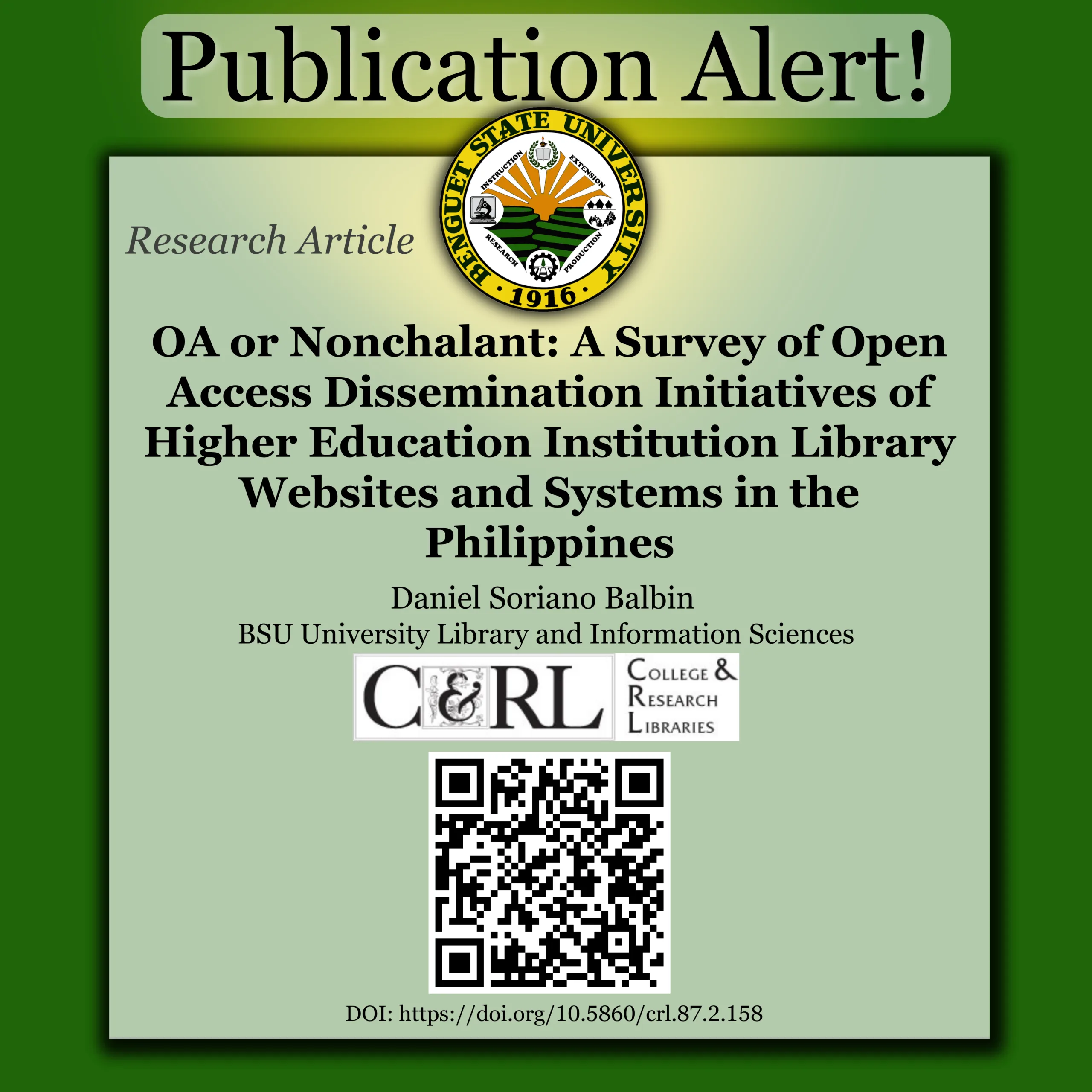
We are excited to share a Research Article Publication entitled;
“𝐓𝐡𝐢𝐫𝐭𝐞𝐞𝐧-𝐘𝐞𝐚𝐫- 𝐆𝐮𝐢𝐝𝐚𝐧𝐜𝐞 𝐂𝐨𝐮𝐧𝐬𝐞𝐥𝐥𝐨𝐫𝐬 𝐋𝐢𝐜𝐞𝐧𝐬𝐮𝐫𝐞 𝐄𝐱𝐚𝐦𝐢𝐧𝐚𝐭𝐢𝐨𝐧 (𝐆𝐂𝐋𝐄) 𝐏𝐞𝐫𝐟𝐨𝐫𝐦𝐚𝐧𝐜𝐞 𝐨𝐟 𝐭𝐡𝐞 𝐌𝐚𝐬𝐭𝐞𝐫 𝐨𝐟 𝐀𝐫𝐭𝐬 𝐢𝐧 𝐆𝐮𝐢𝐝𝐚𝐧𝐜𝐞 (𝐌𝐀𝐆) 𝐆𝐫𝐚𝐝𝐮𝐚𝐭𝐞𝐬: 𝐓𝐡𝐞 𝐂𝐚𝐬𝐞 𝐨𝐟 𝐚 𝐏𝐡𝐢𝐥𝐢𝐩𝐩𝐢𝐧𝐞 𝐒𝐭𝐚𝐭𝐞 𝐈𝐧𝐬𝐭𝐢𝐭𝐮𝐭𝐢𝐨𝐧”
By Dona Claire L. Colinang, Erlyn Honeylette C. Marquez, Jean Janette V. De Joya, Apler J. Bansiong, from the BSU – College of Teacher Education
Abstract:
“Licensure exam performance is a key metric for evaluating the quality of academic programs in many higher education institutions. Consequently, a comprehensive analysis of these results is a fundamental step in program evaluation. This study analysed the institutional performance of Master of Arts in Guidance (MAG) graduates from a Philippine State University in the Guidance Counsellors Licensure Examination (GCLE). It encompasses profiling institutional outcomes and conducting comparative analyses of graduate performance based on examinee classification, sex, and undergraduate academic background. Using archival data from the Philippine Professional Regulation Commission (PRC), this analysis revealed a high 13-year institutional average passing rate of 71.67%. Notably, this institutional passing rate (IPR) exceeded the national average by 13.06% (p = .041). An in-depth examination of performance across the six GCLE content areas indicated that MAG graduates demonstrated the highest proficiency in Area 4: “Organization, administration, and supervision of guidance” (83.33% passing rate, Mean = 78.03). Conversely, their performance was weakest in Area 5: “Group process and program development” (58.33% passing rate, Mean = 72.30). While examinee sex did not emerge as a significant predictor of overall performance, first-time takers and graduates holding undergraduate degrees in psychology exhibited demonstrably higher outcomes. The resulting curriculum and policy implications of these findings are discussed herein.”
We hope you will explore the key findings of this work and share or cite it to spread knowledge and insights to the wider academic community.
🔗 The full article is available through the link in the comment section.
📚 Also featured are other research published by the authors in 2025:
“𝐹𝑟𝑜𝑚 𝑐𝑎𝑚𝑝𝑢𝑠 𝑡𝑜 𝑐𝑎𝑟𝑒𝑒𝑟: 𝑆𝑒𝑐𝑜𝑛𝑑𝑎𝑟𝑦 𝑡𝑒𝑎𝑐ℎ𝑒𝑟 𝑒𝑑𝑢𝑐𝑎𝑡𝑖𝑜𝑛 𝑔𝑟𝑎𝑑𝑢𝑎𝑡𝑒𝑠’ 𝑒𝑚𝑝𝑙𝑜𝑦𝑚𝑒𝑛𝑡 𝑝𝑟𝑜𝑓𝑖𝑙𝑒, 𝑝𝑟𝑜𝑔𝑟𝑎𝑚𝑚𝑒 𝑠𝑎𝑡𝑖𝑠𝑓𝑎𝑐𝑡𝑖𝑜𝑛, 𝑎𝑛𝑑 𝑟𝑒𝑐𝑜𝑚𝑚𝑒𝑛𝑑𝑎𝑡𝑖𝑜𝑛𝑠 𝑓𝑜𝑟 𝑖𝑚𝑝𝑟𝑜𝑣𝑒𝑚𝑒𝑛𝑡.”
Apler J. Bansiong & Alma Vida G. Gallardo
“𝐸𝑣𝑎𝑙𝑢𝑎𝑡𝑖𝑛𝑔 𝑡ℎ𝑒 𝑃𝑟𝑜𝑗𝑒𝑐𝑡 𝑅𝑒𝑠𝑒𝑎𝑟𝑐ℎ 𝑎𝑛𝑑 𝐸𝑥𝑡𝑒𝑛𝑠𝑖𝑜𝑛 (𝑅𝐸𝑥) 𝐼𝑛𝑖𝑡𝑖𝑎𝑡𝑖𝑣𝑒 𝑜𝑓 𝑎 𝑃ℎ𝑖𝑙𝑖𝑝𝑝𝑖𝑛𝑒 𝑆𝑡𝑎𝑡𝑒 𝑈𝑛𝑖𝑣𝑒𝑟𝑠𝑖𝑡𝑦: 𝐴𝑝𝑝𝑙𝑖𝑐𝑎𝑡𝑖𝑜𝑛 𝑜𝑓 𝑎 𝑆𝑖𝑚𝑝𝑙𝑖𝑓𝑖𝑒𝑑 𝑄𝑢𝑎𝑙𝑖𝑡𝑎𝑡𝑖𝑣𝑒 𝐼𝑚𝑝𝑎𝑐𝑡 𝑃𝑟𝑜𝑡𝑜𝑐𝑜𝑙 (𝑆𝑄𝑢𝐼𝑃).”
Apler J. Bansiong, Dolores E. Alawas, Olga B. Betudio, Sarah M. Palaw-ay, Stephen B. Bulalin, and Divina M. Yango
“𝐺𝑒𝑛𝑑𝑒𝑟 𝑇𝑟𝑒𝑎𝑡𝑚𝑒𝑛𝑡 𝑖𝑛 𝑃ℎ𝑖𝑙𝑖𝑝𝑝𝑖𝑛𝑒 𝐶𝑜𝑚𝑚𝑒𝑟𝑐𝑖𝑎𝑙 𝐸𝑙𝑒𝑚𝑒𝑛𝑡𝑎𝑟𝑦 𝑆𝑐𝑖𝑒𝑛𝑐𝑒 𝑇𝑒𝑥𝑡𝑏𝑜𝑜𝑘𝑠.”
Apler J. Bansiong, Emill M. Kisim, Terrilyn G. Dontogan, Albert S. Bolcio Jr.
Open each image for more information!
#BenguetStateUniversity, #ResearchPublication, #ResearchCorner