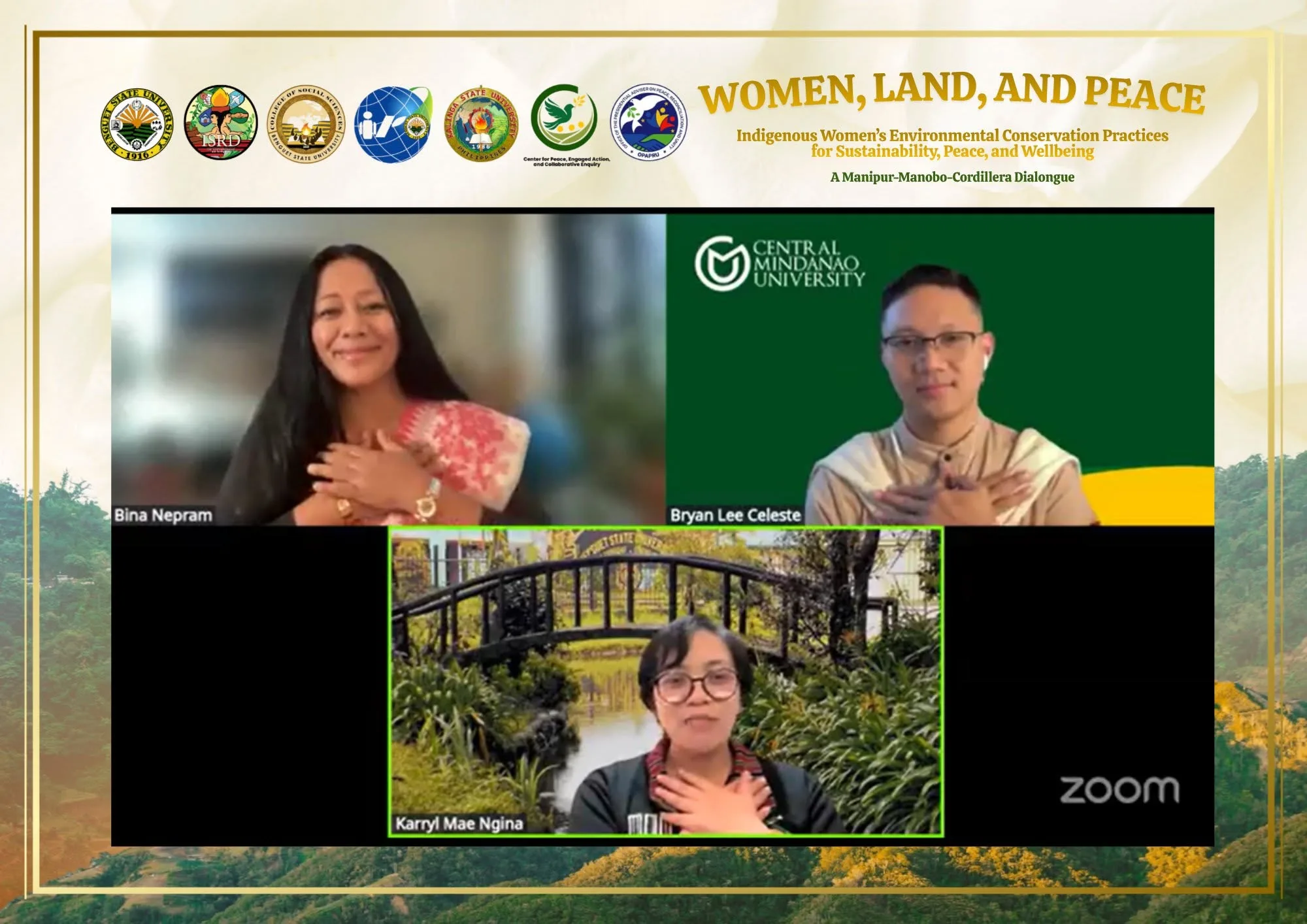
On November 7, 2026, from 7:00 PM to 9:00 PM, the Institute of Social Research and Development, in collaboration with the College of Social Sciences and the International Relations Office, conducted a meaningful dialogue entitled Women, Land, and Peace: Indigenous Women’s Environmental Conservation Practices for Sustainability and Well-being (Voices and Perspectives from Manipur, Bukidnon, and the Cordillera). The activity aimed to strengthen youth awareness, appreciation, and integration of local and international Indigenous Knowledge Systems and Practices (IKSPs) on peacebuilding, gender equality, human rights, and values-based leadership as foundations for sustainable individual and community well-being.
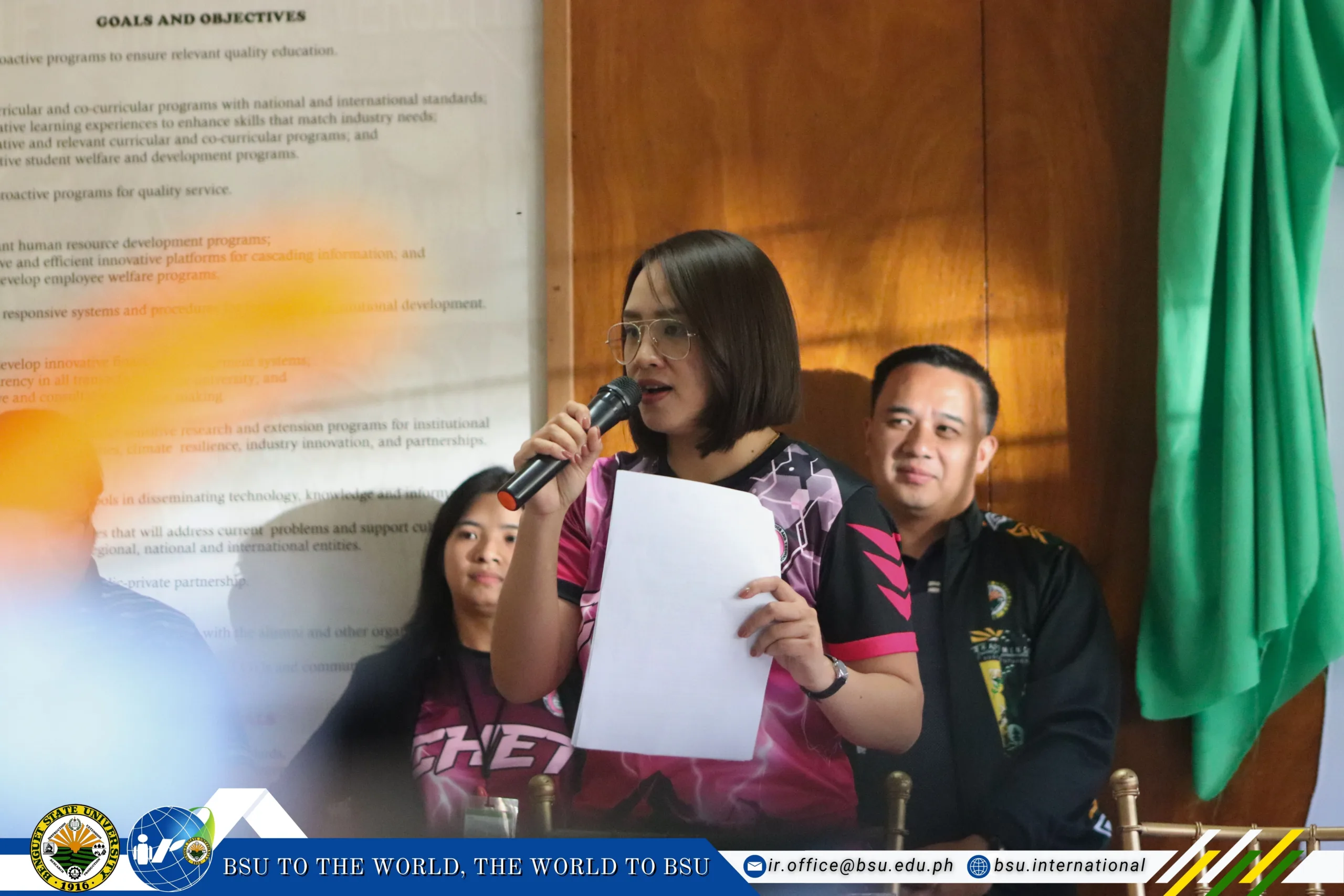
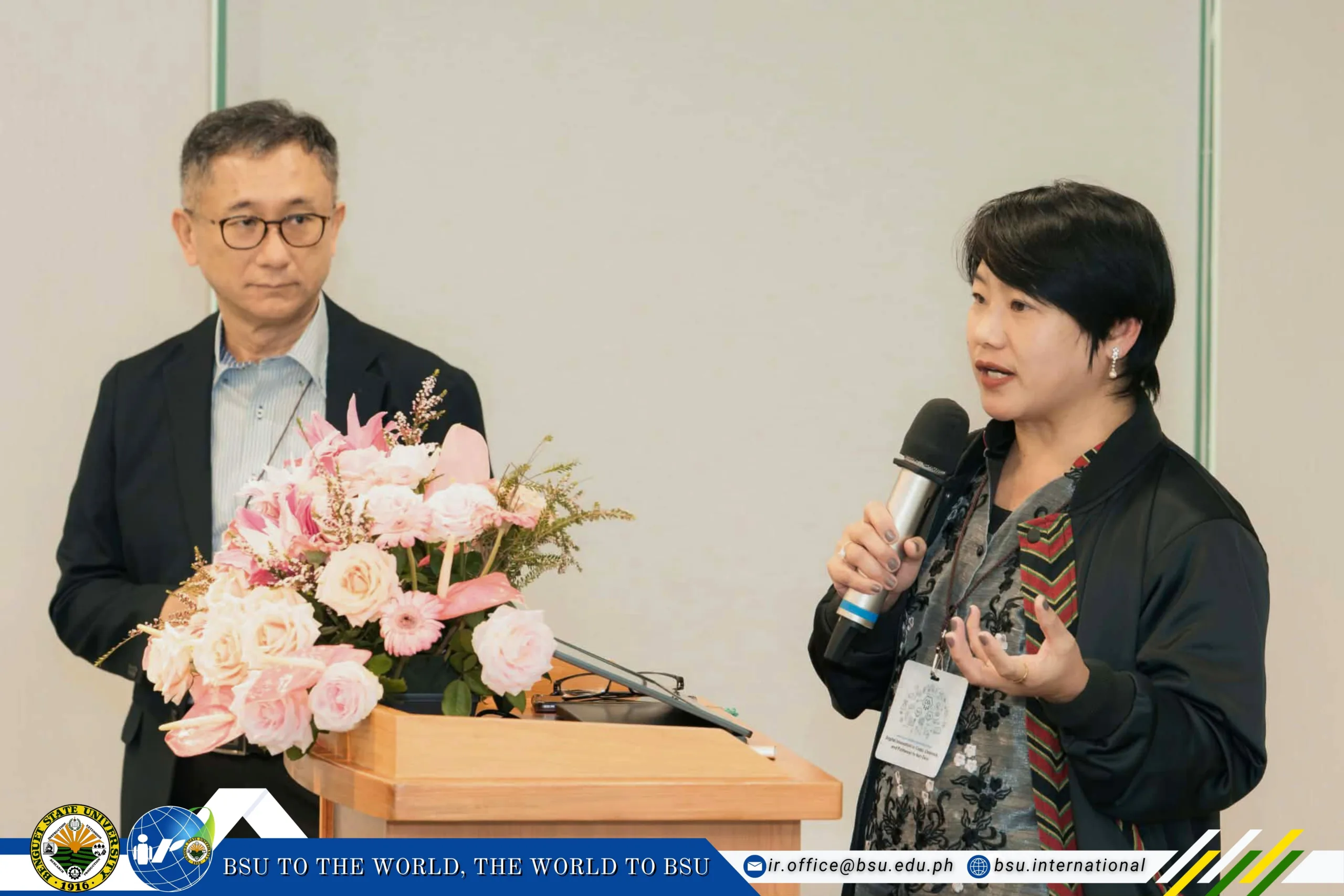
The activity began with the question, “What is peace for you?” which served as the foundation of the discussion. Through this guiding question, the first presentation centered on Women Leading Peace: Lessons from Manipur on Gender, Human Rights, and Community Resilience by Binalakshmi Nepram of Manipur, India, founder of the Manipur Women Gun Survivors Network. Her discussion highlighted how we live in a world constantly affected by war, resulting in the displacement of millions of people. She emphasized that many of these conflicts occur in some of the world’s most beautiful and biodiverse regions. This is true in Manipur, a state that serves as a gateway to Southeast Asia, is home to rich Indigenous cultures such as weaving traditions, and hosts 39 diverse Indigenous communities. Despite its cultural richness, the region continues to experience discrimination, insurgency, and loss of lives due to prolonged conflict. Nevertheless, women continue to uphold traditions of stewardship, peace, and environmental care. Indigenous women work collectively to defend human rights and promote peace in Manipur, leading to the establishment of the Northeast India Women Initiative for Peace in 2010, which advocates for women’s participation in peace processes. Through this initiative, historic gatherings such as the First and Second Northeast India Indigenous Women Initiative for Peace were successfully conducted.
The second discussion was delivered by Dr. Bryan Lee D. Celeste, Director of the Center for Peace, Research, Engaged Action, and Collaborative Enquiry. His presentation focused on Indigenous Identity, Cultural Agency, and Inclusive Leadership for Sustainable Well-being, particularly on The Manobo of Mindanao: Indigenous Identity, Ancestral Lands, and Peacebuilding. His discussion highlighted how Manobo communities continue to face various challenges, including social inequalities, land grabbing, colonial legacies, and marginalization. Through his creative voice approach, he demonstrated how arts-based methods can help in understanding local contexts and cultures, community perspectives, and decolonial ways of examining agency, power, resistance, and futures. Through these approaches, the lived experiences of Indigenous communities become more visible, including the significant role of women in environmental stewardship. He emphasized that women are the caretakers of the forest, playing a crucial role in protecting ecosystems, preserving the environment, and promoting sustainable and equitable environmental stewardship.
The third discussion was delivered by Dr. Marilou Alngag of Kalinga State University with her topic, “Kalinga Women and Peace in the Cordillera: Exploring Women’s Contribution to Indigenous Peacebuilding, the Bodong Tradition, Cultural Preservation, and Community Resilience.” Her presentation showcased how women are at the center of many daily activities, such as saving seeds, gathering forest food, and collecting medicinal resources, highlighting that women are the everyday guardians of the land. Beyond their everyday roles as environmental stewards, Kalinga women have also played significant roles in community resistance and defense. During the Chico River struggle, women stood at the forefront of collective action by driving away survey teams, dismantling their camps, and organizing barricades to protect their ancestral lands.
Overall, the webinar concluded with an engaging question-and-answer session that allowed the speakers to further discuss the interconnected themes of well-being, peace, and sustainability. Across the three presentations, a common message emerged: Indigenous women play indispensable roles as protectors of culture, defenders of ancestral lands, stewards of the environment, and leaders in peacebuilding efforts.
The program concluded with a loving-kindness meditation: “May I be beloved, may I be peaceful, may I be happy, and may I be healthy.” As we reflect on the stories, struggles, and aspirations shared by the speakers, we are left with the same question that opened the dialogue: What is peace for you?
This post is shared for informational purposes only. Follow the original post below for further details.