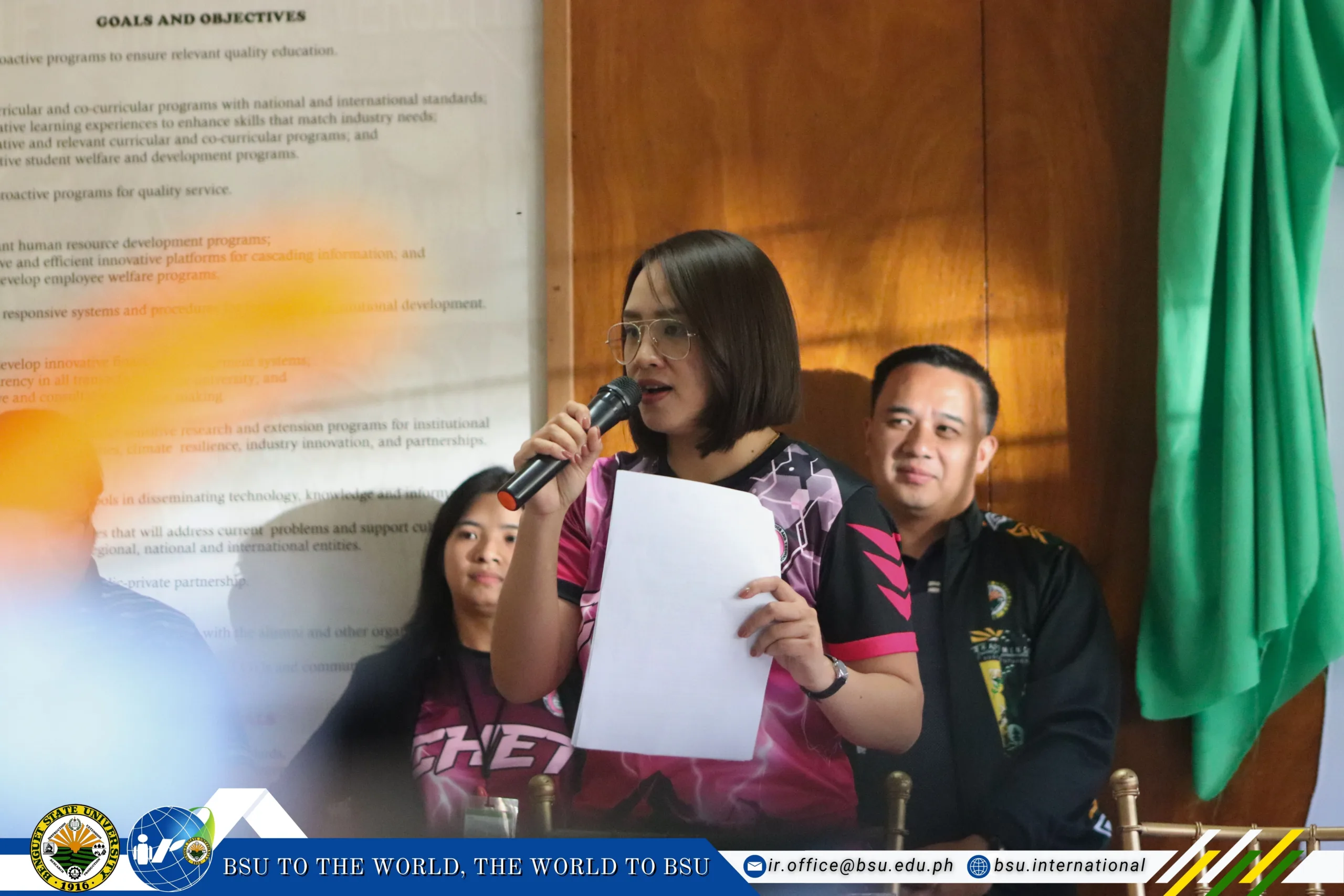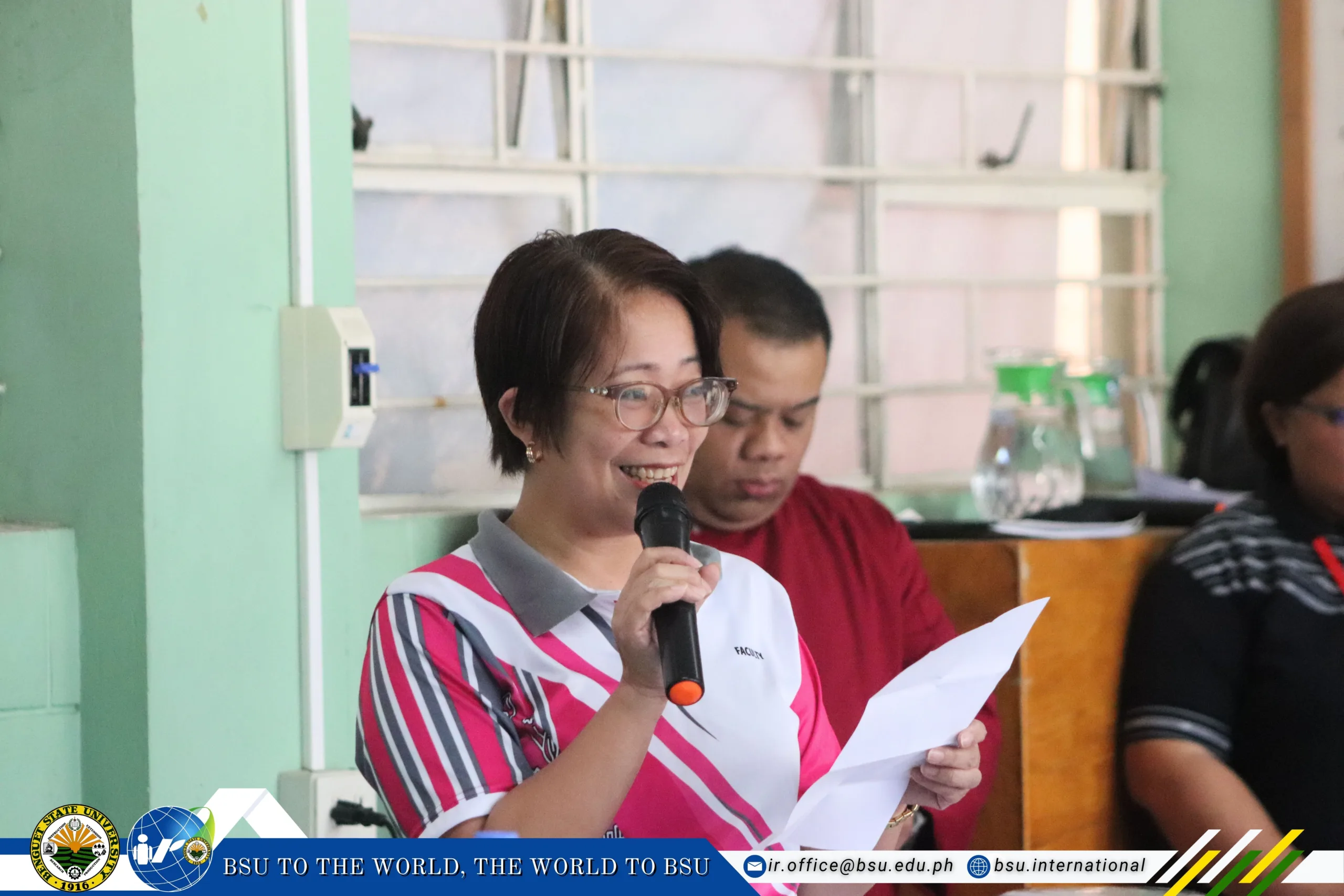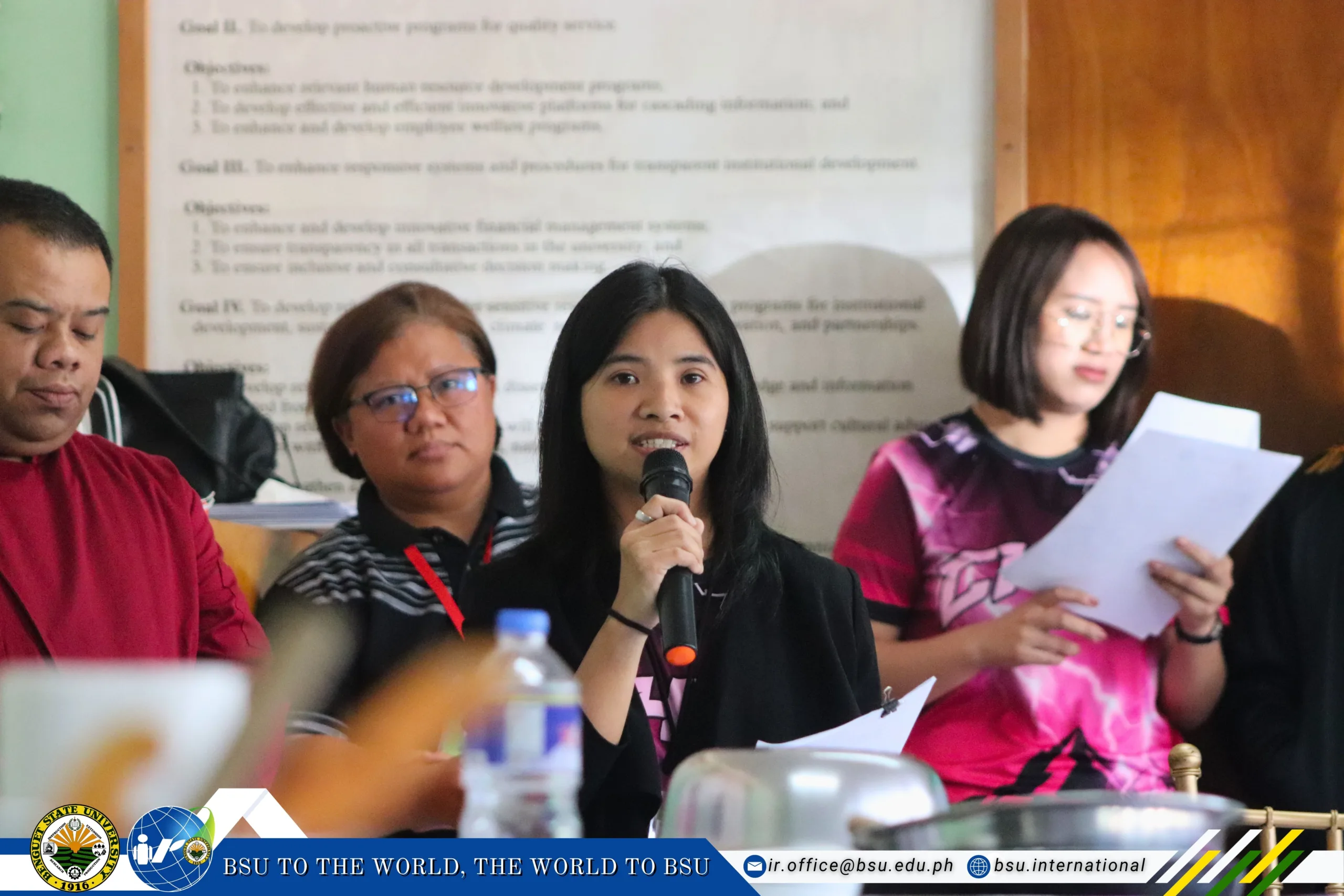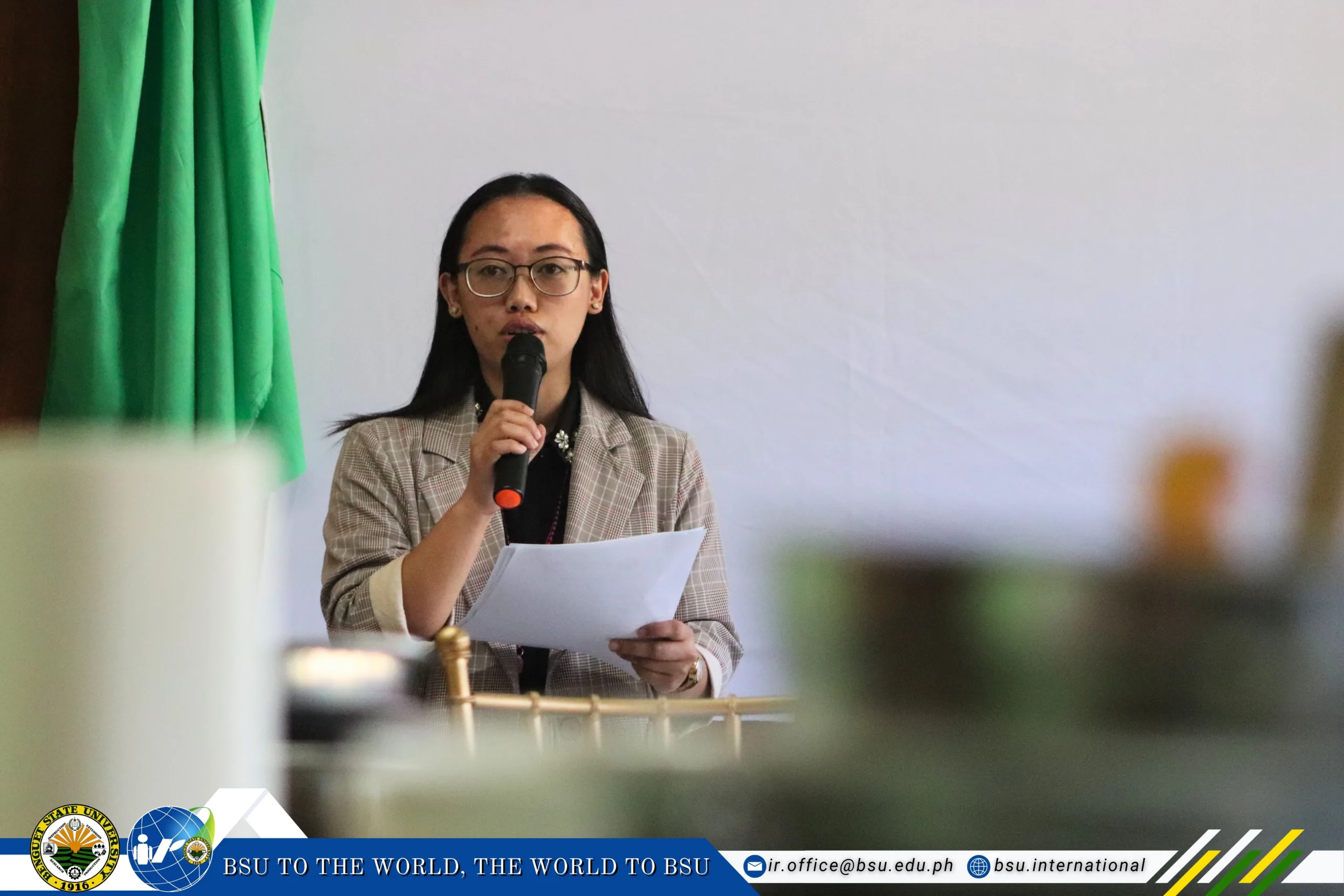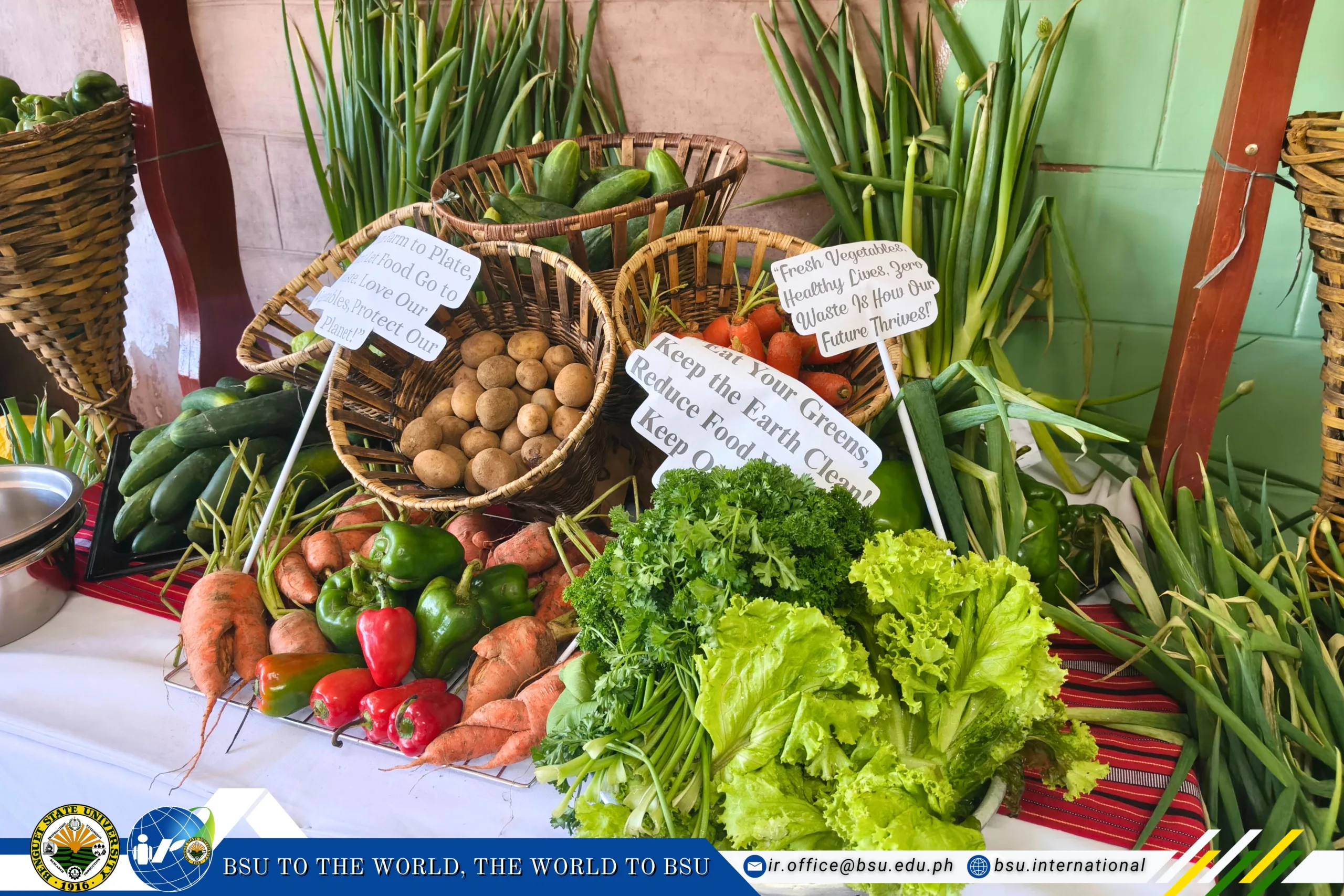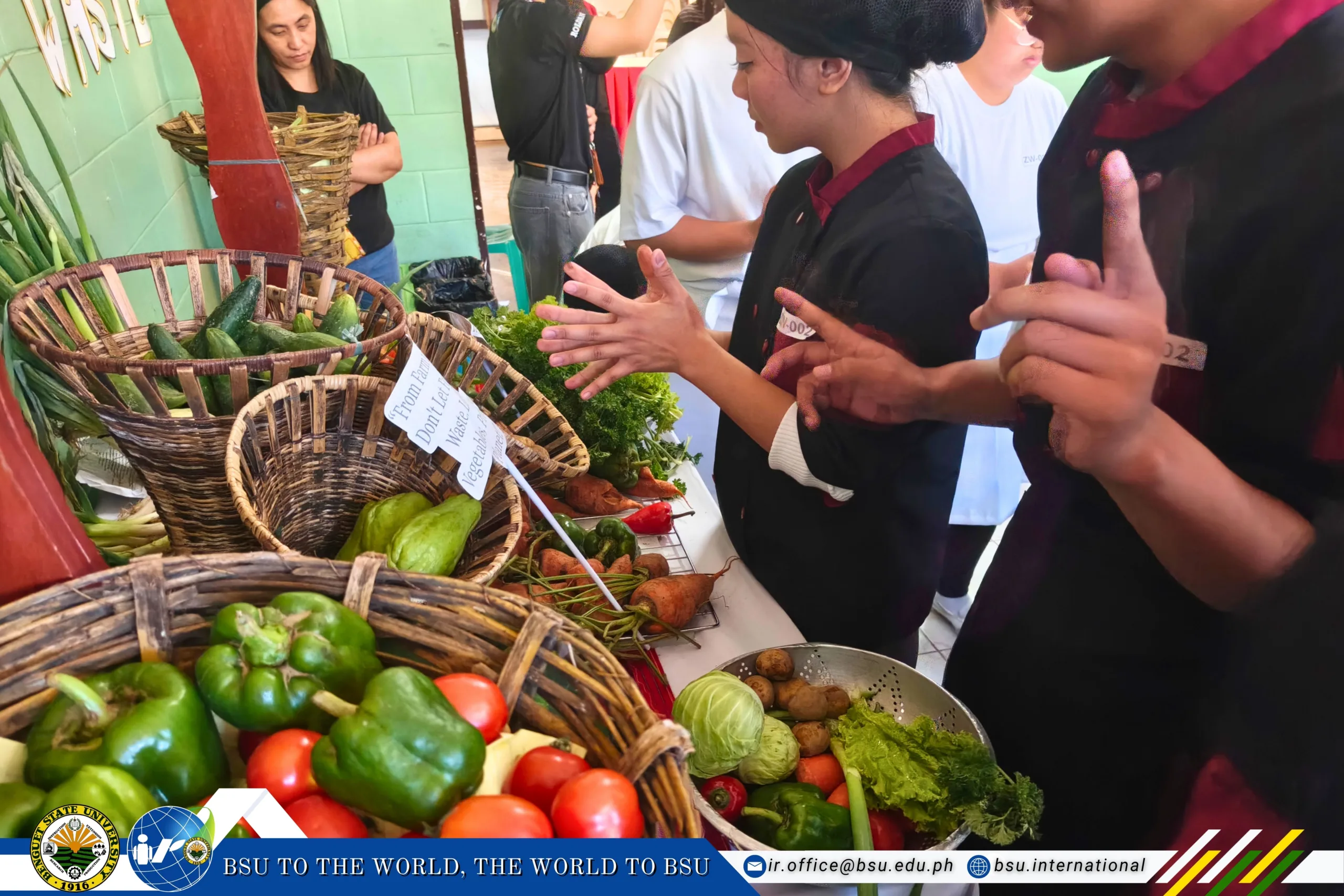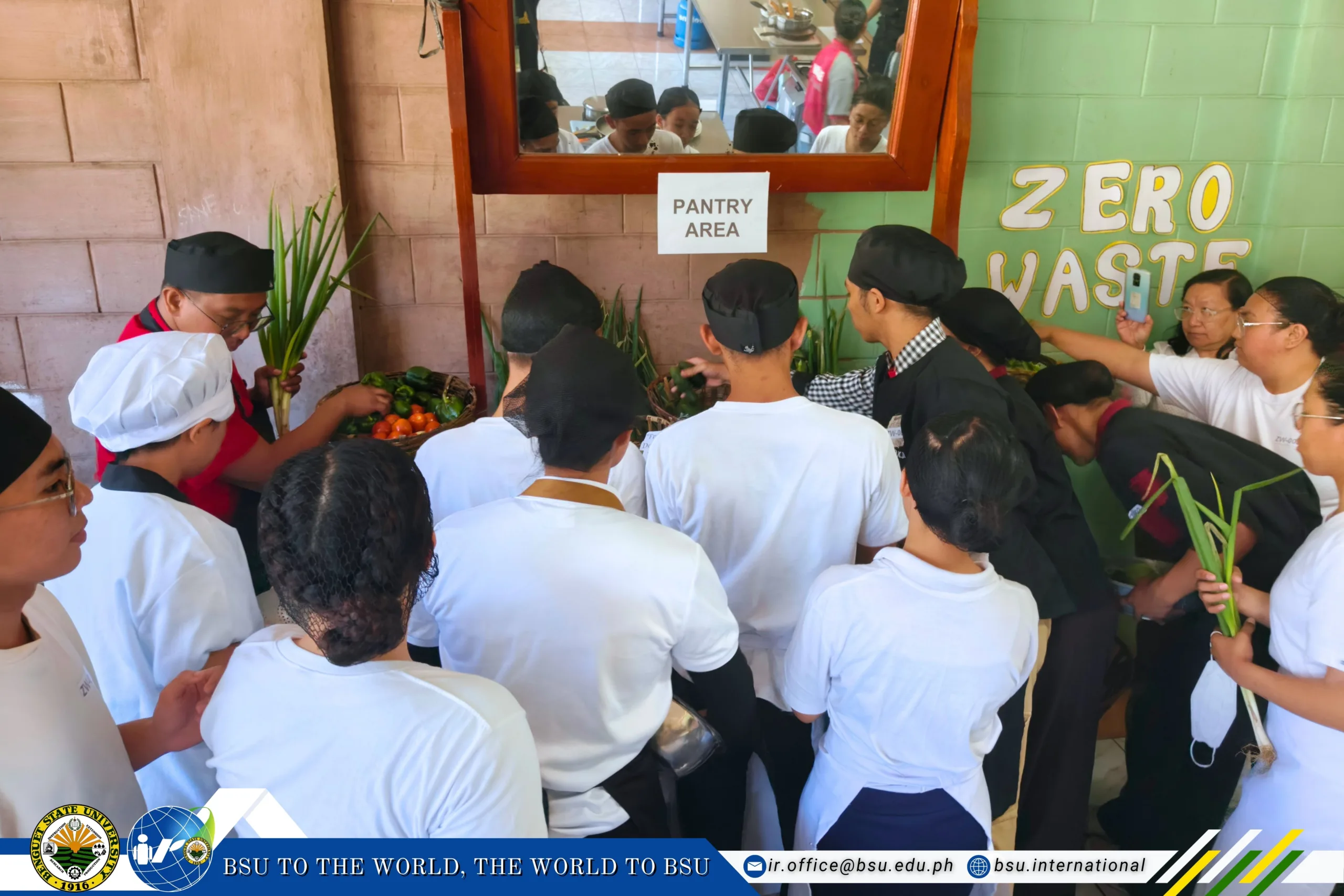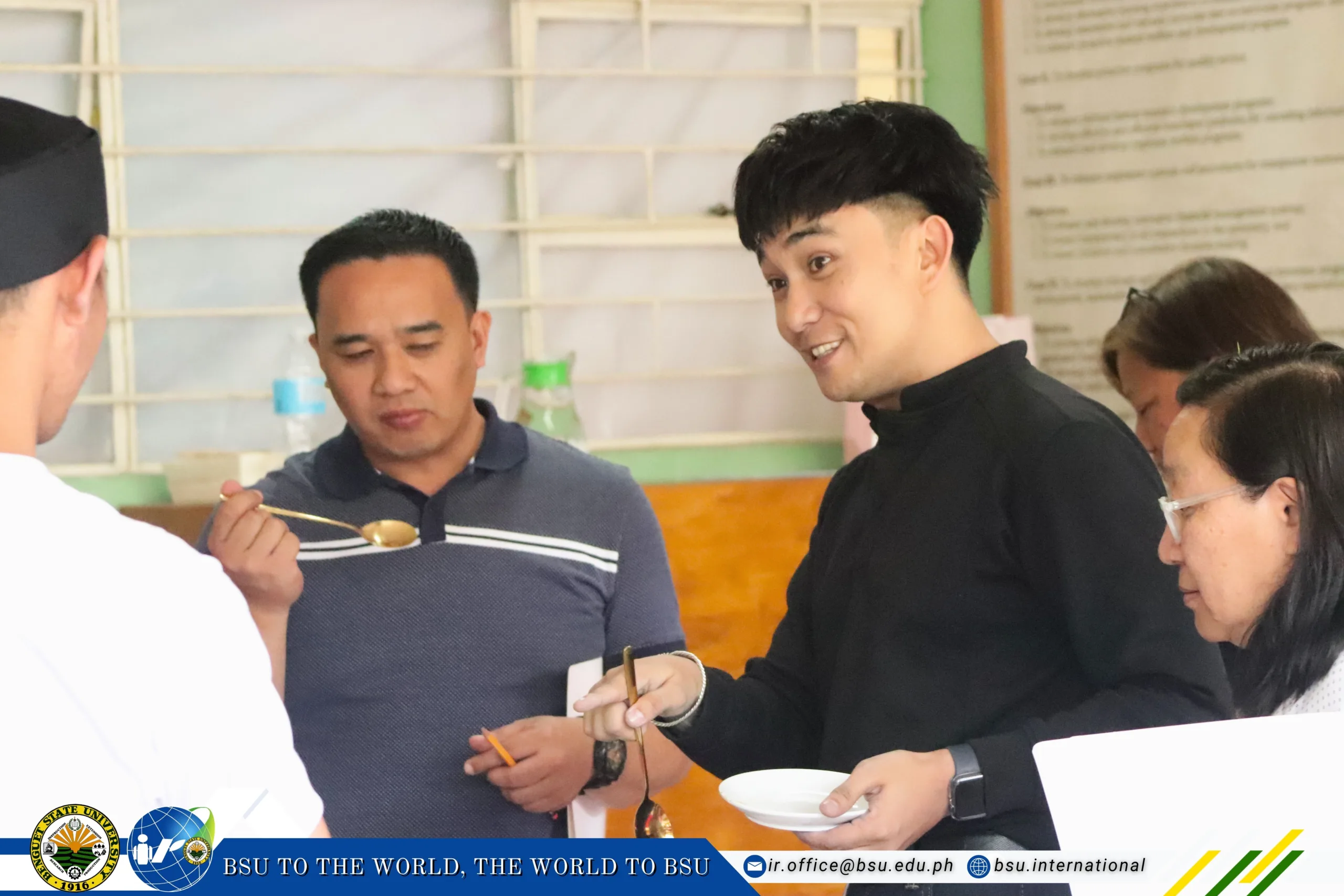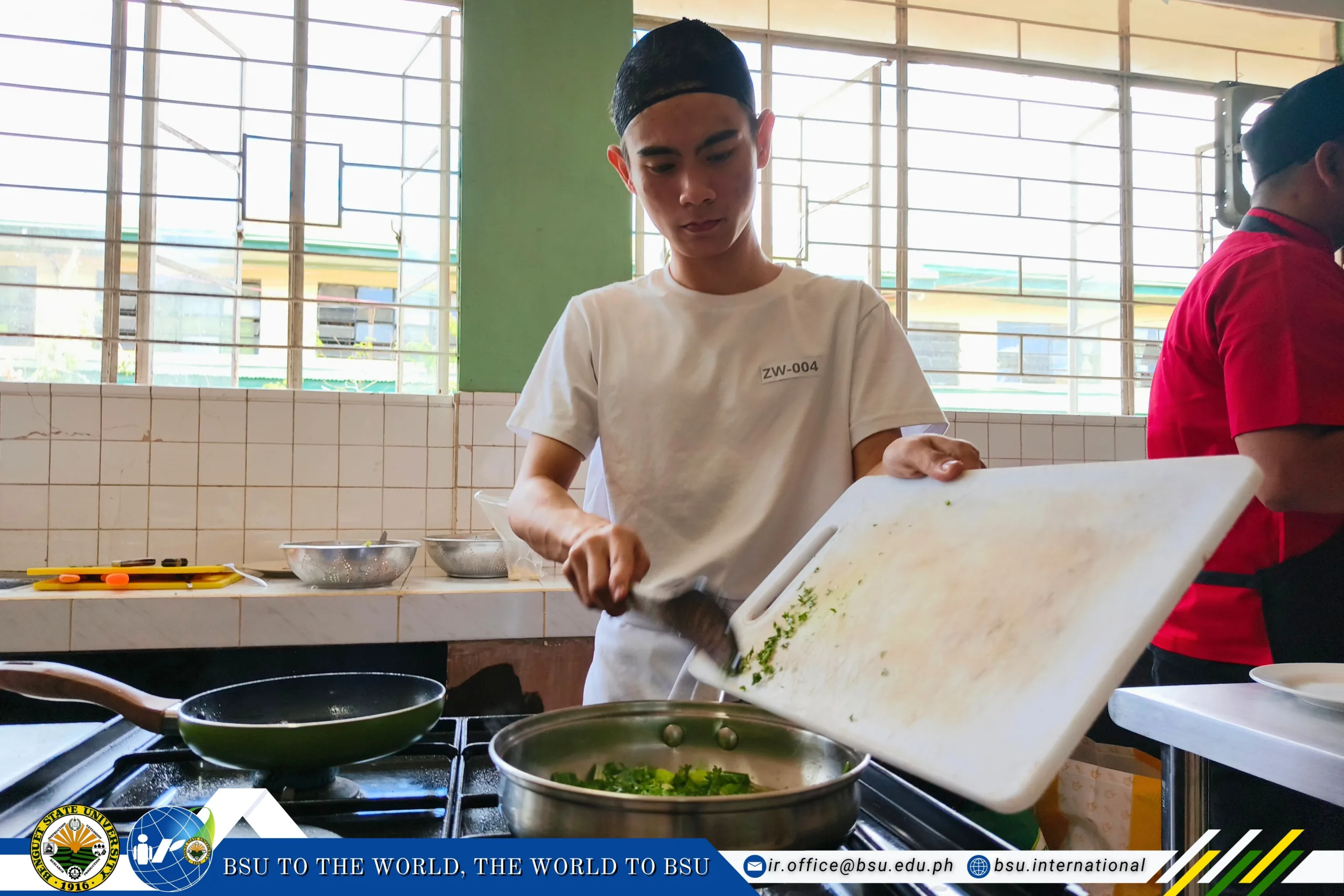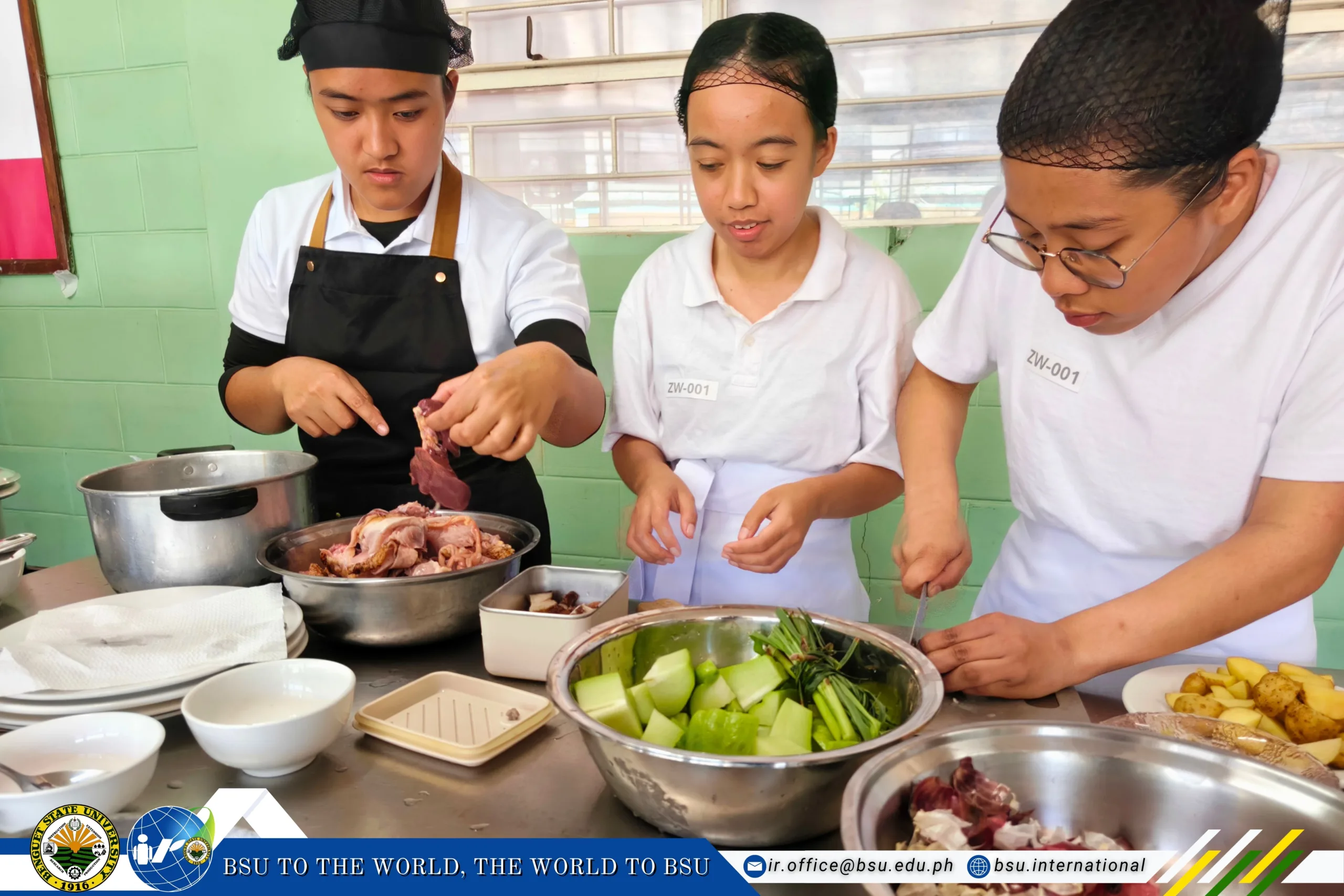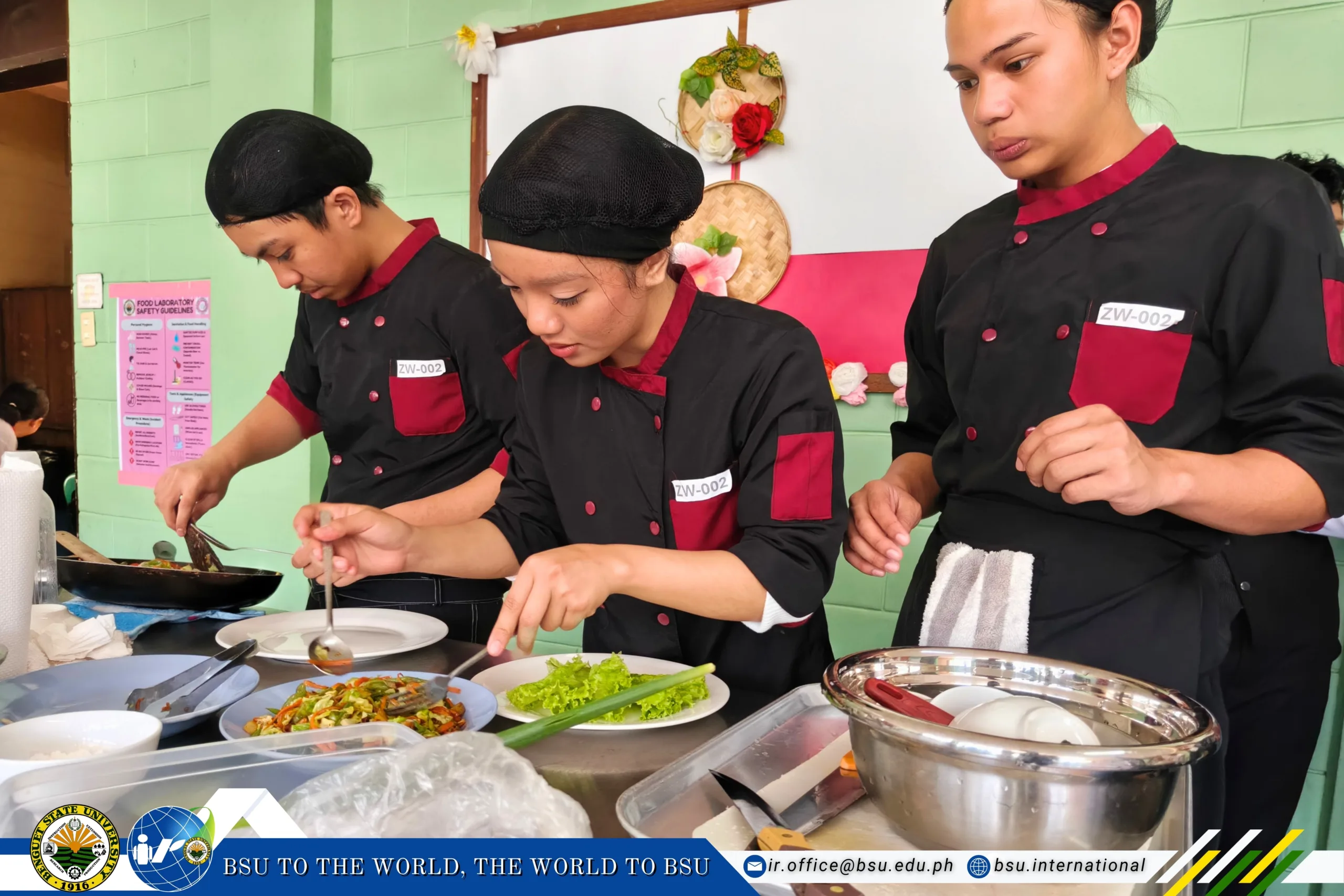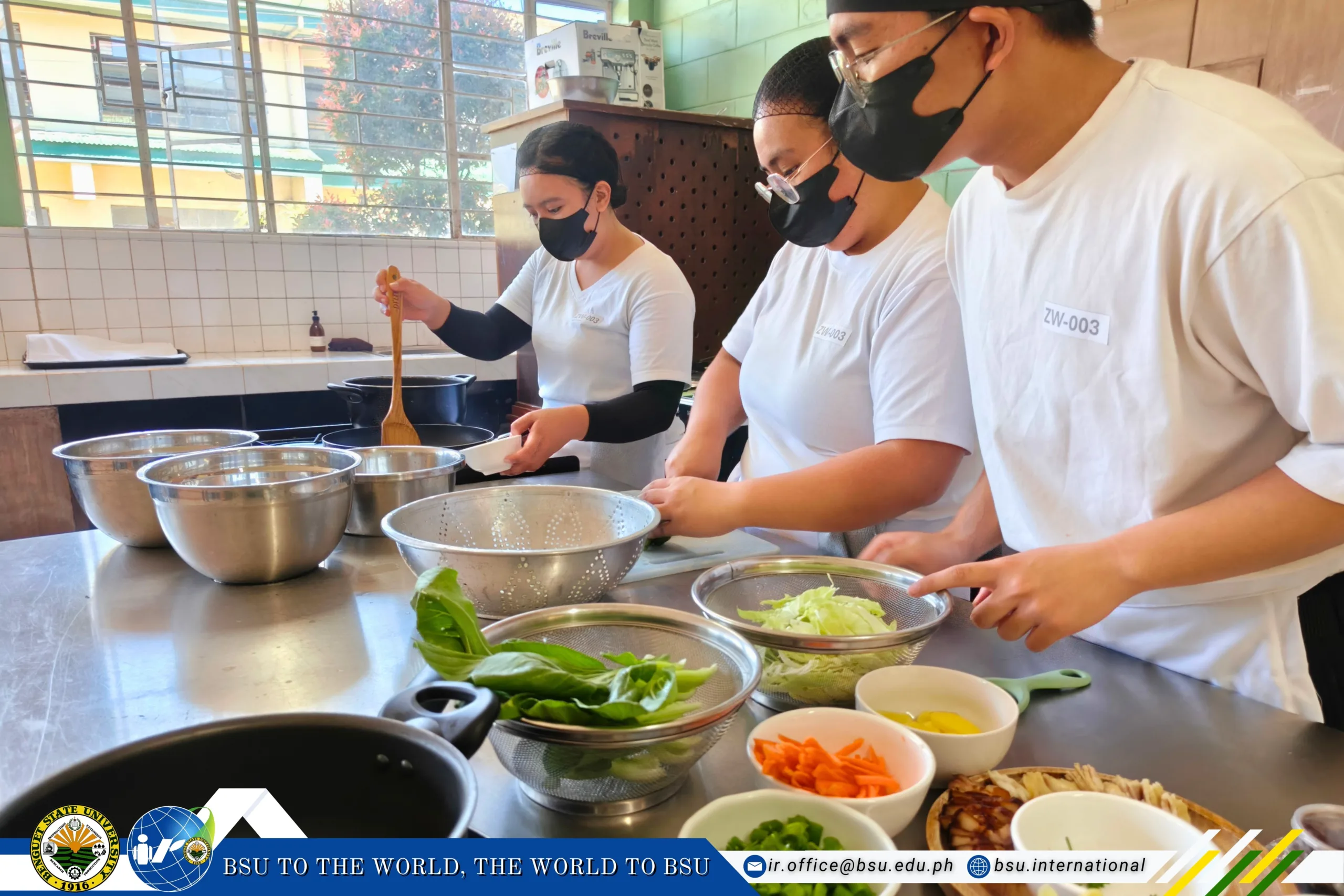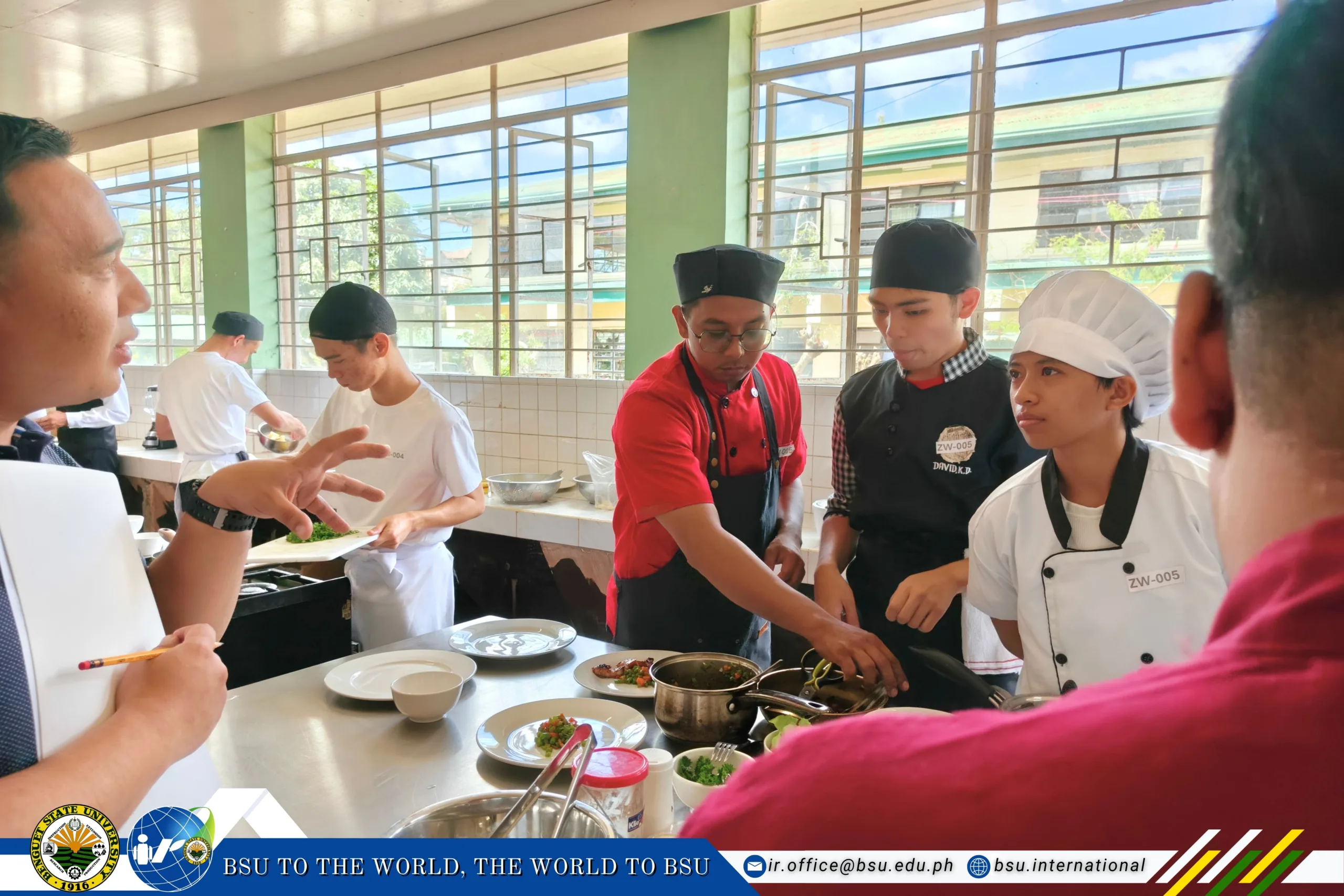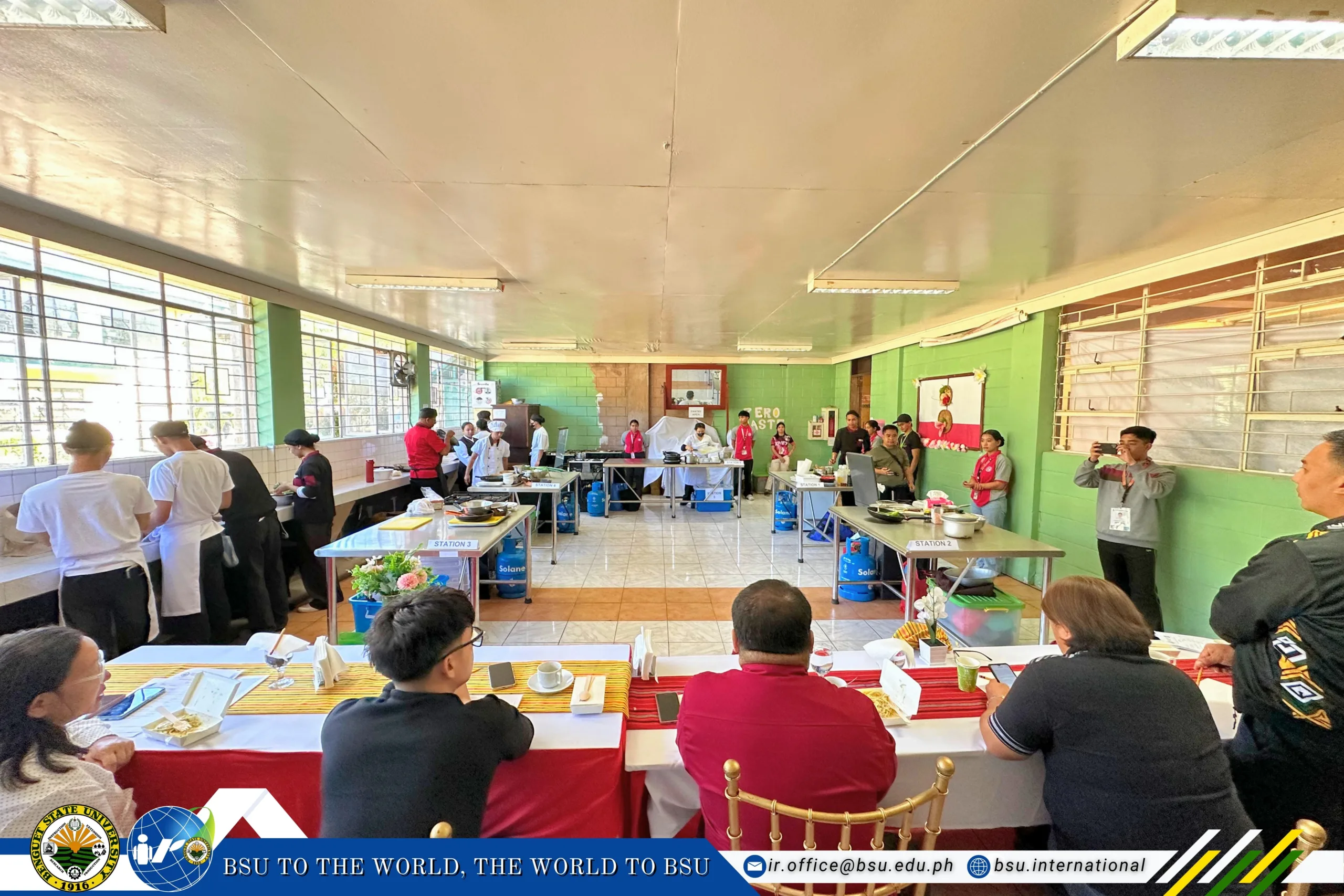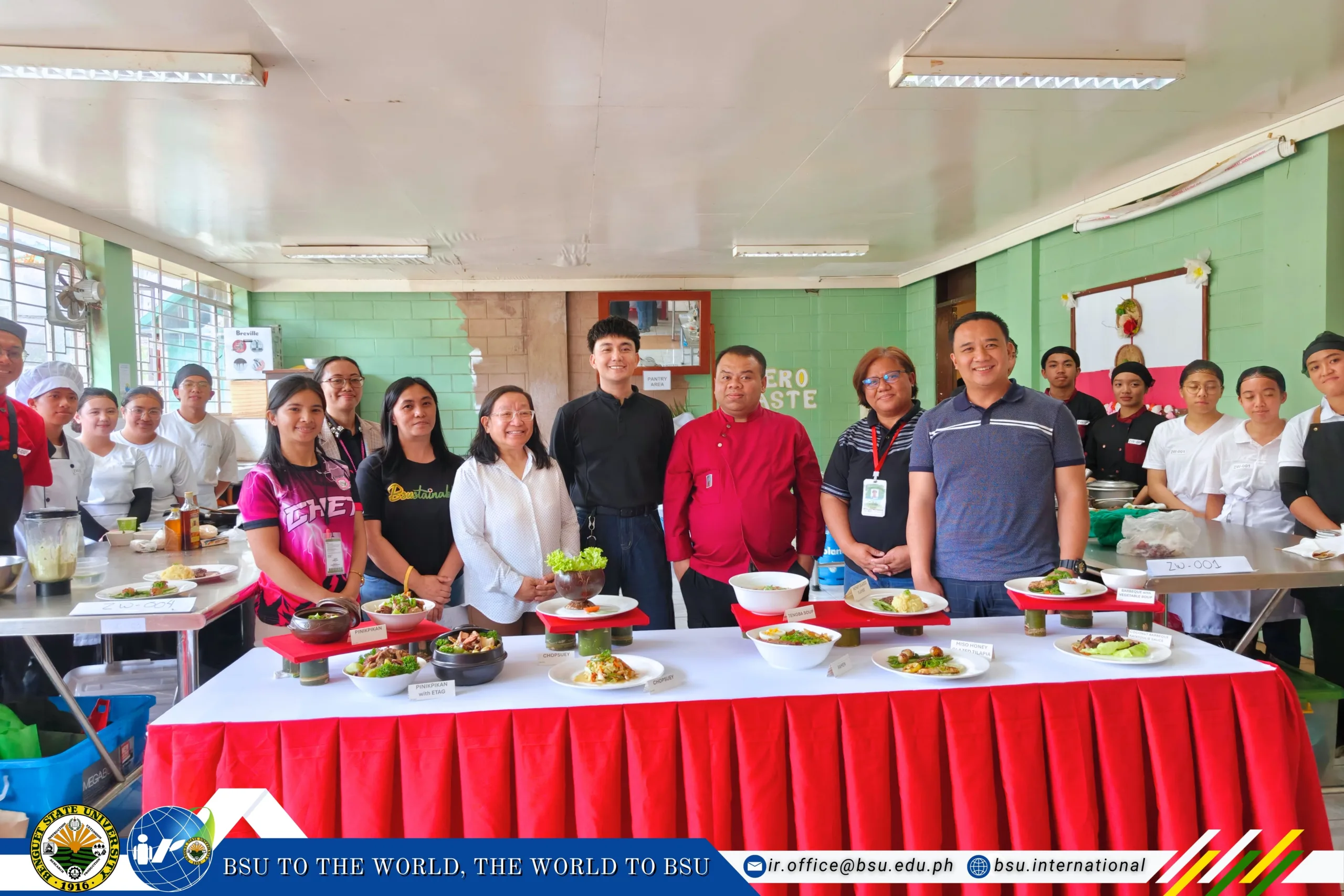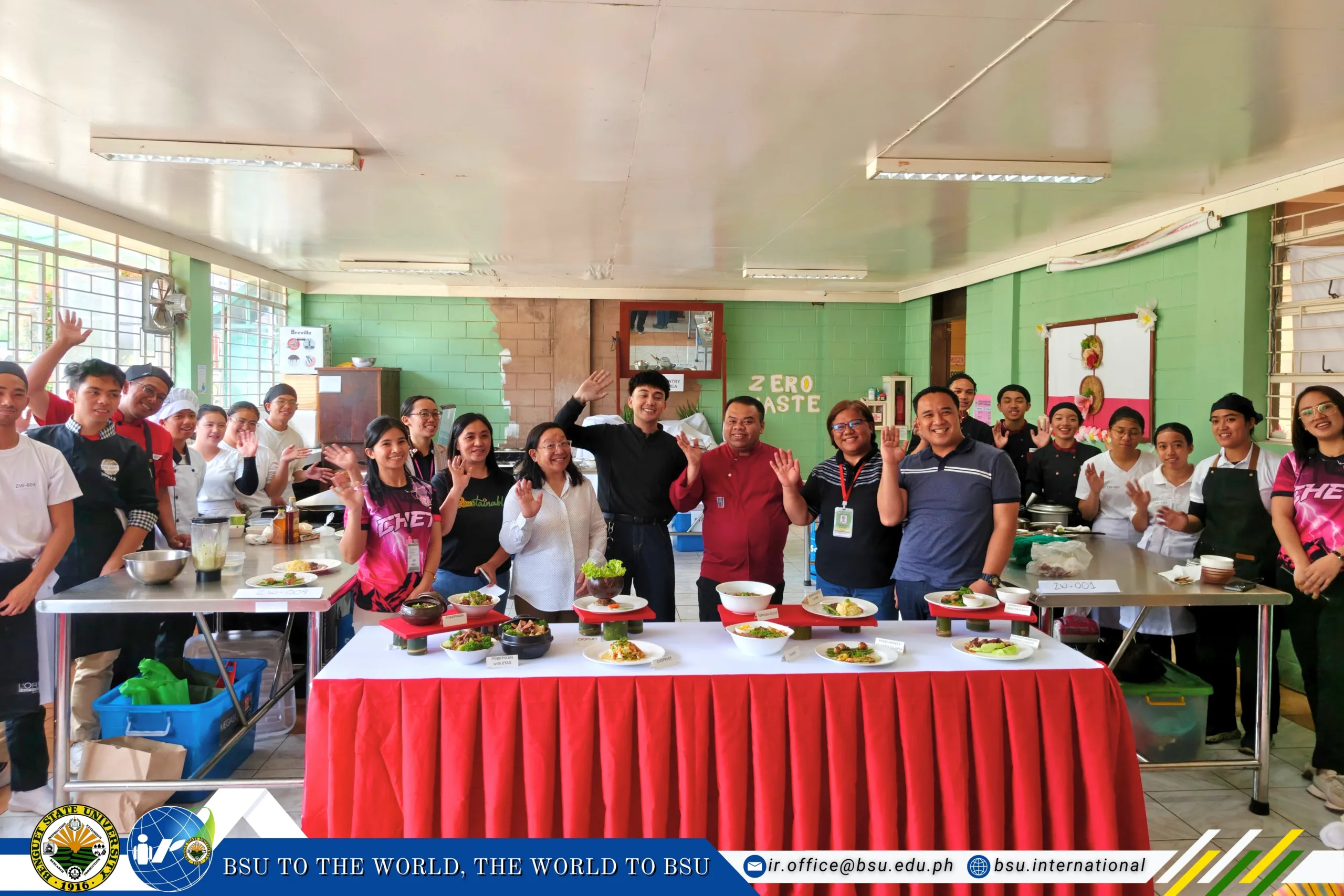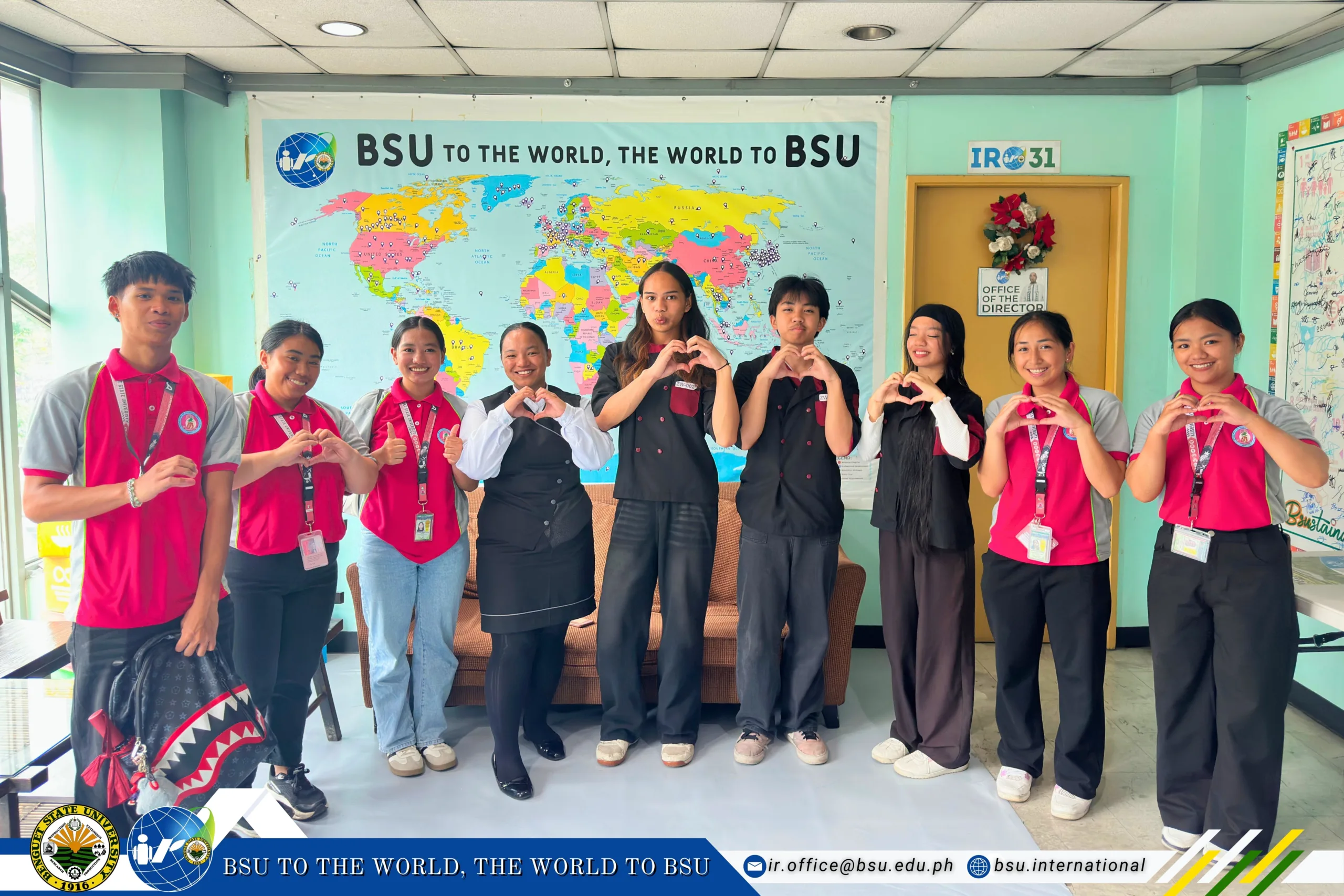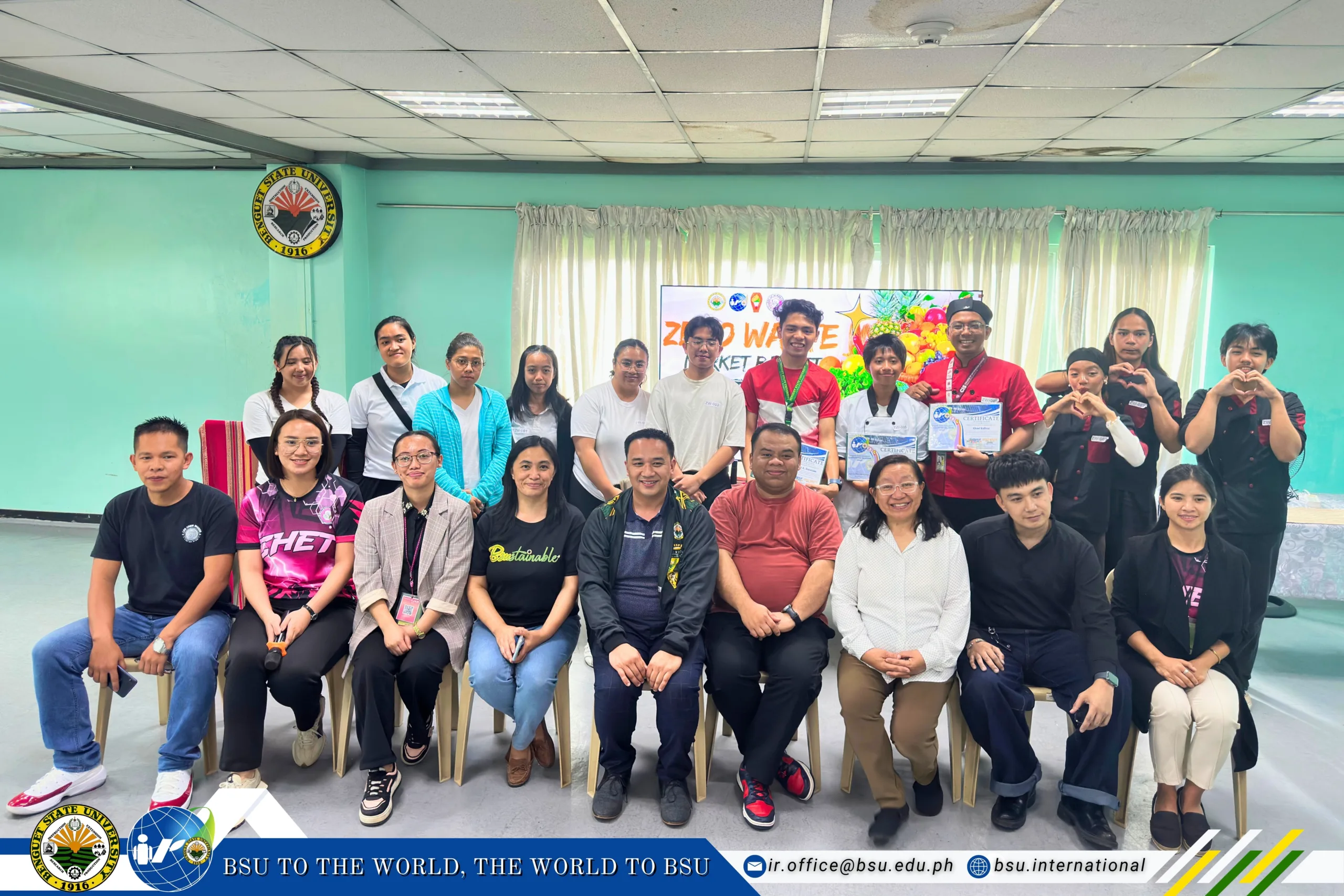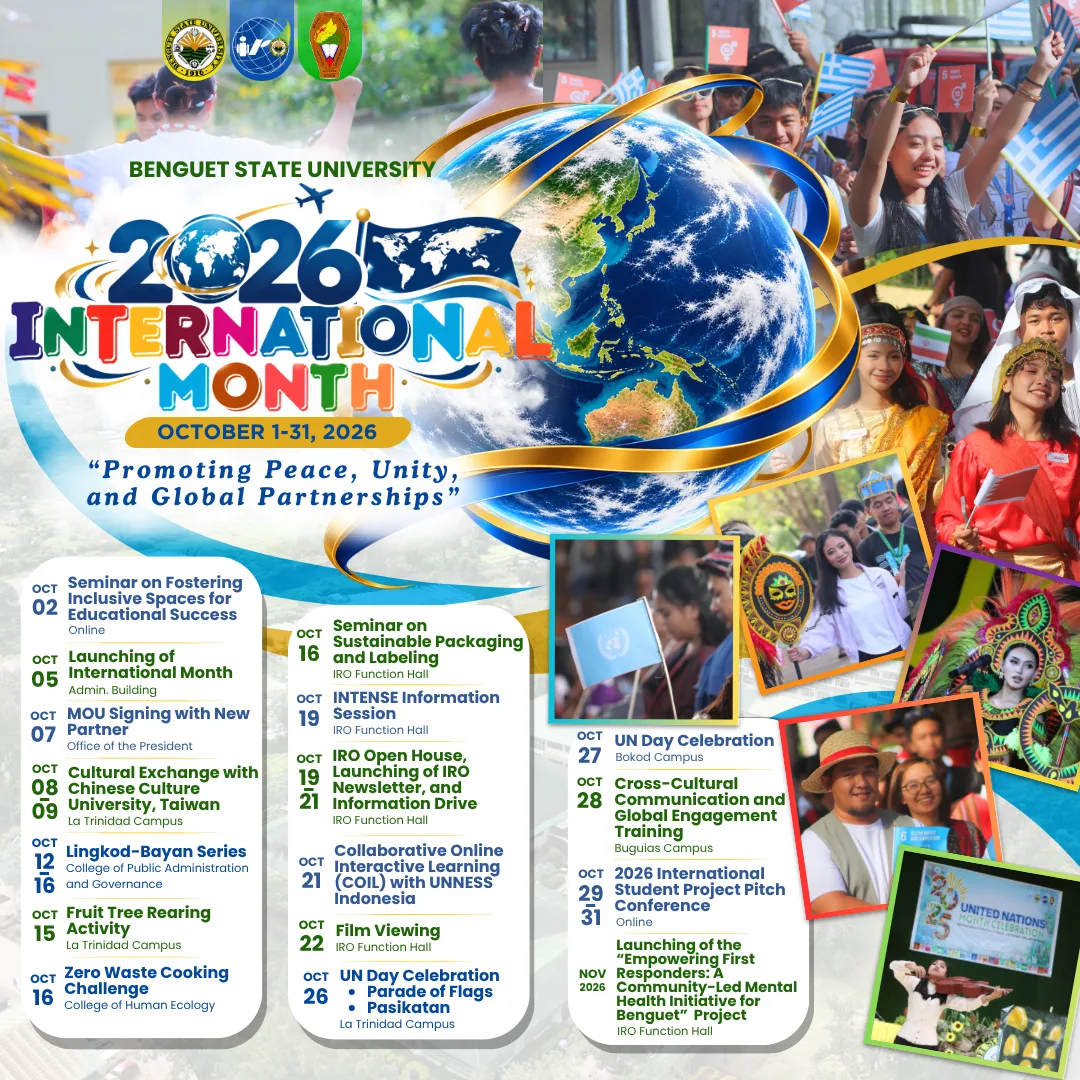
In celebration of World Food Day on October 16, 2026, and as part of the 2026 International Month celebration, the College of Human Ecology, in collaboration with the BSU International Relations Office and the Supreme Student Government, organized this year’s Zero-Waste Market Basket Competition.
This year’s competition marked the second staging of the Zero-Waste Market Basket Competition, following its first run last year as part of the university’s United Nations celebration.
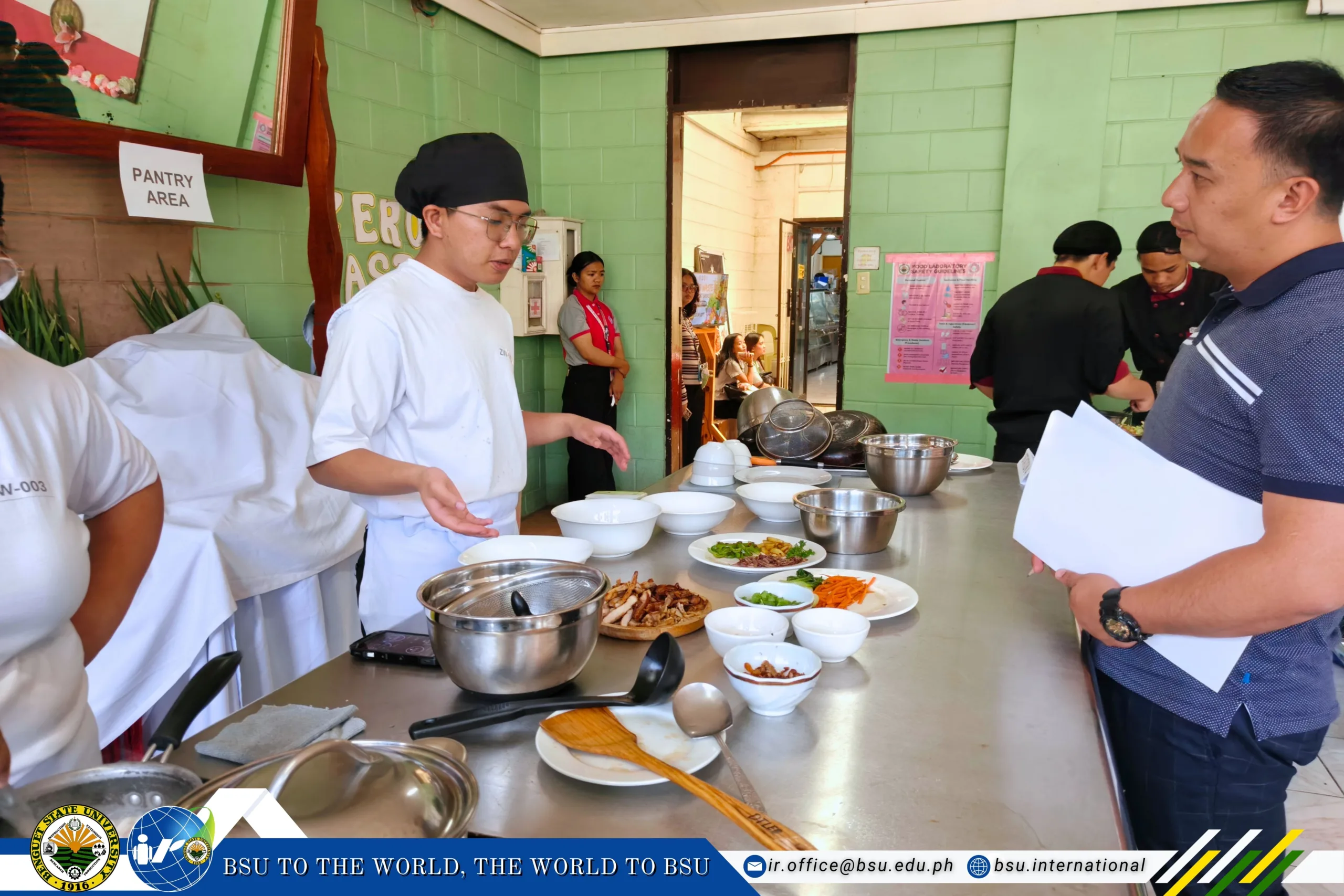
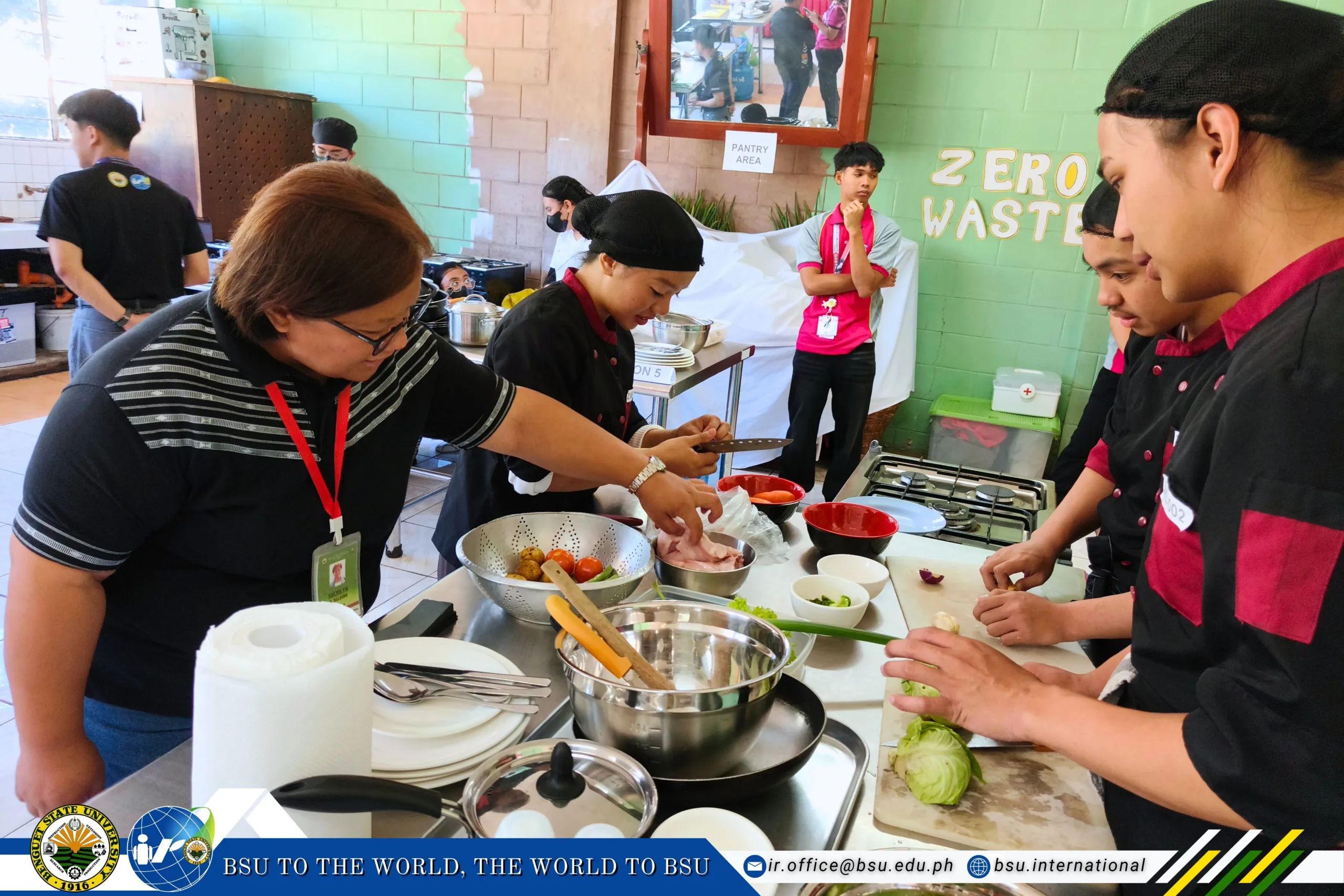
This year’s competition challenged participants to prepare both a traditional and a modern version of a dish using a surprise pantry of local and indigenous ingredients. All five participating colleges completed the challenge, showcasing their creativity, cooking skills, and resourcefulness while putting the principles of zero-waste cooking into practice.
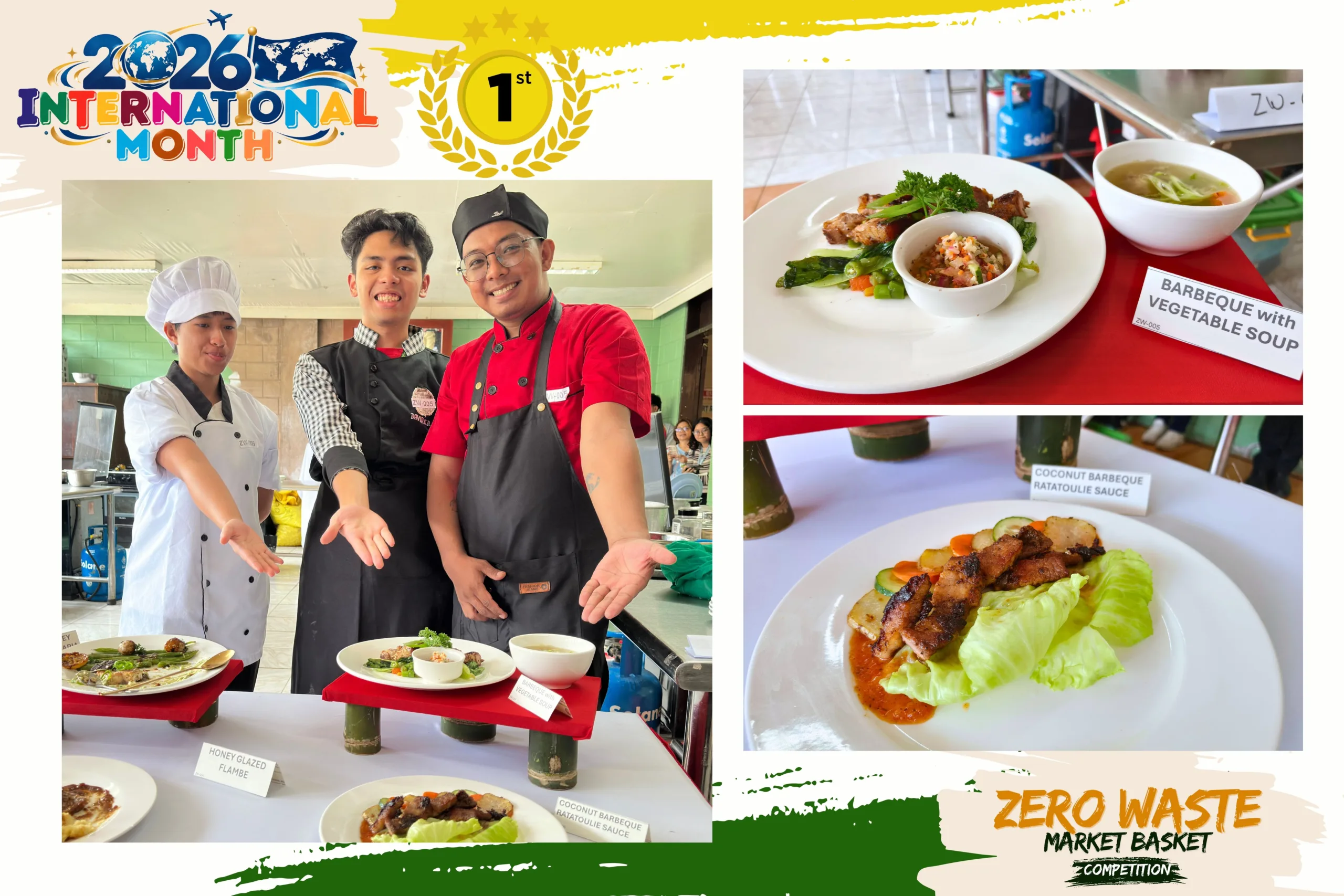
The College of Information Sciences emerged as champion, represented by Kane Dominic David, Bougie Sarmiento, and Princess Eunice Longboan. Their entry featured Pork Barbecue with Soup on the Side as their traditional dish and Coconut Pork Barbecue with Ratatouille-Style Sauce as their modern version.
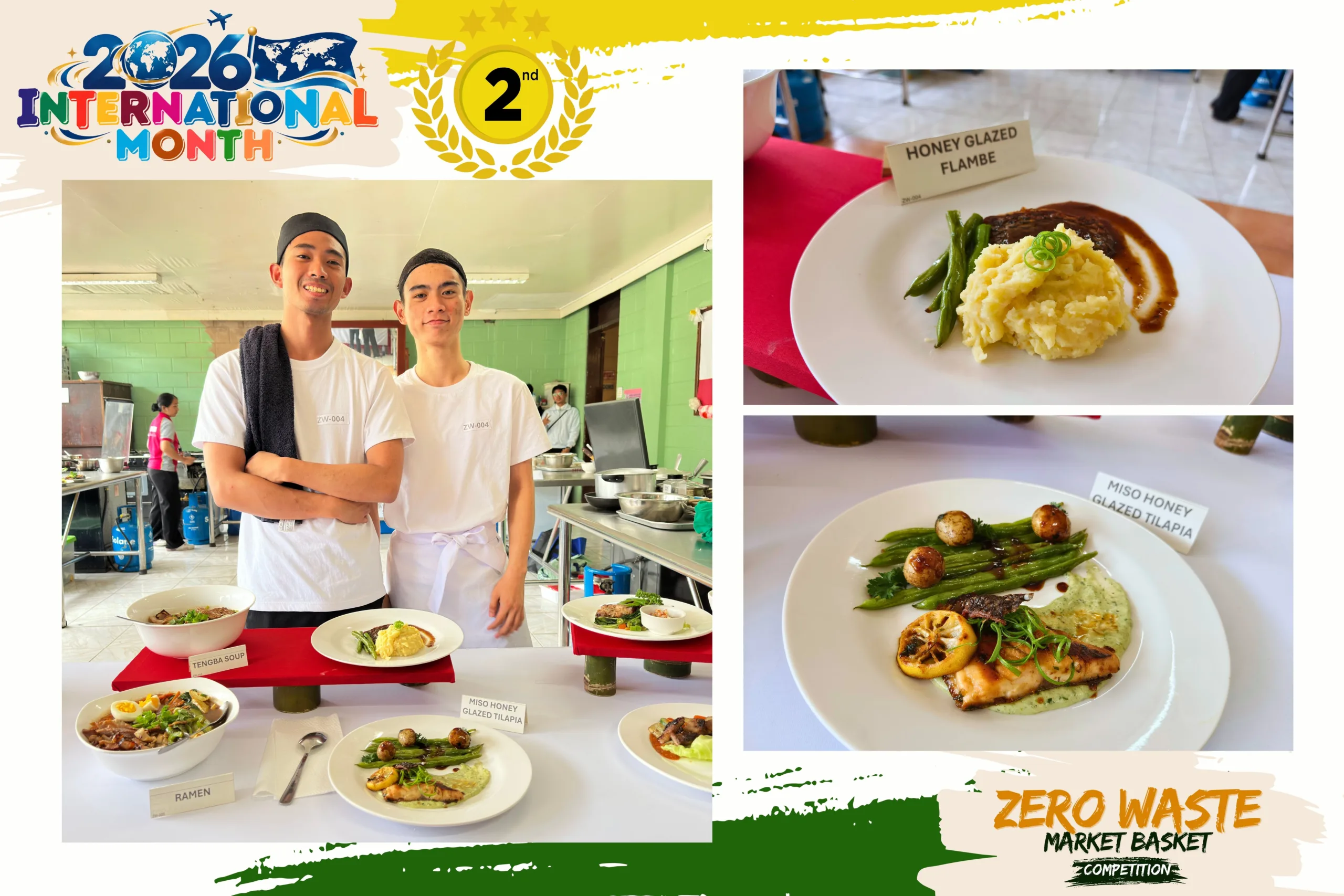
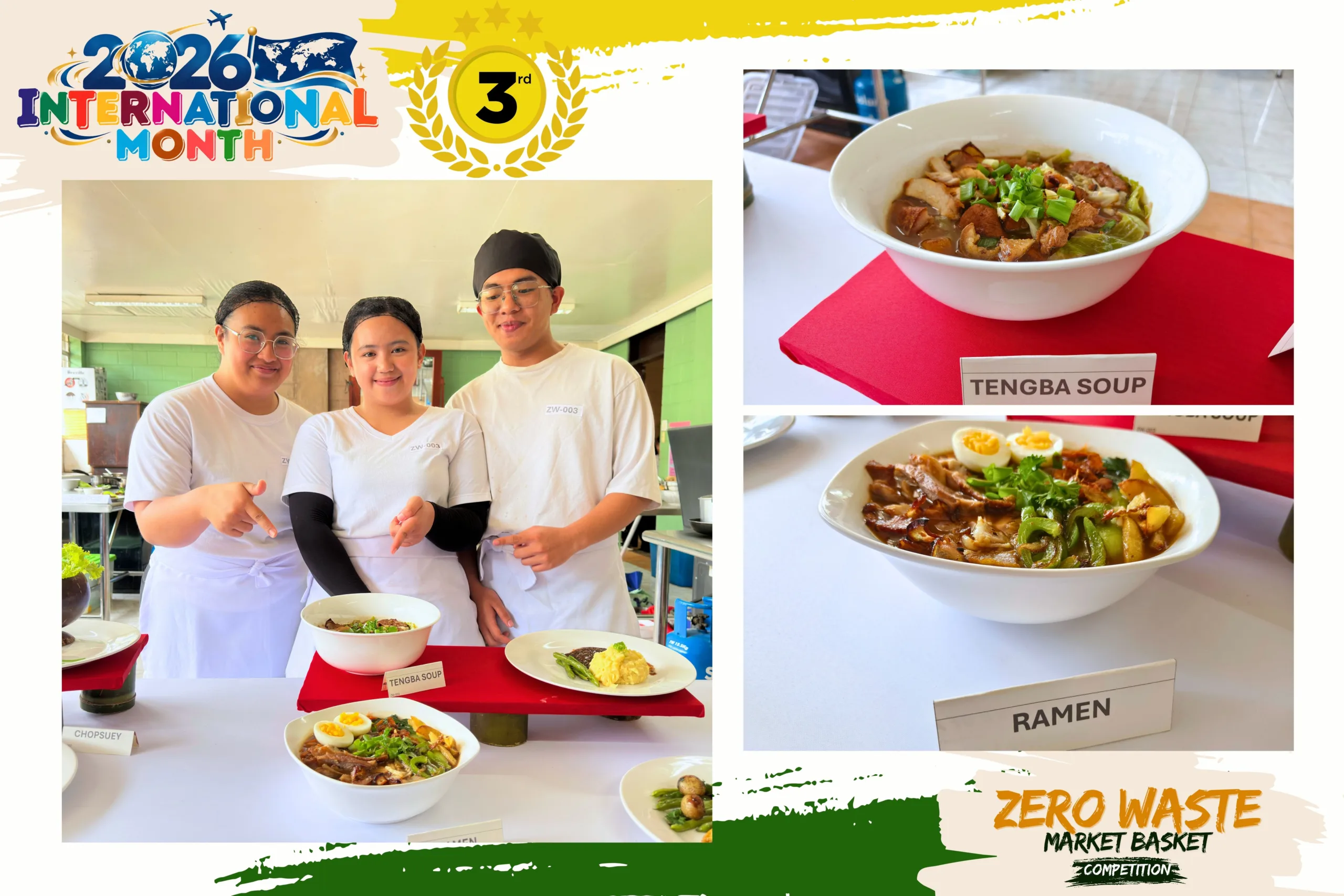
The College of Veterinary Medicine, represented by Joel M. Estabillo and Nathanael John D. Sembrano, secured first runner-up with their Honey Glazed Flambé and Miso Honey Glazed Tilapia. Meanwhile, the College of Teacher Education placed second runner-up. Its team, composed of Aaron Lee U. Corpuz, Faith P. Dong-on, and Althea Jane B. Gavino, prepared Tengba Soup as their traditional dish and Ramen as their modern version.
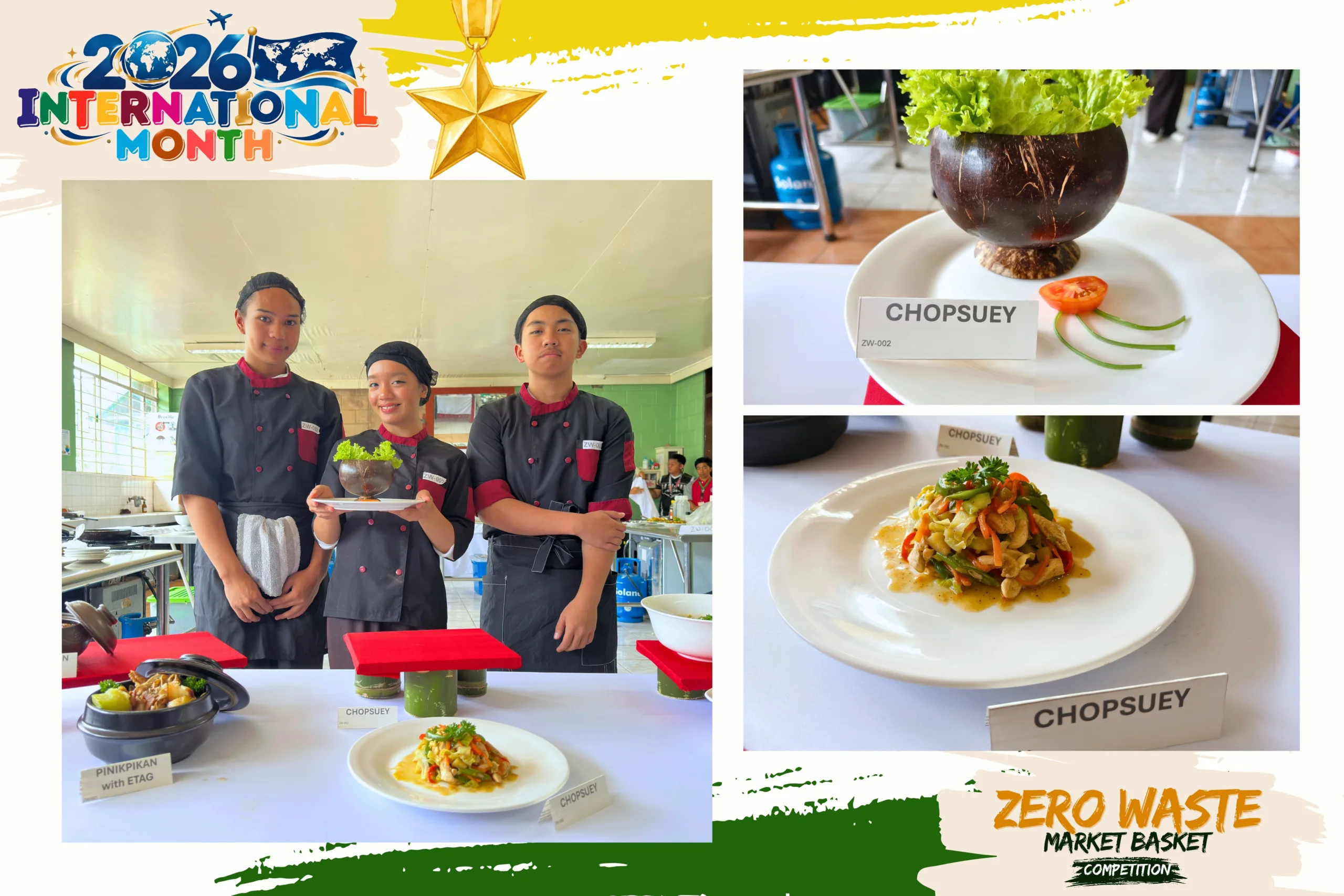
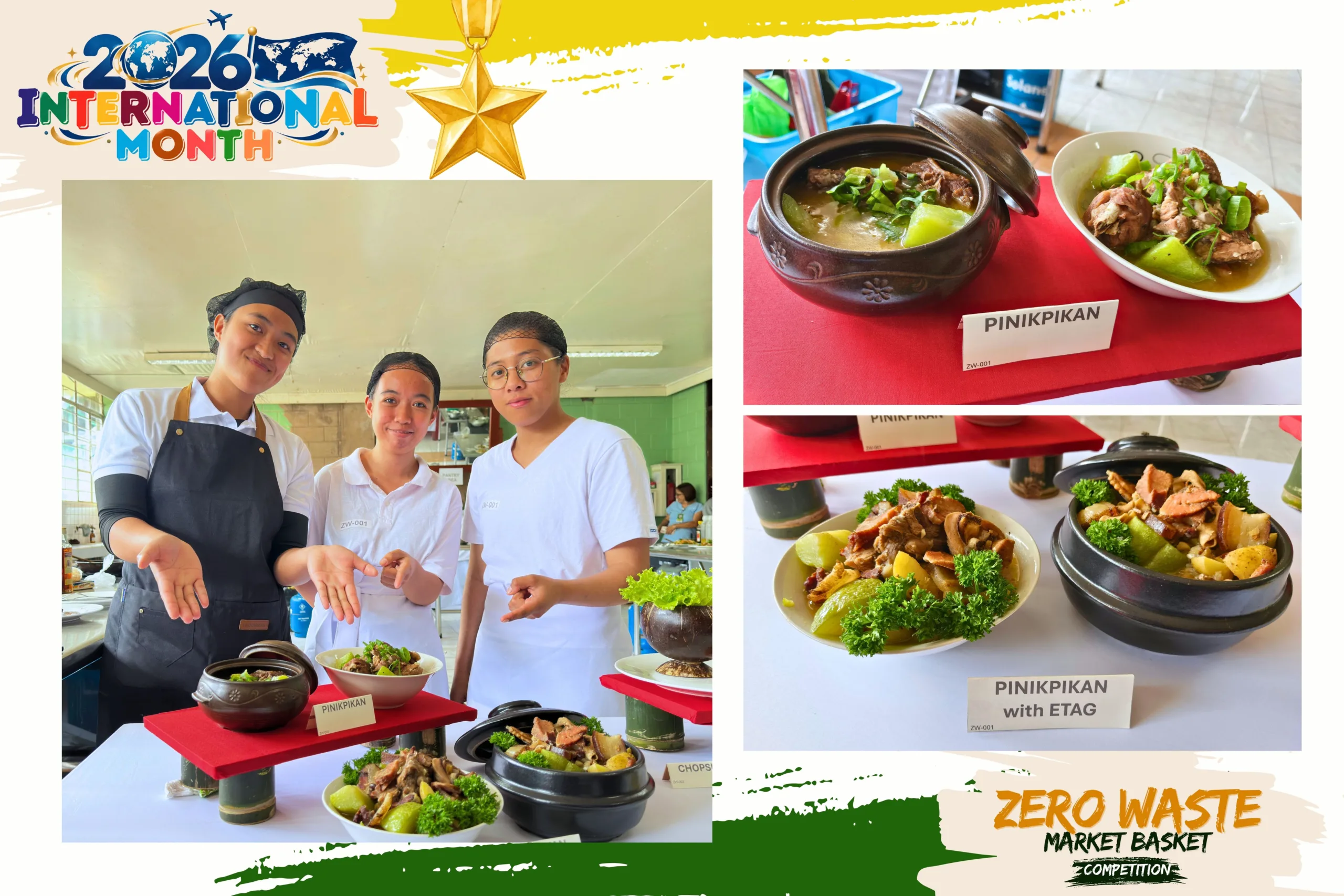
The other participating teams also completed the challenge. Representing the College of Forestry were Jirena A. Bencio, Elizabeth F. Lasdacan, and Hyacinth C. Padillo, who prepared Pinikpikan and Pinikpikan with Etag. The College of Arts and Humanities, represented by Jamaica P. Ogayan, Renz M. Roldan, and Kenneth W. Nabe, presented Chopsuey and its modern version with meat.
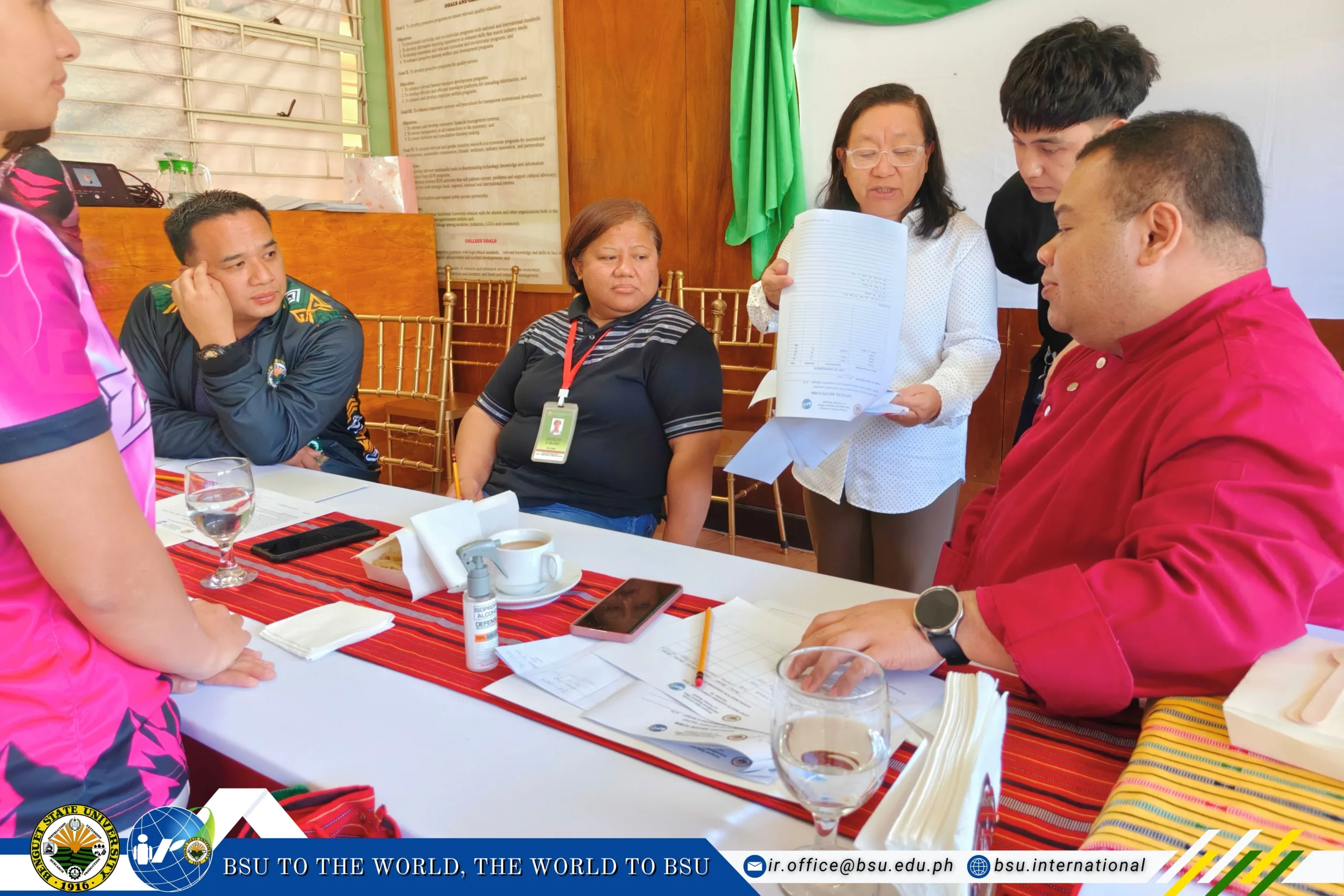
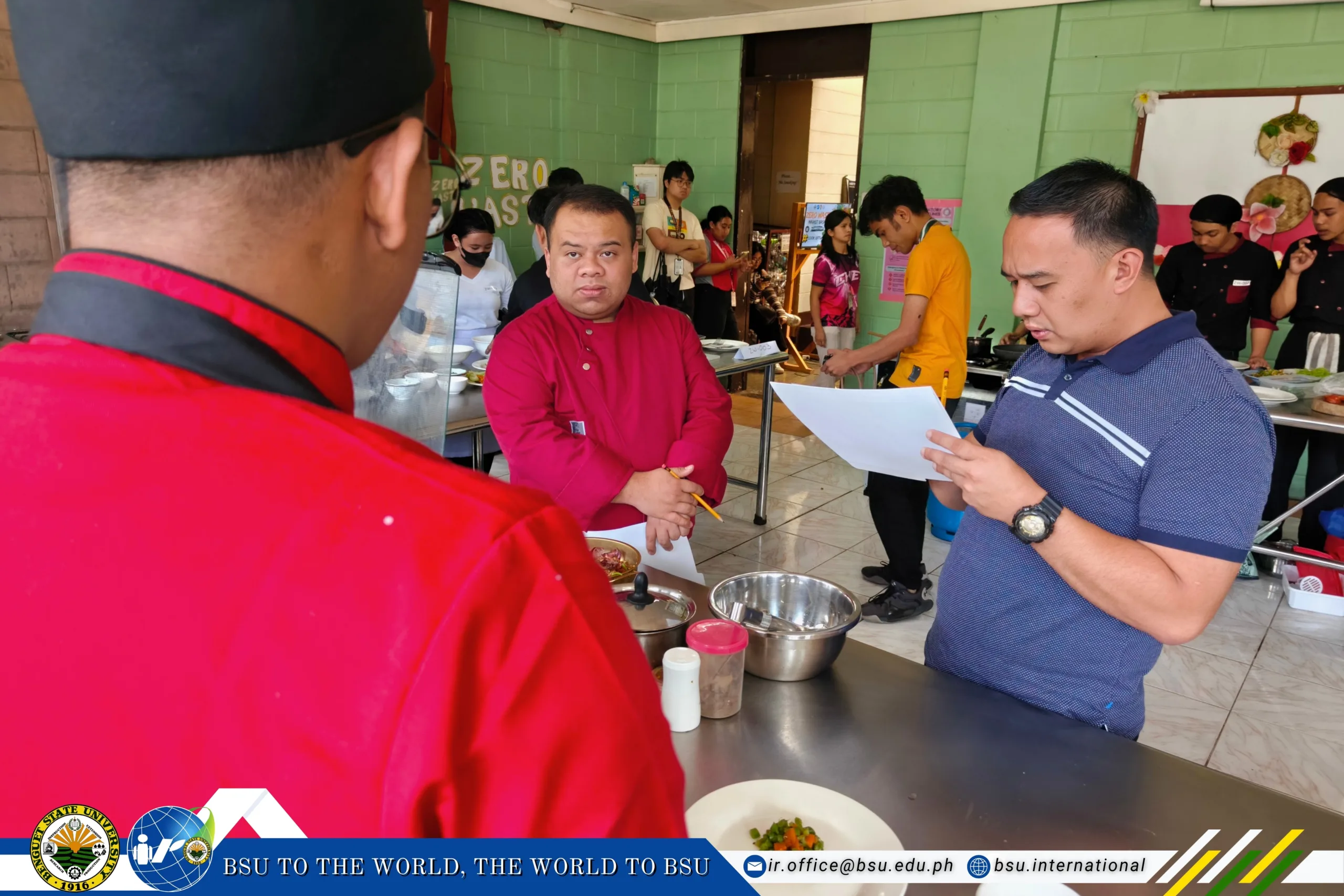
The dishes were evaluated by five judges: Greg B. Landocan, faculty member of the Department of Hospitality Management, College of Human Ecology; Sherilyn B. Balauro, faculty member of the Department of Nutrition and Dietetics, College of Human Ecology; Khael Balboa, School Director of the Philippine Institute of Culinary Arts; Angelo A. Bayacsan, faculty member of King’s College of the Philippines; and Constance Dulay-Florentin, a Home Economics educator. Aside from evaluating the entries, the judges shared practical tips and insights with the participants during and after the competition.
Supporting the activity’s zero-waste advocacy, the League of Associations at La Trinidad and Vegetable Trading Areas, Inc. donated vegetables for the competition, helping provide ingredients for the participating teams.
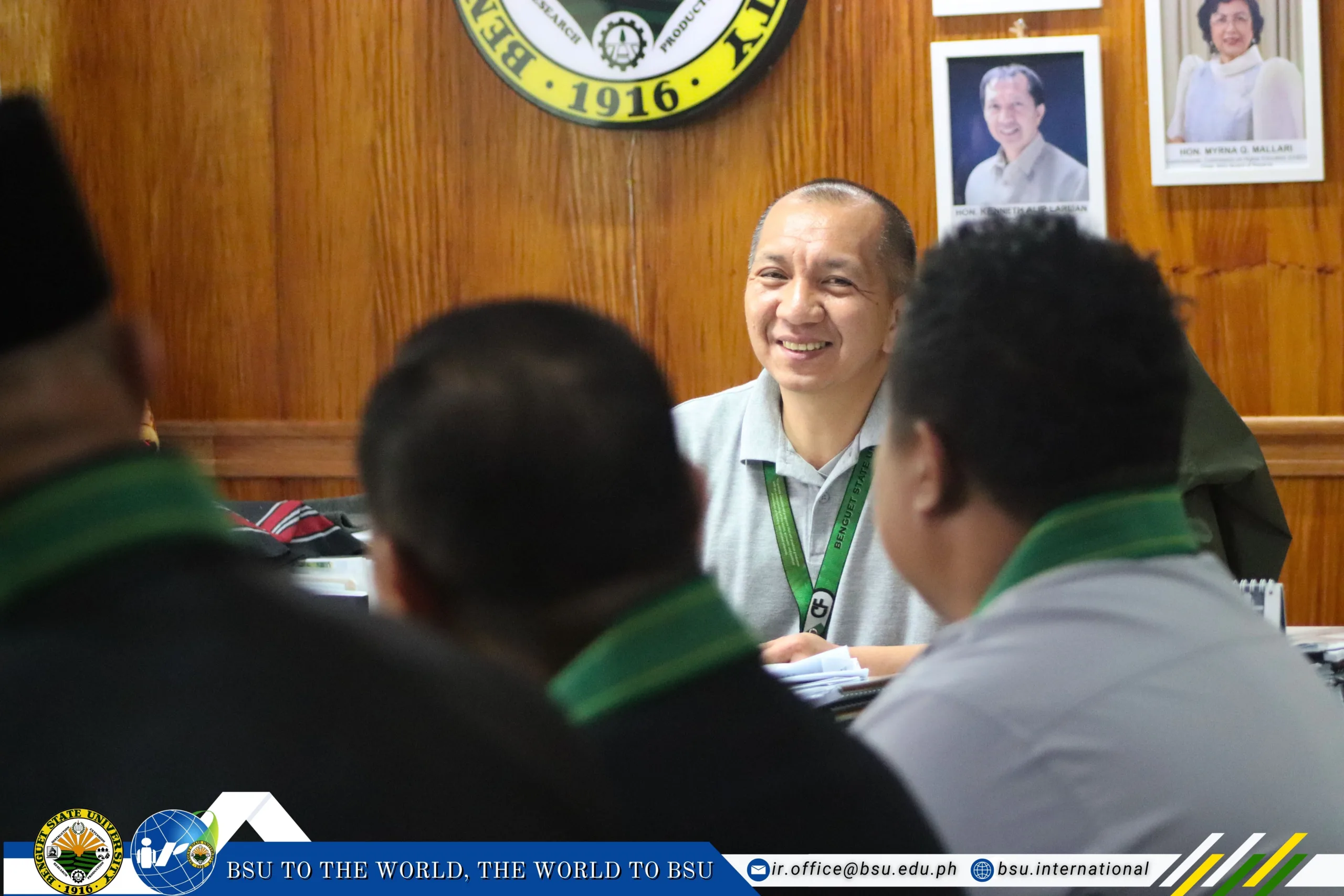
During the closing remarks, UBA IRO Coordinator Jeftee Ben B. Pinos-an emphasized the importance of making use of available resources. His message reflected the main purpose of the competition: to make the most of the ingredients at hand, find practical ways to reduce food waste, and recognize the value of what is readily available.
The Zero-Waste Market Basket Competition showed how traditional dishes can be given new interpretations while keeping resourcefulness and sustainability in mind. Congratulations to the winning teams and to all participating colleges for taking up the challenge and completing the competition!