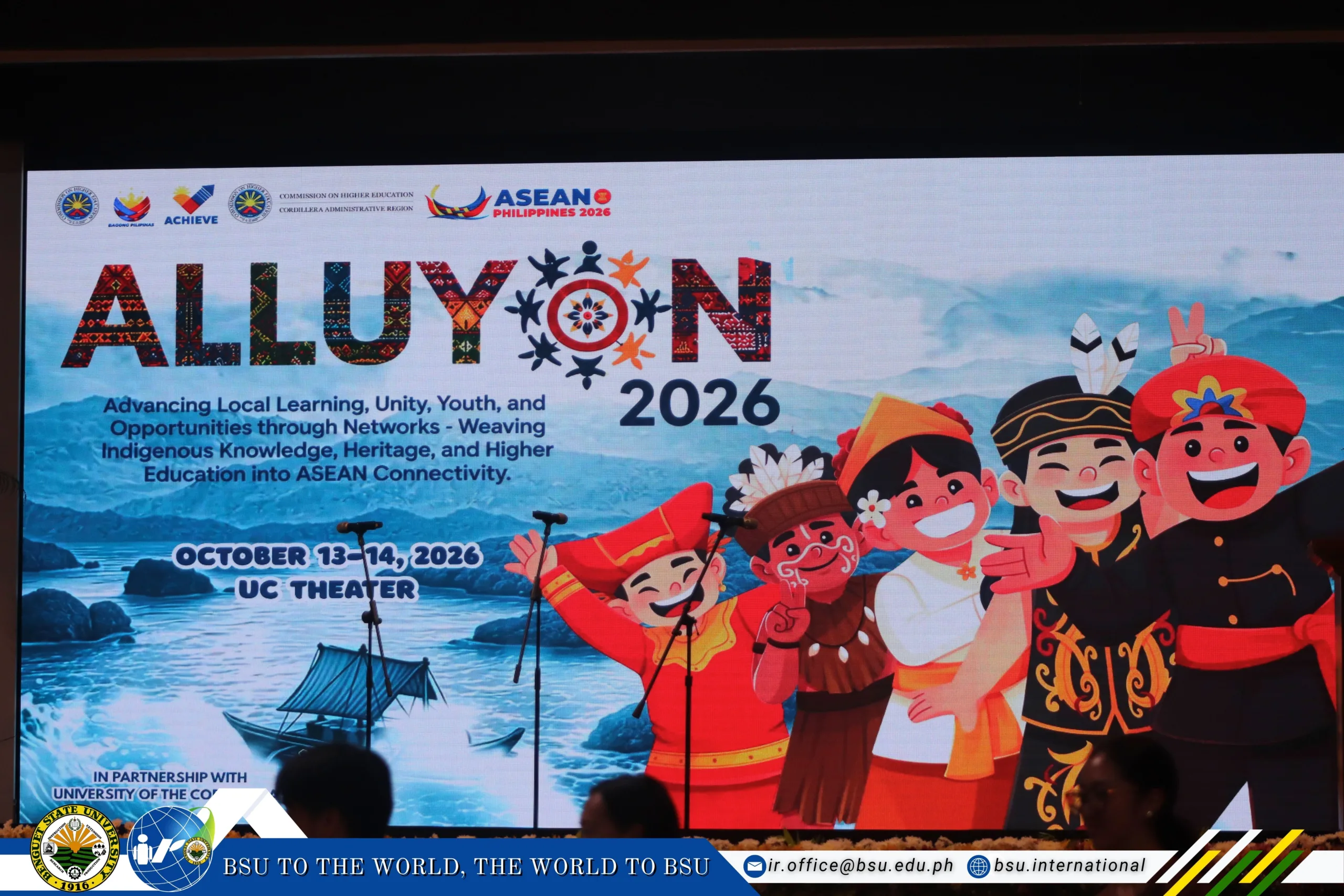
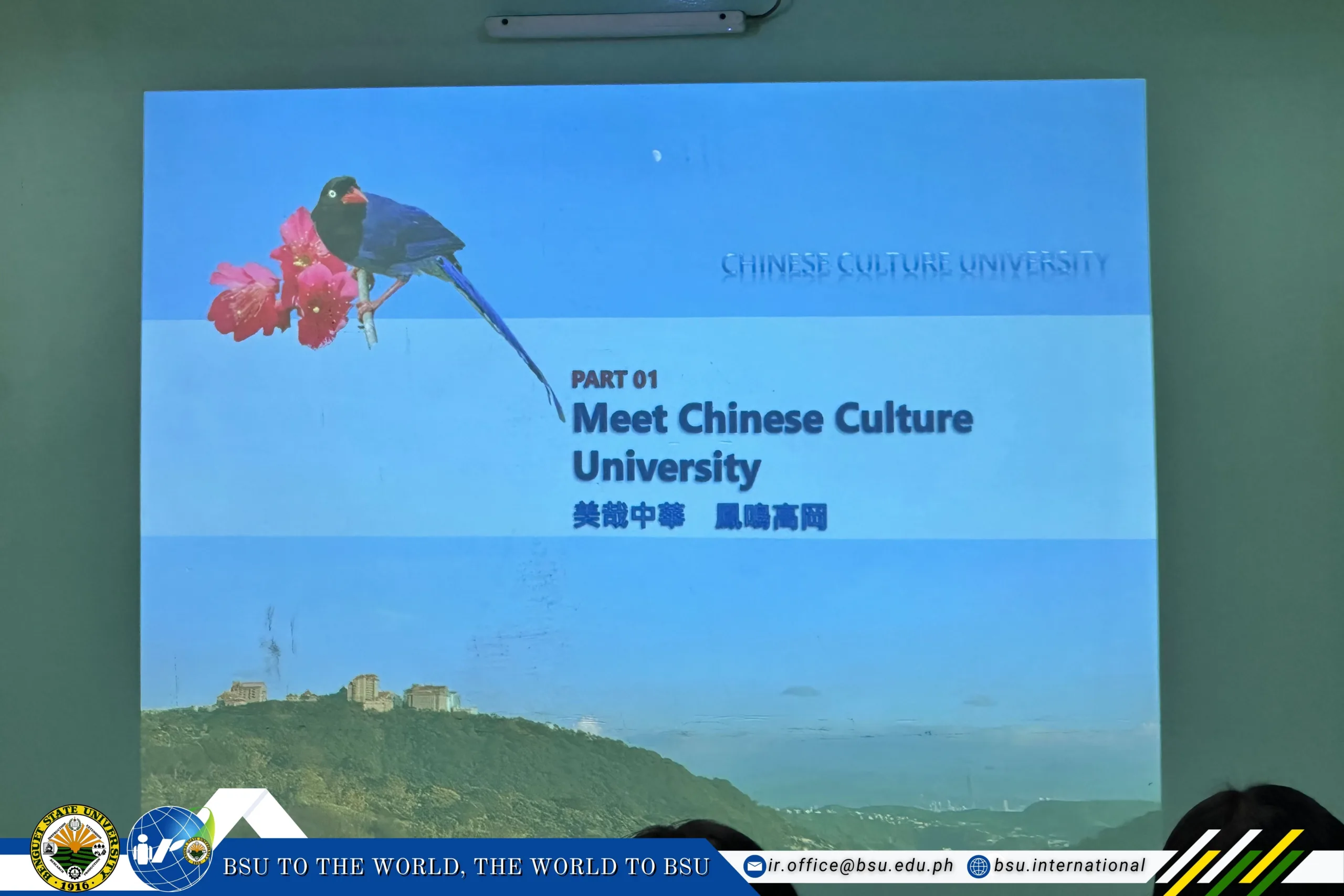
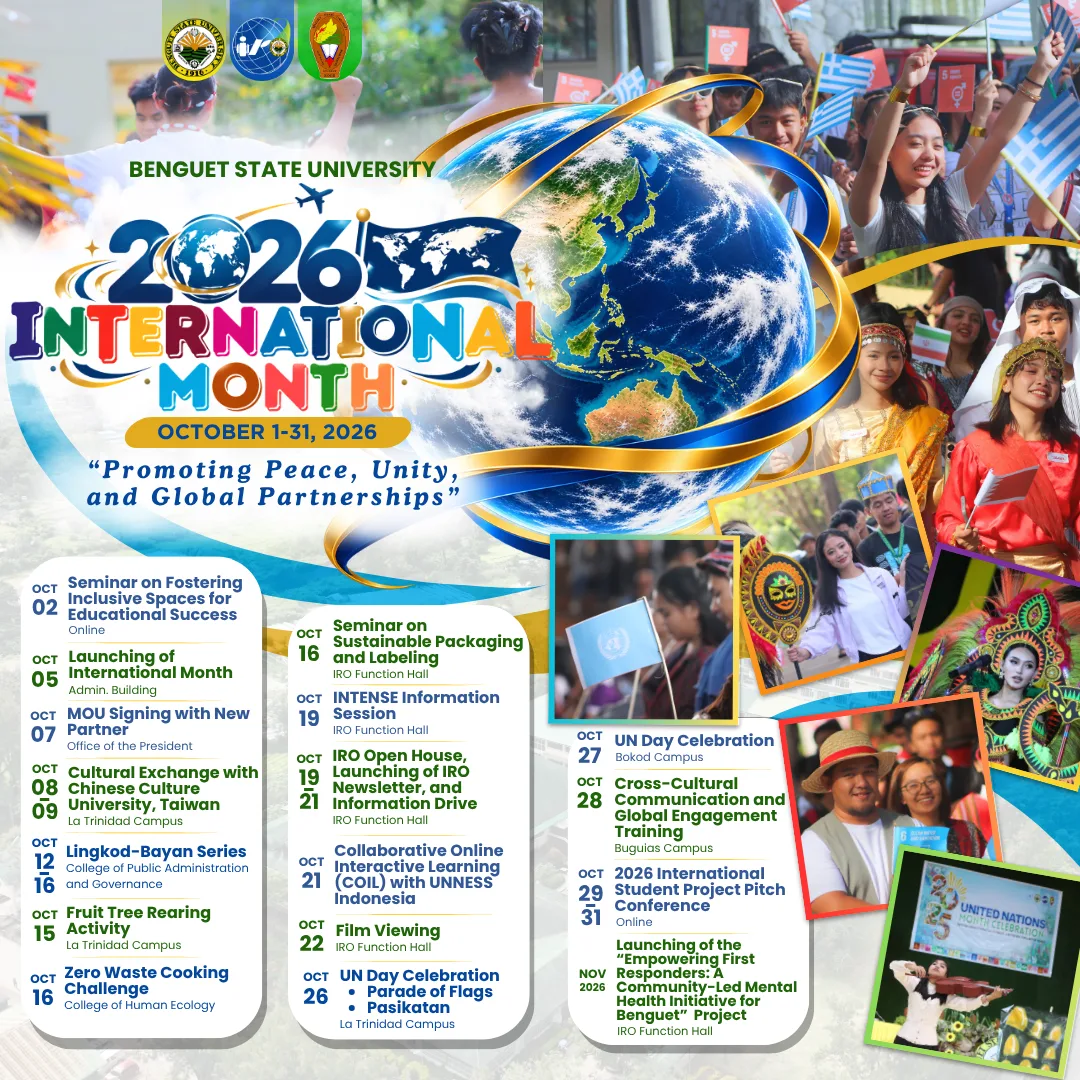
On the afternoon of October 9, 2026, the cultural exchange between Benguet State University (BSU) and Chinese Culture University (CCU) of Taiwan continued with a showcase of traditional music, dances, and cultural attire, highlighting the rich cultural heritage of Taiwan’s Indigenous communities and the Cordillera region.The afternoon session commenced with an informative presentation by the Taiwanese delegation introducing Taiwan’s sixteen officially recognized indigenous tribes: the Amis, known for their harvest festivals and vocal harmonies; the Atayal, recognized for weaving traditions and facial tattooing; the Paiwan, renowned for wood carving and stone-slab architecture; the Bunun, famous for polyphonic singing; the Puyuma, noted for their youth age-grade system; the Rukai, who honor the lily flower as a sacred symbol; the Tsou of Alishan, deeply connected to forest traditions; the Saisiyat, known for the biennial Pas-ta’ai ritual; the Yami (Tao), ocean-farers famous for hand-carved boats; the Thao, known for pestle music around Sun Moon Lake; the Kavalan, skilled in banana-fiber weaving; the Truku, celebrated for hunting lore and weaving; the Sakizaya, known for their distinct ancestral rites; the Sediq, high-mountain dwellers steeped in weaving and lore; the Hla’alua, guardians of the sacred shell rituals; and the Kanakanavu, dedicated to language and ritual revitalization.
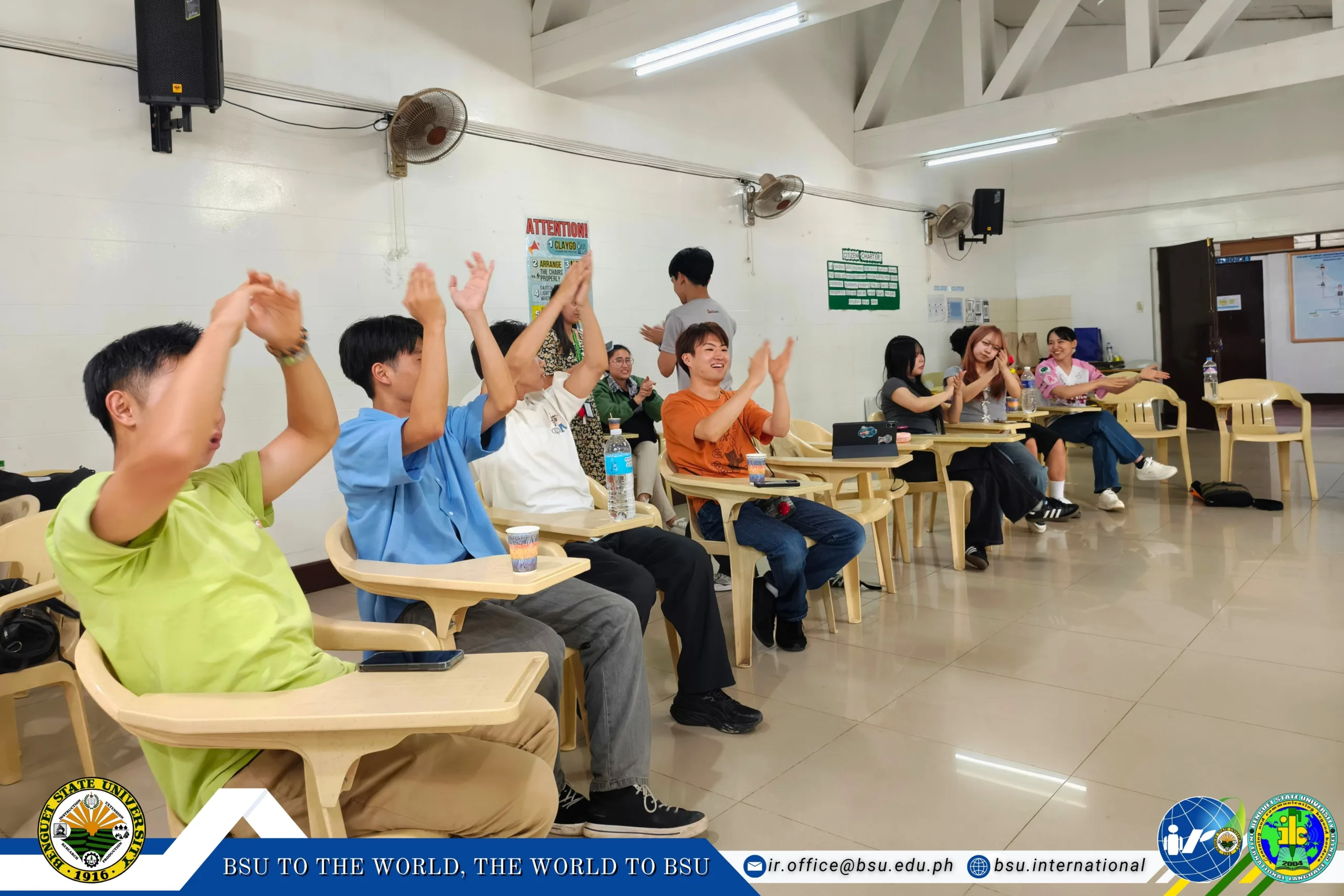
Following this introduction, the Taiwanese students performed three traditional songs: the interactive Clap Song, which uses rhythm to express joy; Yul Lore’s, a reflective piece rooted in indigenous storytelling; and the Friends Song, a welcoming melody celebrating unity and hospitality.
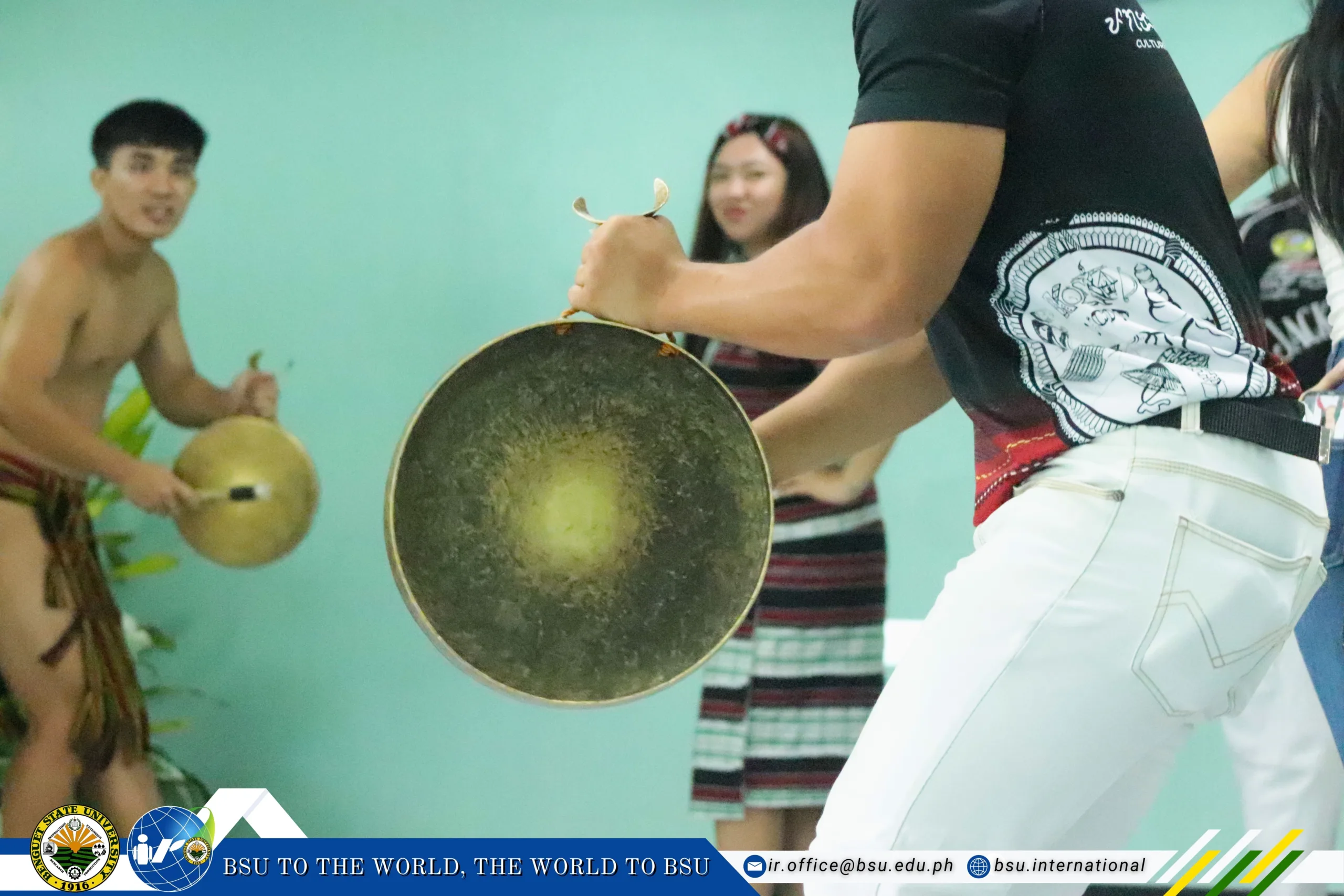
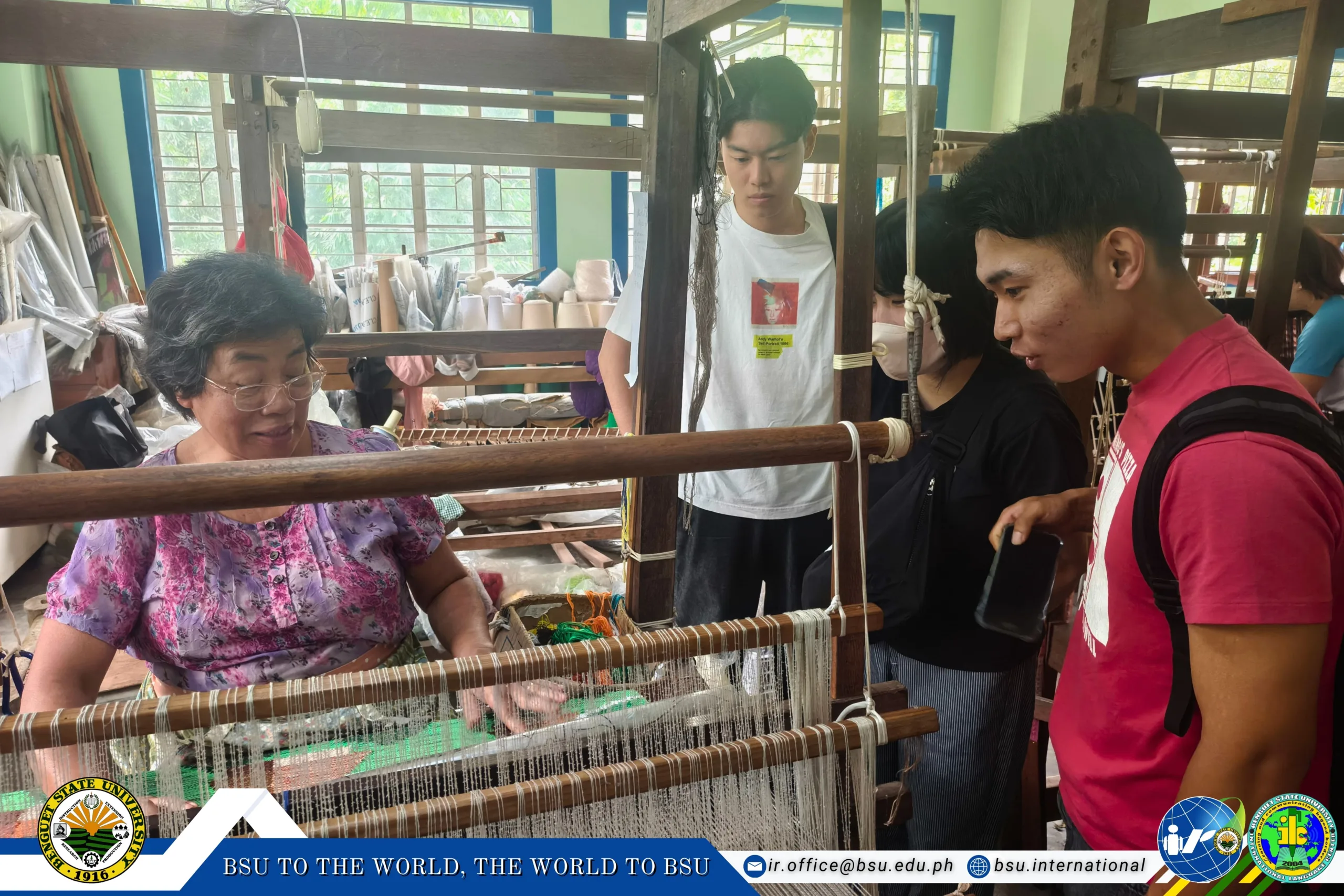
The focus then shifted to the local cultural showcase as the student performance group Kontad presented a suite of traditional Cordilleran dances. These included Tinatakyad, a dance featuring strong and rhythmic footwork; Tayaw, a sacred Benguet dance expressing gratitude to ancestors through wing-like arm movements; Bendian, a celebratory circle dance marking victory and community unity; Boogie, a lively social dance adapted into regional gatherings; and Tadok alongside Salidsid, expressive courtship dances reflecting grace and community harmony. Following their performances, members of Kontad introduced and detailed the various traditional attires of the Cordillera, explaining the intricate patterns and cultural symbolism embedded within each garment.
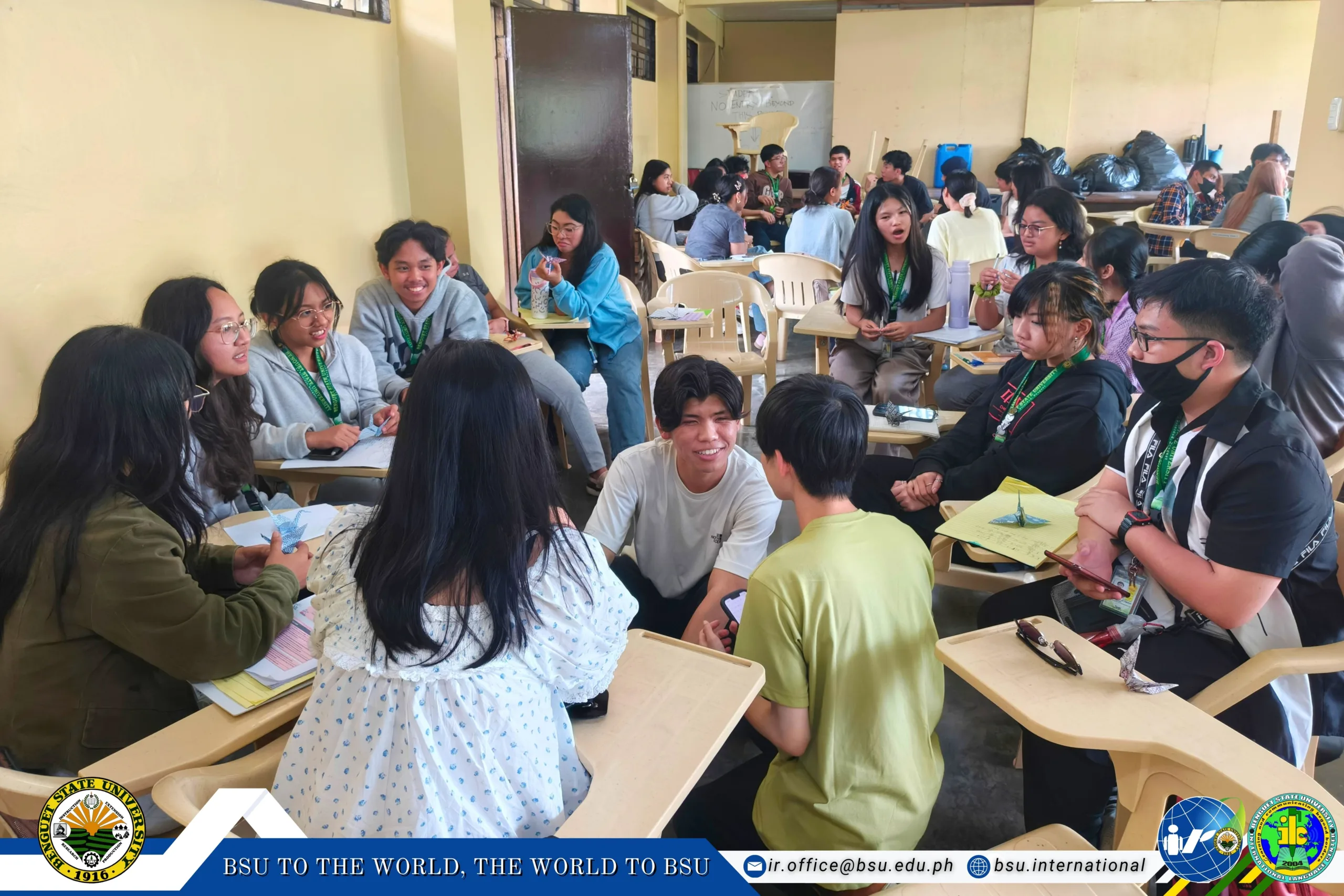
The exchange concluded with an interactive workshop and inspiring closing messages. The Taiwanese students first led the audience through the basic steps of traditional Taiwanese dances, prompting students from History 3A and Kontad to join them on the dance floor. In turn, members of Kontad taught the Taiwanese guests the fundamentals of Cordilleran dances, culminating in a festive joint performance where participants danced together.
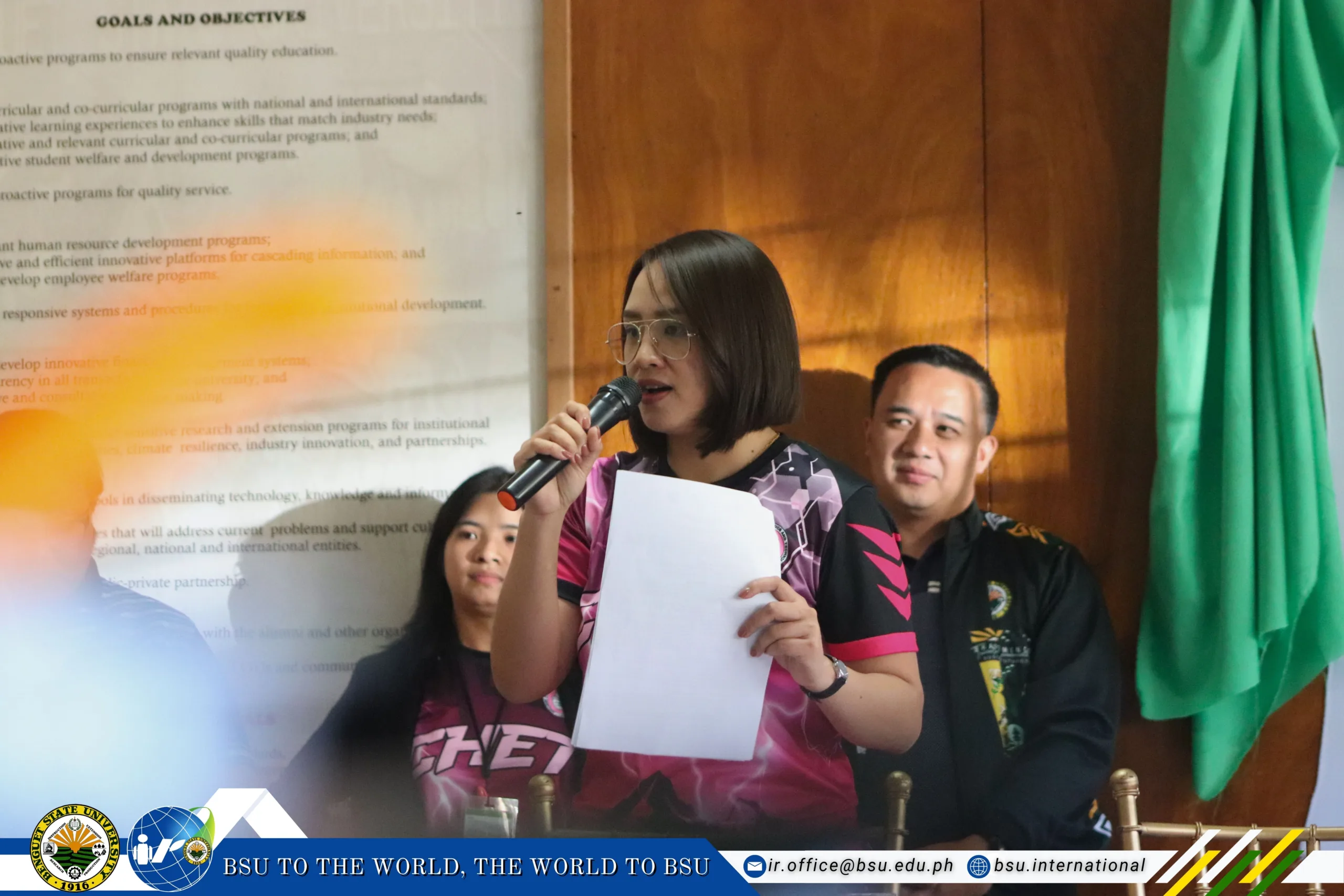
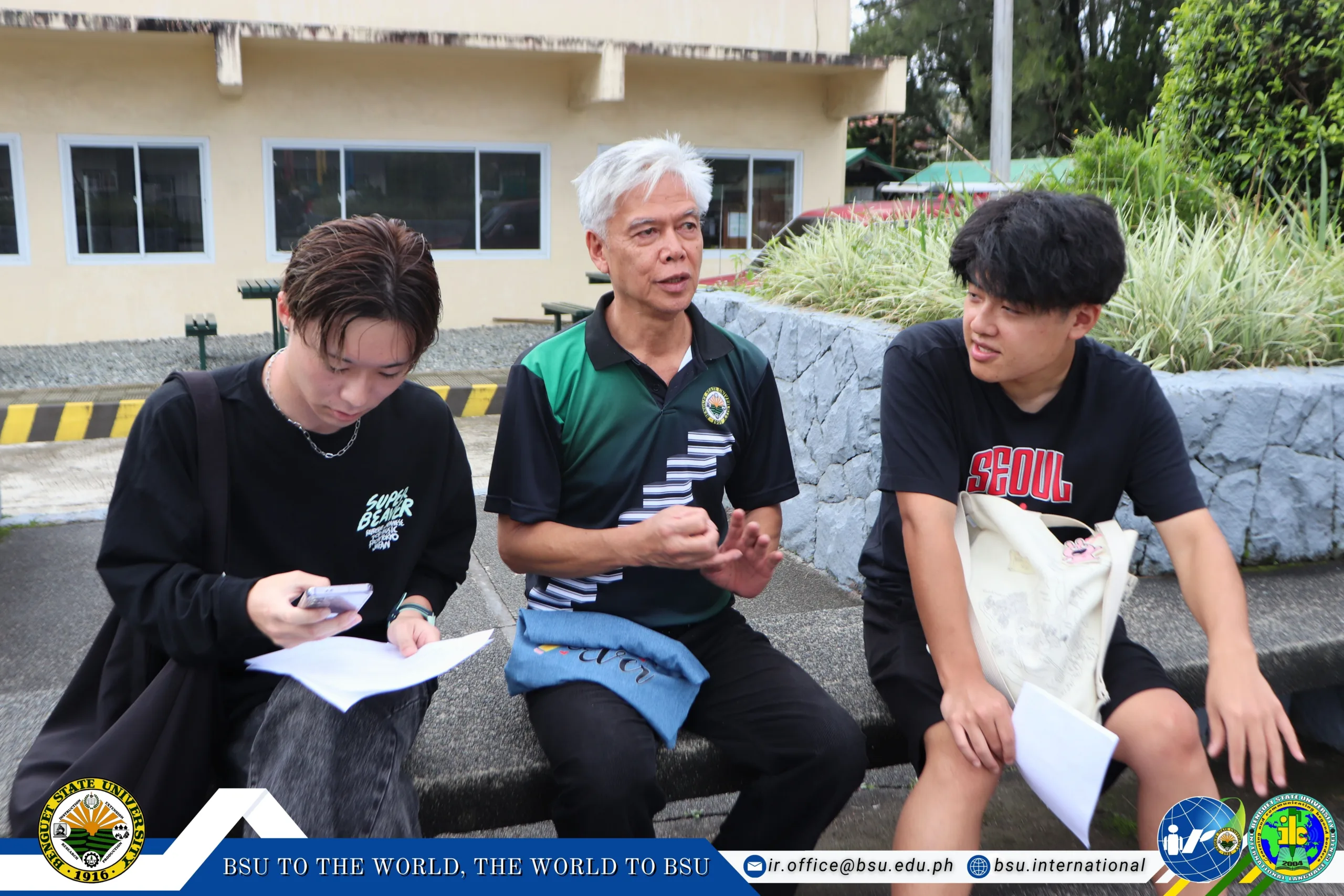
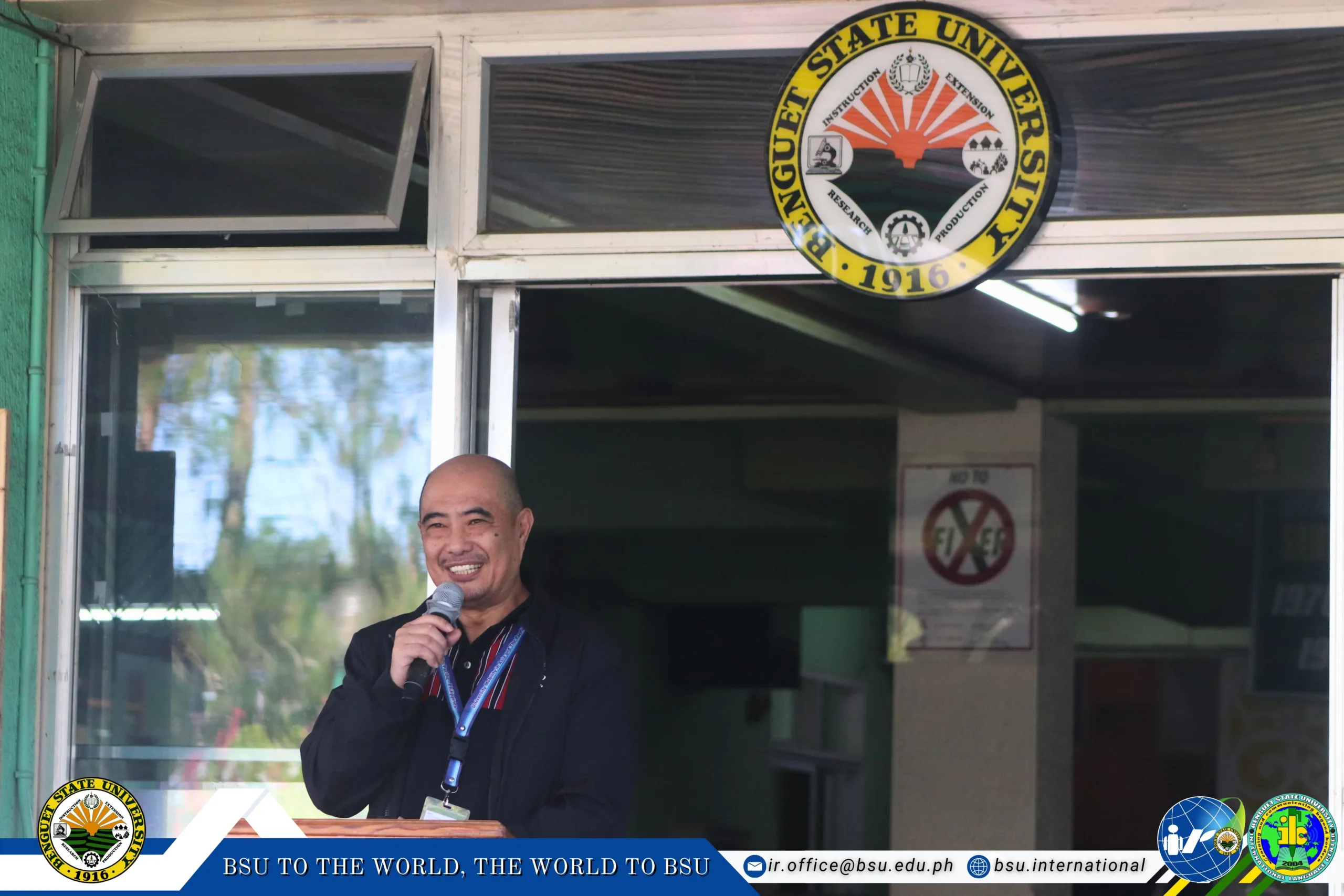
To wrap up the program, Dr. Richard H. Kinnud delivered an inspiring message highlighting the cultural similarities between Taiwan and the Cordillera. He emphasized that education goes beyond the classroom, as meaningful cultural exchanges allow students to learn from different experiences and develop openness, empathy, and respect for diversity.
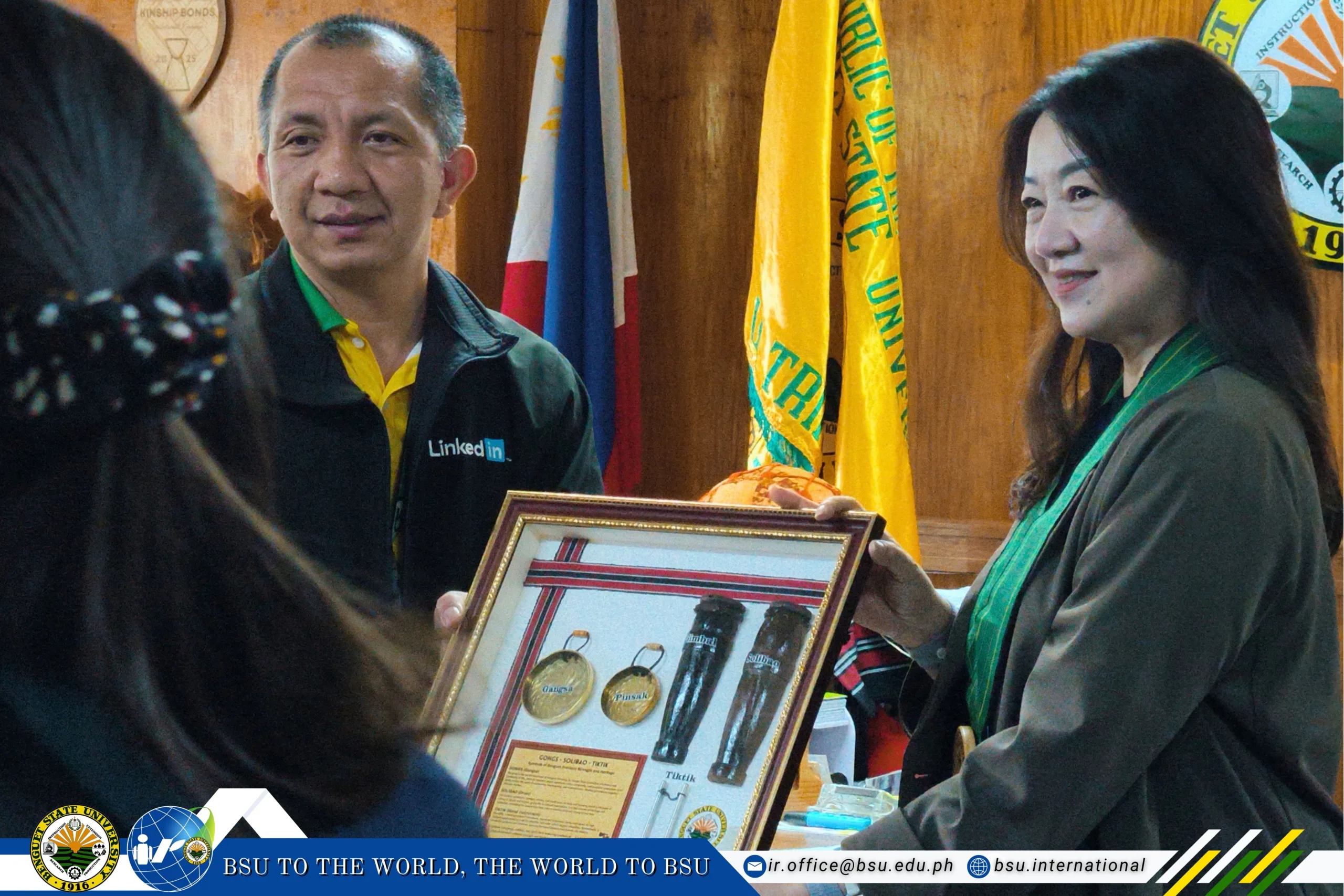
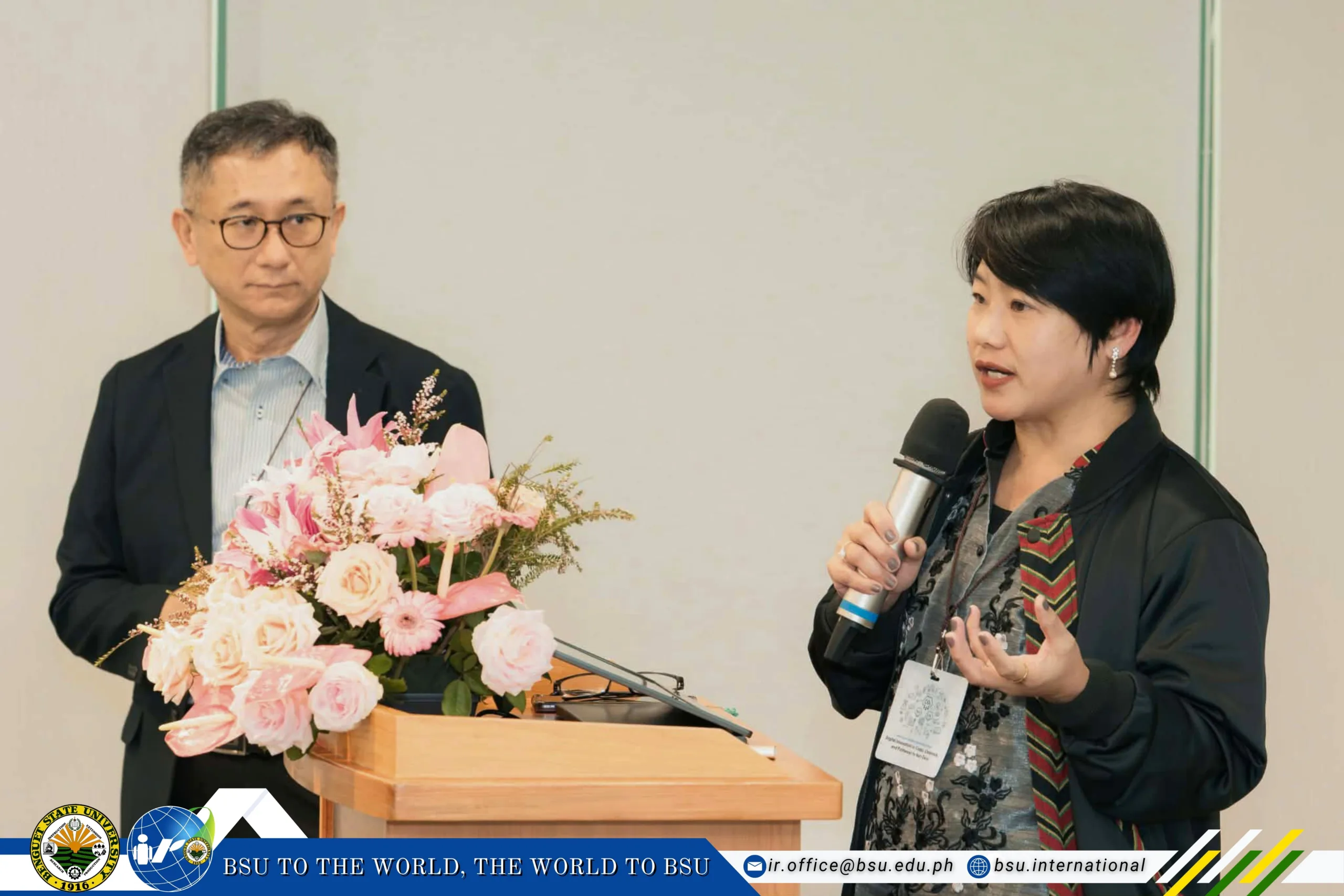
Dr. Yih-Jiun Lee, Dean of Student Affairs of CCU, then expressed her appreciation to the BSU International Relations Office (IRO) for the opportunity to learn and share cultural experiences. She remarked that the two regions are “not just neighbors” but are also connected through culture and history, expressing her hope that their friendship would continue to grow.
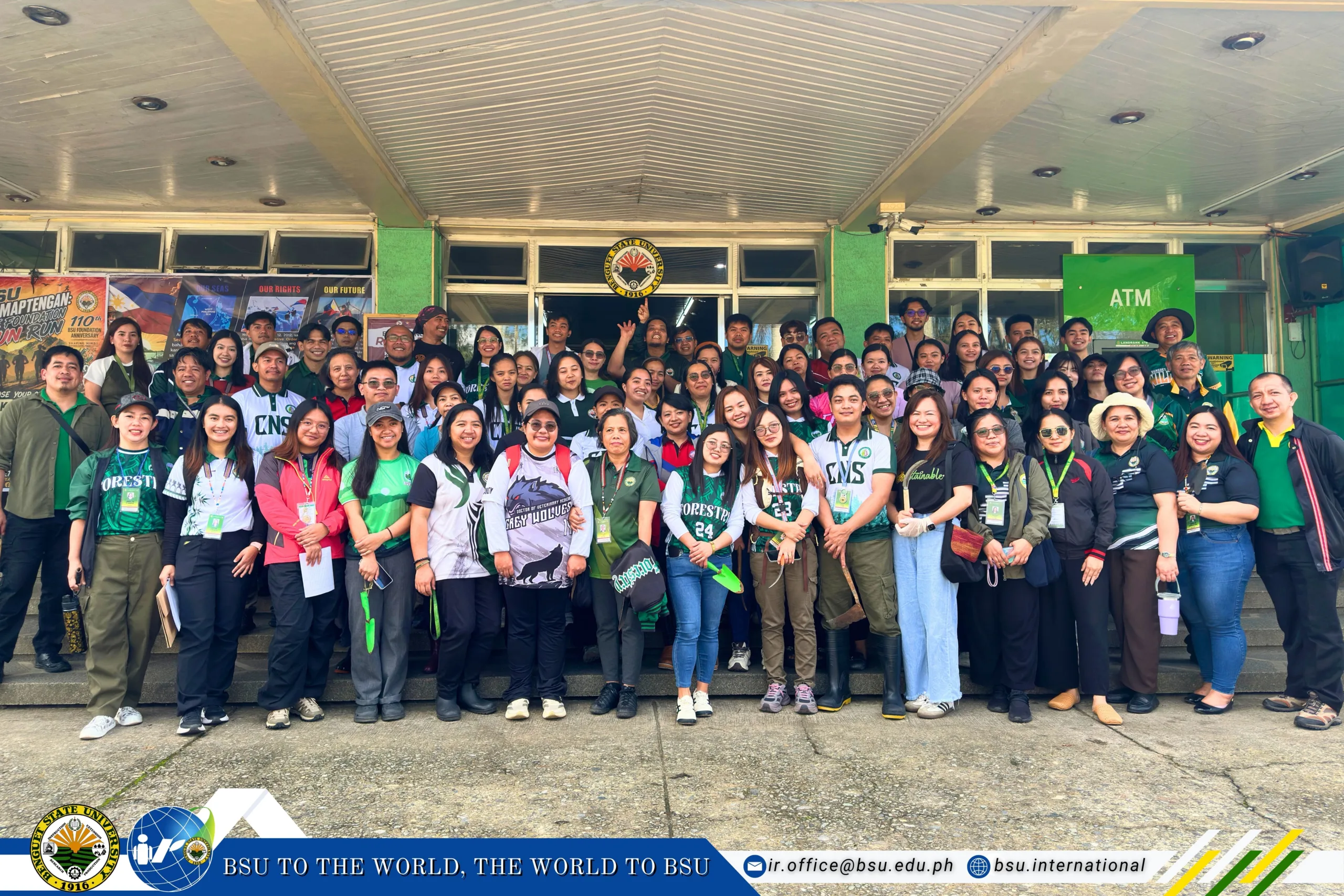
Finally, Ms. Gwyneth A. Sildon, IRO Coordinator, delivered the closing remarks, emphasizing that the gathering went beyond sharing cultural knowledge and traditions, as it also helped build friendships and strengthen understanding between the participating communities.✍️ D. Waclin, CSS History Intern
#BenguetStateUniversity, #ChineseCultureUniversity, #PartnershipsCorner