

















Benguet State University (BSU), declared as a National Historical Site by the National Historical Commission of the Philippines (NHCP), is a key contributor to the preservation and celebration of regional cultural and natural heritage in the Philippines. As one of the oldest learning institutions in Benguet, the stewardship of culture and the environment is explicitly stated in its vision. This commitment is facilitated across the university’s four-fold functions of Instruction, Research, Extension, and Production. These involves BSU students, employees, alumni and the general public.
Maintaining a Shared Space for Discovery and Culture Amidst Rapid Urbanization
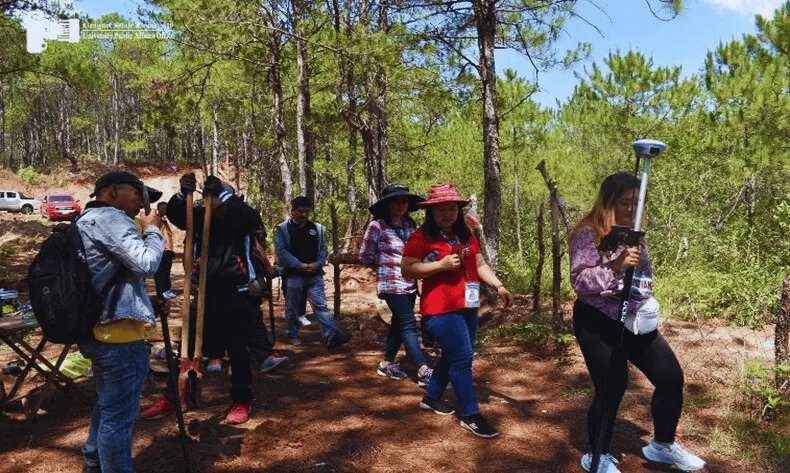
BSU’s three campuses in La Trinidad, Bokod, and Buguias are surrounded by rapidly developing communities. Through political will, most of BSU’s lawns, gardens, forests, and athletic fields remained the property of BSU despite numerous land dispute claims by continuously conducting safeguarding activities within the boundaries of its lands.
Thus, to this day BSU’s open spaces remain accessible to students and the general public for organized and casual academic, civic, and public activities. These includes street parades, friendship games, fun runs, flag-raising ceremonies, student-organized activities, and nature-immersion activities.
BSU as a Keeper and Steward of Indigenous Knowledge
BSU Facilities that serve as venues for preserving, disseminating, documenting and studying Indigenous Knowledge Systems and Practices (IKSP) includes the BSU Library, Center for Culture and the Arts, and Institute for Social Research and Development (ISRD). The BSU library and Museum accommodates hundreds of visitors every year. Meanwhile, the ISRD funds researches and holds various conferences and seminars on IKSP.
As a result, several knowledge products about IKSP have been produced by BSU including the Encyclopedia of Benguet Indigenous Knowledge Systems (IKS).
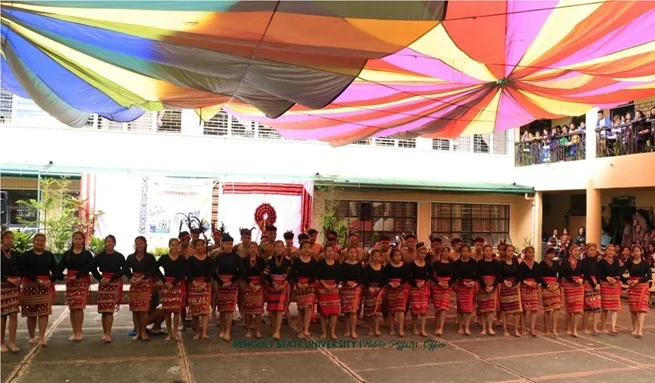
Partnerships with various Indigenous Peoples (IP) organizations have also been established to strengthen the efforts towards IKSP preservation and to reach out further to the community. BSU is also a staunch supporter of the Philippine National IP Month, holding various activities and programs to commemorate this every year.
Provision of Housing for Students and Employees
BSU provides housing to employees prioritizing those who are not home-owners, who are within the lower salary-grade, and with irregular work-hours. As of 2024, there are 200 housing units for university employees (LUDIP, 2024).
Students who live far from the University are also given priority in the Men’s and Women’s Dormitories. Combined, the two dormitories have 99 rooms that could accommodate 340 students (BSU LUDIP). This service of the Office of Student Services (OSS) aims to: provide accommodation to selected single freshman college students coming from far places who are not financially capable of paying rentals offered by outside lodging houses; contribute to the intellectual development of the residents by providing an atmosphere conducive to study, social interaction and group living; help enhance the physical well-being of its residents, and provide opportunities for residents’ social advancement by emphasizing proper behavior and conduct.
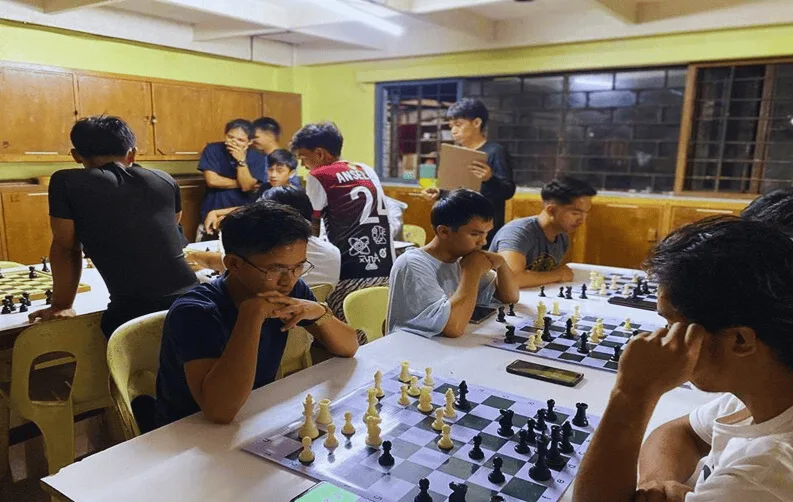
These objectives are achieved through the close supervision and monitoring of the OSS. Full-time and live-in OSS employees are assigned in the dormitories tasked with overseeing the welfare and security of the tenants. The Student Housing Unit is more than mere provision of shelter to students. It also aims to provide a healthy atmosphere conducive to study, social interaction and group living. To foster this, the students have the Ladies Dormitory Organization (LADORA) and the Mens’ Dormitory Organization (MENDORO). These duly registered students’ organizations dating back to the 1980s facilitate activities such as mental-health seminars and board game competitions. Practices in the management of these dormitories are also benchmarked by other schools.
Towards Sustainable Physical Facilities
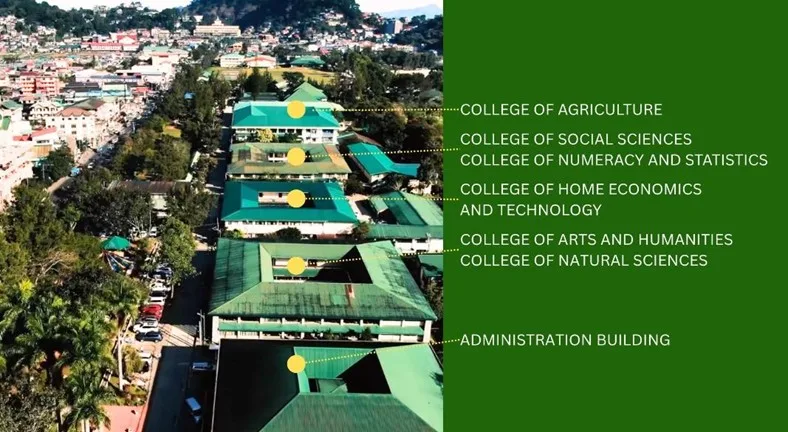
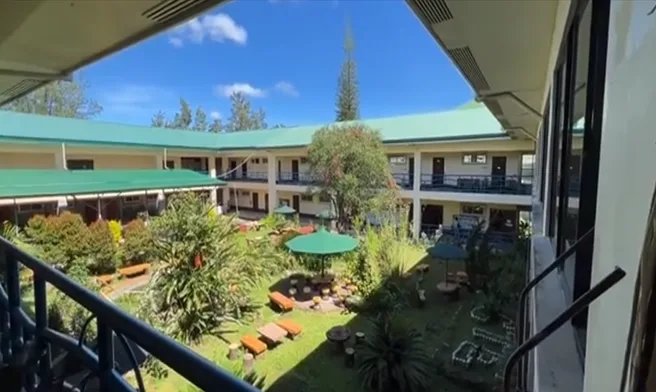
The buildings housing the College of Teacher Education (CTE), College of Agriculture (CA), College of Arts and Humanities (CAH), College of Social Sciences (CSS), College of Natural Sciences (CNS), College of Numeracy and Statistics (CNAS) and the administration offices, despite being built within the 1980s-1990s were built with courtyards in the middle that promotes natural lighting and ventilation. These courtyards also serve as public spaces for students promoting a conducive environment for learning.
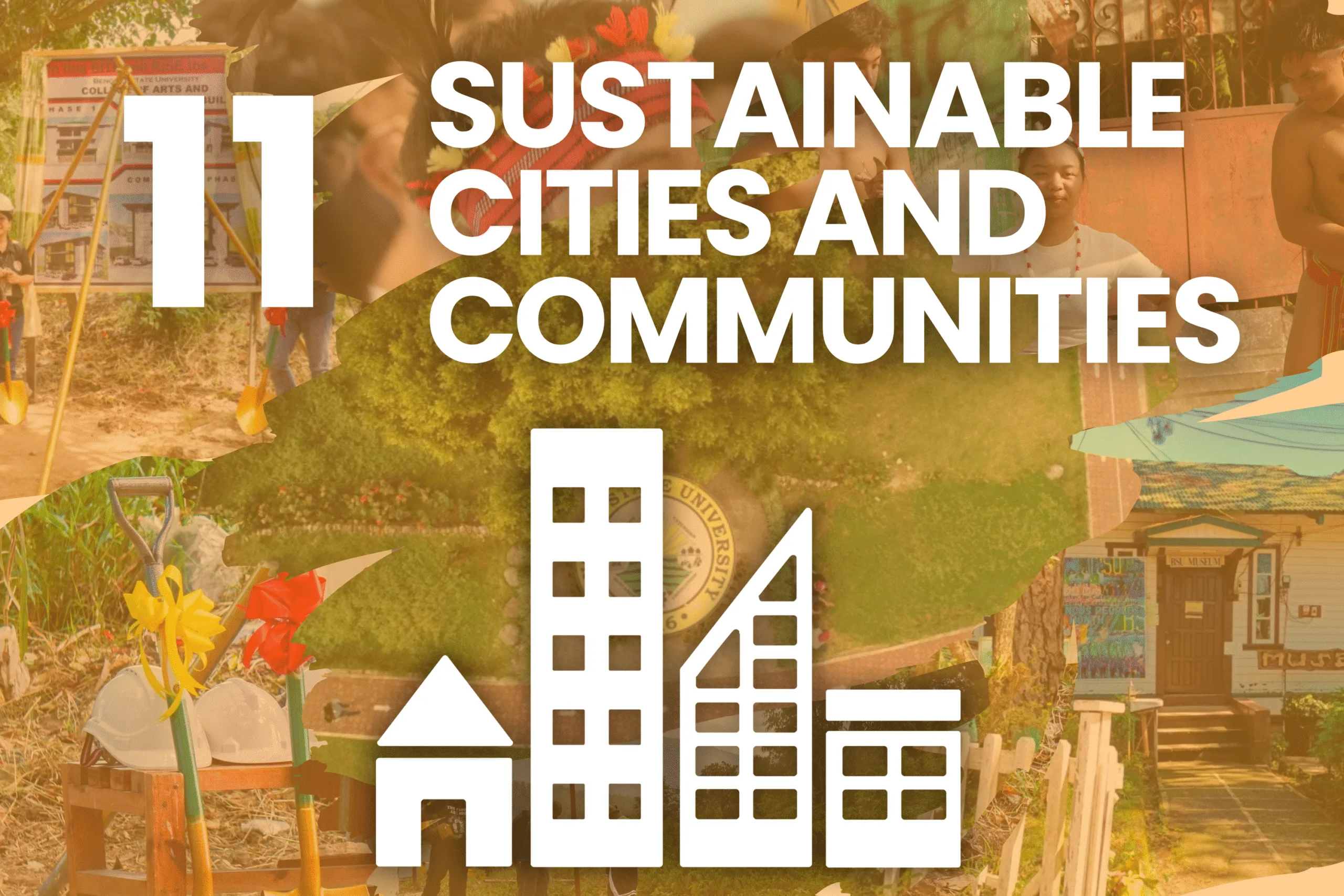
In 2024, university’s comprehensive Land Use Development and Infrastructure Plan (LUDIP) is approved by the BSU Board of Regents. The LUDIP is fundamentally a conceptual map leading to both Green Architecture and the goals of SDG 11 (Sustainable Cities and Communities).
At its core, the entire planning framework is a strategic response to the Sustainable Development Goals, explicitly targeting the creation of sustainable cities and communities. This is evident in the plan’s mandate, which directly calls for the construction of dormitories for students and housing sites for employees. Providing adequate, safe, and affordable housing is a necessary step in achieving an inclusive and resilient community, placing the LUDIP squarely within the scope of SDG 11.
Furthermore, the concept of Green Architecture is not merely implied but is an integrated requirement for new construction, specifically detailed for the proposed Research and Training Center. The plan dictates that its design must explicitly consider the impacts of Climate Change and incorporate environmentally sound building principles. This commitment to green design is realized through practical standards, such as promoting the efficient use of natural lighting and installing energy-saver devices within the new facilities. Beyond the buildings themselves, the plan ensures community sustainability by addressing critical infrastructure, including the proposal for a University Sewage Treatment Facility to manage water resources responsibly and the designation of a Material Recovery Facility (MRF) site to ensure environmental compliance with waste management regulations. This holistic approach to infrastructure, housing, and ecological design confirms that the LUDIP is a living document guided by principles of sustainable development and green building practices.